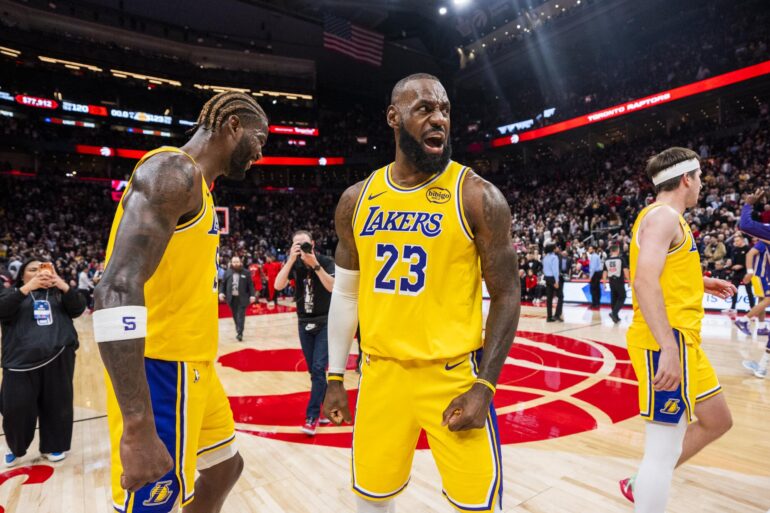
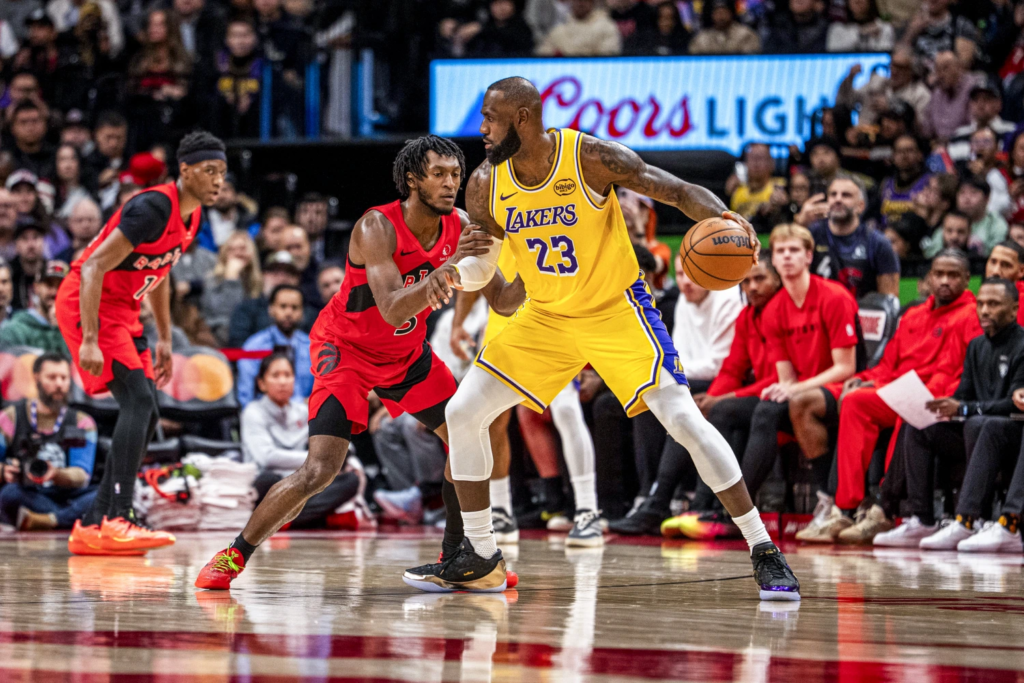
TORONTO — The numbers don’t lie. On the surface, LeBron James’s night looked like the kind of rough shooting slog that could signal the end of what had been an iron‑clad streak: eight points on 4‑for‑17 shooting, a gritty performance that interrupted a consecutive‑game double‑digit scoring run stretching back nearly two decades. Yet by the final buzzer, after a razor‑thin 123–120 win over the Toronto Raptors, LeBron found another way to matter: his assist to Rui Hachimura for the game‑winning three carried a message — greatness isn’t just about piling up points.
The backdrop was perfect — and precarious
Coming into the night, LeBron’s streak of scoring at least 10 points in consecutive regular‑season games stood at a historic 1,297. (Yahoo Sports) In an era where usage is spread across stars and rising role players, that streak has served almost like a baseline guarantee: even when he doesn’t dominate he delivers. Tonight, though, he teetered on the edge. Eight points, a line that felt pedestrian for a man whose career has been built on consistency.
For many fans — and critics — there’s danger in that. One former NBA figure recently suggested the streak carried whispers of “stat padding,” as though double‑digit nights had become more about legacy than urgency. (Yahoo Sports) My concern was simple: would the streak end and with it a little piece of basketball lore that defines LeBron’s longevity?

But basketball isn’t always about what shows up in the box score. Sometimes it’s about tone‑setting, about trust.
Fan perception, organizational context, coaching as backdrop
In the stands of Scotiabank Arena, those murmurs — the “stat‑padder” talk — didn’t disappear. Every miss, every glance upward, every limp rebound brought a subtle ripple. Social media, too, buzzed: some lamented the end of the streak, others shrugged, saying that such nights were inevitable given LeBron’s age and the changing Lakers dynamics. The front office, embracing a newer roster that combines youth and talent, has visibly shifted toward distribution and less reliance on LeBron as a scoring engine. That broader context matters: the balance between venerating an icon and building for the future.
After the game, Lakers coach JJ Redick was careful, almost diplomatic. He lauded the end result, lauded the team cohesion — and avoided delving too deeply into LeBron’s off night. He spoke instead of “everyone doing their job,” of trust in the group, of letting the players decide the moment. It was almost refreshing: no overcompensation, no coddling the legend — just basketball pragmatism.
The play that defined the night
Down the stretch, with the clock winding down and the game deadlocked, LeBron held the ball. The hot hand was not his: the arc of the game had betrayed him. Yet rather than chase a shot, he zipped a pass to Hachimura on the wing. Hachimura rose, fired, and buried the three — the buzzer-beater that sealed the 123–120 win.
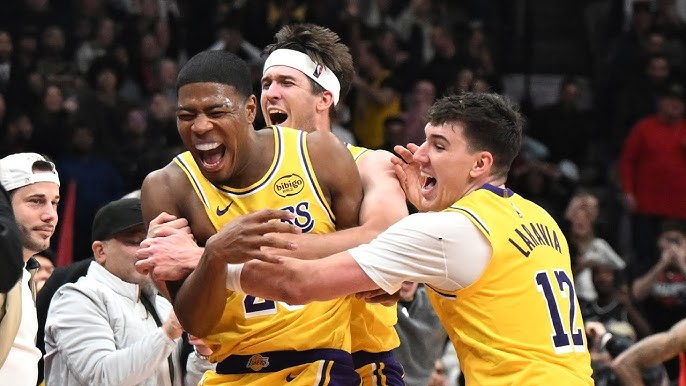
That assist was symbolic. It told anyone watching: his game may not always shine through volume scoring. Sometimes it’s through timing, through trust, through enabling. For a night that could have been swallowed by criticism, that assist — that selfless act — reminded everyone why LeBron remains indispensable.
Statistical context — more than just the eight points
This season, LeBron is averaging 15.2 points, 4.0 rebounds, and 7.2 assists per game. (ESPN.com) In his last five games, he’s hovered right around those marks — not vintage “King James,” but effective, serviceable, contributive. (StatMuse) At 40 years old, after 22 seasons, that kind of production is nothing to sniff at.
The eight‑point finish tonight would have raised eyebrows — if not for the assist. That sequence reframed the night from “streak lost” to “legacy evolved.”
Through adversity, shifting roles, still relevant
The arc here isn’t new. LeBron has endured nights of heavy criticism before: shooting woes, aging legs, roster turnover. In recent seasons, the arrival of new stars and rising talents — including younger wings and guards — has thinned his usage. The Lakers organization seems more willing now to let others take shots, to let the offense breathe. In that context, the scoring-streak was as much symbolic as statistical. Maybe too symbolic.
Tonight’s shift felt like a long time coming. Rather than chase a number, LeBron accepted a different kind of impact. That’s growth.

Humble criticism, measured reflection, and my take
I won’t pretend tonight was perfect. A Hall‑of‑Famer shooting 4‑for‑17 can’t skate by on an assist alone. My concern — and perhaps yours — was whether this signaled decline, the slow unwinding of greatness. There’s no denying the visual of misses, the frustration that flickered when rim after rim denied him.
But watching the final play — watching the pass, the trust, the shot, the roar — I felt something else: respect. Not just for what LeBron used to be, but for what he remains capable of being.
Game over? Not even close.
Zooming out: maturity arc, long‑term potential, what this night means
If you believe in stories, LeBron’s career has always been about chapters. There was the prodigy — athletic, explosive, unstoppable. The prime — dominant, ball‑handling, central. The veteran — thoughtful, experienced, enduring. Now, perhaps, we’re seeing another evolution: the elder statesman who knows when to pass, when to defer — who measures value beyond the scoreboard.
That doesn’t mean his scoring days are over. But maybe his role — his identity — is shifting. And that’s fine. Because this league has room for legacy that adapts. For impact that doesn’t require 30 points every night. For leadership that shows itself in timing, in choices, in moments.
What I take away: even on nights when the shot is off, LeBron remains woven into the fabric of what makes the Lakers dangerous. His streak may have ended, but his significance — perhaps greater than any stat line — remains.