When Jeff Bezos purchased The Washington Post in 2013, the mood was one of cautious optimism—a tech titan arriving to save a legacy institution from the slow bleed of the digital age. Four years later, the paper adopted its now-famous slogan, “Democracy Dies in Darkness,” a phrase that felt less like a mission statement and more like a battle cry for the Trump era. It was a golden age of moral clarity and subscription spikes, where subscribing to The Post was an act of civic resistance.
Today, that slogan reads less like a warning and more like a prophecy fulfilled from within.
The recent announcement that the paper would cut roughly one-third of its staff—eliminating the entire sports and books sections, decimating the metro desk, and shuttering the Post Reports podcast—marks the end of the “Resistance” business model. The “Democracy Dies in Darkness” era is officially over, replaced by a cold, algorithmic reality where prestige cannot pay the bills and where the billionaire savior has decided to stop saving.
The Rise and Fall of the “Trump Bump”
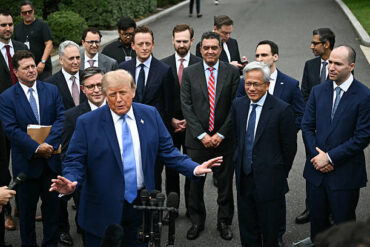
To understand the current “death spiral,” we must rewind to the heady days of 2017. Under the editorship of Marty Baron, The Post positioned itself as the primary antagonist to the Trump administration. This strategy was wildly successful; digital subscriptions tripled between 2016 and 2020. The paper wasn’t just selling news; it was selling a narrative of accountability. It was the “Pentagon Papers” on a daily loop.
But when Donald Trump left office, the “Trump Bump” vanished, revealing a precarious foundation. The audience that had flocked to the paper for political combat found less reason to stay for zoning board meetings or literary criticism. By 2023, the paper was reportedly losing $100 million annually.
The turning point came in late 2023 with the arrival of Will Lewis as publisher. A British media executive with a reputation for ruthlessness, Lewis was brought in to do the dirty work that the previous regime avoided. His tenure began with the clumsy ousting of executive editor Sally Buzbee and exploded into controversy in October 2024, when Bezos blocked the editorial board’s endorsement of Kamala Harris. The backlash was immediate: over 250,000 subscribers canceled in a single week.
That moment was the catalyst. It wasn’t just a loss of revenue; it was a loss of the specific kind of cultural capital the paper had traded on for a decade. The subscribers who left were the true believers, the ones who bought the tote bags. When they walked away, the floor fell out.
The Bloodbath and the Backlash
The cuts announced this month are not surgical; they are an amputation. By eliminating the sports section—once a jewel of the paper that produced legends like Tony Kornheiser and Michael Wilbon—and the standalone books section, leadership is signaling that The Post is no longer a “newspaper of record” in the traditional sense. It is becoming a niche product focused on “core” verticals like politics and business, shedding the “lifestyle” fat that once made a newspaper a community hub.
The reaction has been a mix of fury and resignation. The Washington Post Guild described the layoffs as a “bloodbath,” noting that the paper has now lost nearly 50% of its workforce in just a few years. Former staffers and media critics have framed this not as a restructuring, but as a “hollowing out” that leaves the capital city without a comprehensive local paper.
Critically, the media framing has shifted from “Bezos the Savior” to “Bezos the Butcher.” The narrative is no longer about a billionaire protecting journalism from market forces; it is about a billionaire disciplining journalism to align with his broader corporate interests. The fear is that The Post is being transformed into a “service journalism” brand—efficient, profitable, and politically toothless.
“We Are in a Hole”
Leadership has been startlingly blunt about the motivation. In a tense town hall meeting last year, Will Lewis told staff, “We are in a hole, and we have been for some time.” He argued that the old model of “being everything to everyone” was dead.
Bezos himself, in a rare op-ed defending the decision to end presidential endorsements, argued that newspapers had lost credibility with the “mushy middle” of America. He framed the pivot not as cowardice, but as a necessary return to neutrality to regain trust. “Most people believe the media is biased,” he wrote. “Anyone who doesn’t see this is paying scant attention to reality.”
This is the crucial self-admission: The leadership believes that the “Resistance” identity is a business liability. They are betting that the path to survival lies in being less political, less combative, and more utilitarian. They are trading the passion of a shrinking base for the indifference of a broader market.
The End of the Prestige Era
The collapse of The Washington Post as we knew it reveals a harsh truth about the modern media ecosystem: Prestige is not a business model.

For a long time, there was a belief that high-quality, expensive journalism was immune to the market forces that gutted local news. We believed that if you did the “important work”—investigations, foreign reporting, book reviews—the money would follow. The Post’s current crisis proves that this is no longer true, even for a brand owned by one of the richest men in history.
This situation highlights a conflict between relevance and legacy. The “legacy” parts of the paper—the metro desk, the book reviews, the sports columns—are the things that build a deep connection with a city and a culture. But in the metrics-driven world of modern media, they are “inefficient.” They don’t drive the same viral traffic as a scoop on a scandal. By cutting them, The Post is choosing short-term relevance (clicks) over long-term legacy (community trust).
It also exposes the fragility of the “benevolent billionaire” model. We hoped that tech money would insulate journalism from capitalism. Instead, it just subjected journalism to the ruthlessness of tech capitalism. Bezos ran The Post like a startup: rapid expansion, heavy investment in user acquisition, and now, when growth stalls, a brutal “pivot” to cut costs and find a new product-market fit.
Conclusion: A Ghost in the Machine
As the dust settles on K Street, The Washington Post still stands, but it is a ghost of its former self. It will continue to break news; it will continue to publish investigations. But it has lost the essential “paper-ness” that made it a daily habit for millions. It is no longer a bundle of sports, culture, and local life; it is a content feed for political junkies.
The strategy may work on a balance sheet. Will Lewis may successfully turn the paper into a lean, profitable news wire for the elite. But the cultural authority that The Post wielded—the sense that it was the voice of the capital, the check on power, the record of our times—has been sold off for parts.
We are watching the death of the “general interest” newspaper in real-time. And in its place, we are getting something colder, smaller, and infinitely darker. The lights haven’t gone out at The Washington Post, but the dimmer switch has been turned all the way down.