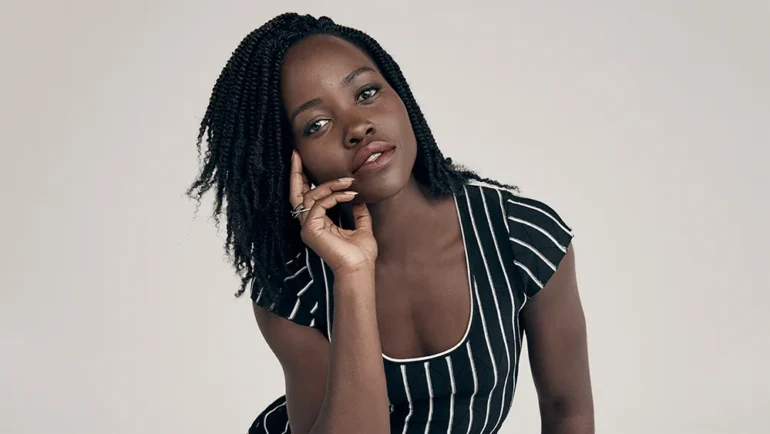
The reaction was quick and extremely predictable when word started circulating that Oscar-winning actress Lupita Nyong’o might play Helen of Troy in Christopher Nolan’s adaptation of The Odyssey, set to come out in July of this year. Tech billionaire Elon Musk showed objections to Nolan’s casting choice on social media, claiming that by straying from conventional portrayals, Nolan had “lost his integrity” as a director.
Now, what has started as a mere rumor has now become a heated cultural debate over race, representation, and how adaptations should be carried out.
From Myth to Modern Backlash
Reports spreading online indicated that Helen of Troy in The Odyssey would be portrayed by Lupita Nyong’o, famous for her transformative performances in movies like 12 Years a Slave and Black Panther. However, even though Nyong’o has been verified to be in the film, it still hasn’t been confirmed what role she is set to play.
Despite this, many netizens have criticized this “casting,” arguing that a Black actress could not properly portray this famous character since most adaptations of Helen feature her as a fair-skinned woman with blonde hair.
The biggest criticism that started this debate came from Elon Musk, who entered the debate on X, launching the discussion into the mainstream with millions of followers.
Helen of Troy
In Greek myth, Helen is described using terms reflecting classical Greek aesthetics. Her physical depiction, though, stresses her beauty more as a way to drive conflict instead of a particular collection of hereditary characteristics.
It is also important to note that Helen of Troy never existed historically, as there is no evidence to prove that she was ever a real person. She is not a confirmed historical person with proven lineage or ethnic origin.
If the myth tells us anything, it’s that the story is rooted in fantasy with gods masked as animals, amazing births, and heroes capable of almost superhuman feats. Why all of a sudden is it unrealistic to think that a dark-skinned Black woman would be an undeniable beauty?
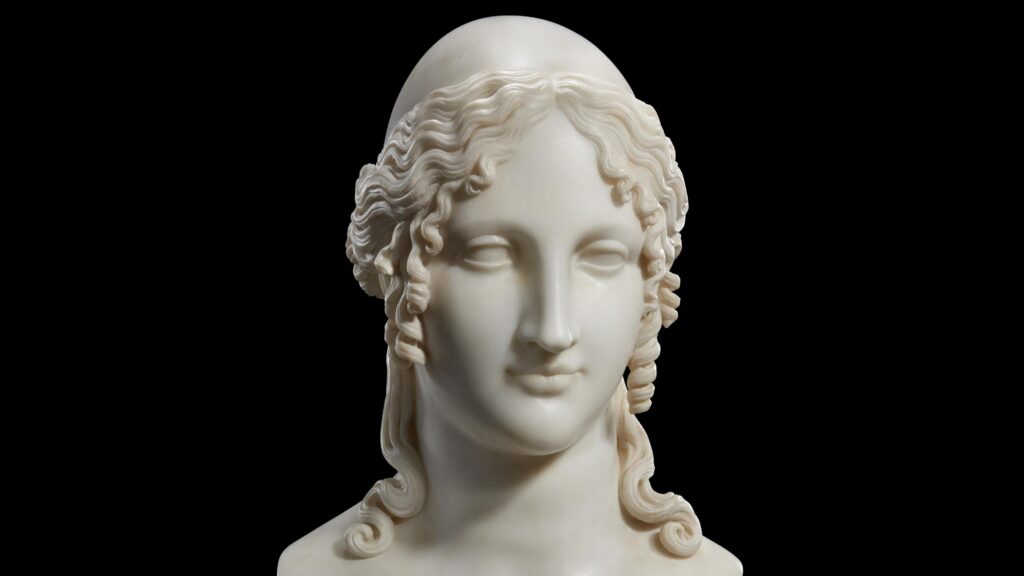
Artistic License and the Evolving Canon
Adaptations have never had their casting selections bound to textbook realism. From Renaissance paintings to contemporary theatrical performances, creative interpretations of literature are as ancient as the documents themselves.
Some audiences suddenly claim it skews “authenticity” when contemporary filmmakers cast actors of color in roles usually portrayed as white. For so long, white has been considered the default for so many projects in media that now, in a new age of understanding, there is a level of outrage when it comes to casting and including characters of different races and ethnicities, even when those characters are mythical or fictitious.
Helen of Troy comes from a myth filled with magical components like gods becoming swans and hatching children from eggs, allowing this story not to make the strongest case in debates about “reality” and “authenticity.”
Reinterpretation is an amazing tradition, as it can expose you to performances from theater to cinema that you would have never seen if not for allowing people of different races, genders, and sexualities to try their hand. There would be no point in making an adaptation, especially for a story as popular as this one, if only to recreate everything the exact same way as the person before.
When the Conversation Turns Personal
The criticism went beyond Musk’s social media statement. On the talk show The View, the panelists publicly rebuked Musk for his remarks; Whoopi Goldberg in particular defended Nyong’o’s casting and criticized Musk for concentrating on something as subjective as beauty and appearance rather than artistic merit.
Adding to that, Sunny Hostin called Musk’s remarks racist and grounded in an exclusionary perspective. The conversation changed from just film casting into a more general social critique regarding race, representation, and cultural ownership. Watch here.

The Power of Reimagining Classic Roles
Critics may find casting an actor of another race in a role formerly portrayed one way to be uncomfortable. Framing this as essentially dishonest or disrespectful, however, misses the need for interpretation.
The goal of theatre and film is to engage modern audiences with the arts and encourage community and empathy. An unambiguously Black actress playing a character like Helen of Troy honors the fact that beauty is not something that is defined by proximity to whiteness.
Furthermore, insisting that only white actors can portray particular roles, especially in fantasy and myth, subtly reinforces ancient ideas of whose narratives matter and who is authorized to embody them. Mythology is for everybody, not limited to one racial group.
Art, Storytelling, and the Real ‘Integrity’ Question
Assuming Elon Musk’s criticism at face value that Christopher Nolan has “lost his integrity,” we have to question: Whose integrity counts? Is artistic integrity related to adherence to stereotypes and phenotypes, or does it lie in the ability to retell a myth that has existed for centuries to resonate with a worldwide audience?
Skin tone does not define Homer’s myth. The Odyssey at its core is about human complexity and the joy and pain that comes with love. And if an actress like Lupita Nyong’o can represent one of the most famous characters in Western mythology and execute these themes well, there is no reason that she is not deserving of this role.
Myth Belongs to All of Us
All in all, the backlash against Lupita Nyong’o’s alleged casting as Helen of Troy reveals more about ongoing fears over cultural shifts and ownership than about her performance or Nolan’s vision. And when critics focus on race in an imaginary world with monsters and magic, it shows more about the boundaries of their creativity than any mistake in casting.