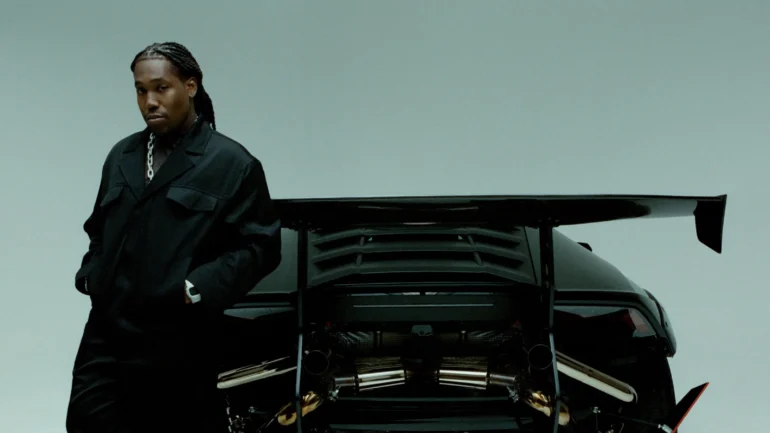
For years, Don Toliver has been the secret weapon of the Houston scene—a melodic chameleon capable of turning a gritty Travis Scott track into a hazy, neon-soaked fever dream. With previous outings like Love Sick and the desert-rock-tinted Hardstone Psycho, Toliver proved he could steer his own ship, blending Houston’s “chopped and screwed” legacy with a modern, high-fashion sheen. But on his latest album, Octane, the tank feels surprisingly empty.
A Formula in Neutral
The album arrives with the heavy expectations of a blockbuster, yet it often plays like a collection of b-sides. The lead singles, “ATM” and “Terramisu,” lacked the visceral, earworm quality we’ve come to expect from a Cactus Jack flagship artist. Instead of the high-energy delivery that made him a star, Toliver sounds strangely detached, his vocals drifting into a monotonous, sleepy register that feels less like a stylistic choice and more like a lack of inspiration.
The production mirrors this lethargy. While Toliver has always excelled in “nocturnal” atmospheres, Octane leans into beats that feel recycled from the genre’s most exhausted tropes. It is a sonic landscape we’ve traversed a thousand times before—moody, dark, and ultimately predictable.
Flashes of Brilliance
The album isn’t without its silver linings, though they are fleeting:
-
“Rendezvous”: A collaboration with the hyper-prolific Yeat provides a much-needed jolt of electricity. Their chemistry is tangible, offering a glimpse of the boundary-pushing artist Toliver can be when he’s challenged by a peer.
-
The Opener: The record begins with a cinematic flourish—a brass section that feels like a coronation. However, the momentum is quickly undercut by a chorus that feels more like a placeholder than a polished hook, a recurring theme throughout the project’s 45-minute runtime.
The Identity Crisis
The most glaring issues arise when the production strips back, leaving Toliver’s songwriting exposed. On tracks like “Tuition,” the lyrical content feels tethered to the mundane, lacking the surrealist imagery or emotional depth that once defined his best work. In an era where hip-hop is increasingly defined by radical vulnerability or avant-garde experimentation, Octane feels content to simply “vibe.”

There are moments of blatant interpolation here—nodding to classics past—but they often feel like hollow echoes rather than meaningful reinventions. It leaves the listener with a nagging sense of déjà vu, a feeling that we are listening to a talented artist treading water in a sea of his own influence.
The Verdict
Octane isn’t a total failure, but it is a cautionary tale. It serves as a reminder that in the fast-moving current of modern hip-hop, “vibe” alone isn’t enough to sustain a legacy. To maintain his seat at the table, Toliver will need to look beyond the formula and rediscover the daring spirit that made him a Houston standout in the first place.
Circle60 Scoring: 30 – 60