In the golden light of the 2017 and 2018 NBA Finals, Kevin Durant appeared to have achieved the impossible: he had solved basketball. Armed with a 7-foot frame and the shooting touch of a specialist, Durant operated with a clinical, almost eerie efficiency that rendered the best player of a generation, LeBron James, a secondary character in his own era. During those years with the Golden State Warriors, Durant was the ultimate “cheat code,” a frictionless addition to a 73-win machine that dismantled the league with terrifying ease. He was the Finals MVP, the conquering hero who had finally ascended to the throne.
Yet, as the 2026 postseason unfolds, that throne feels increasingly like a folding chair. The sharp contrast between the “Easy Money Sniper” who cruised to titles in the Bay Area and the wandering superstar of recent years has become the central tension of modern basketball culture. While Durant maintains a public persona of Zen-like detachment—claiming he only cares about the “purity of the hoop”—the digital breadcrumbs of his burner accounts and his frequent, late-night skirmishes with fans on social media suggest a man deeply preoccupied with how the history books will frame his journey. For Durant, this first round isn’t just about a series win; it is a desperate defense against the narrative that his greatness only functions within a pre-built infrastructure.
The Migration of a Mercenary
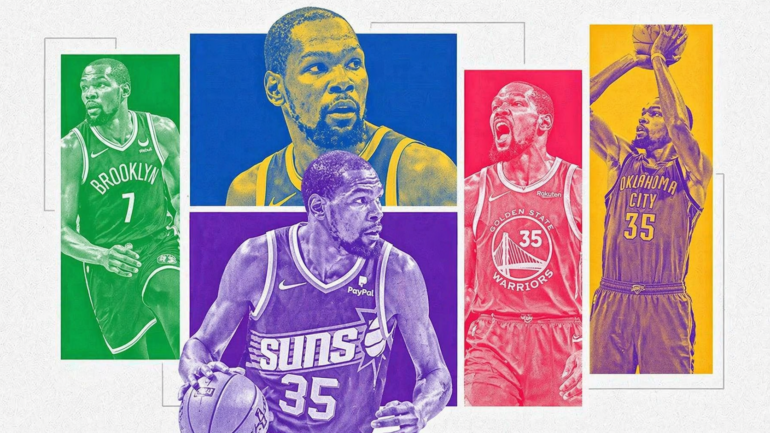
To understand Durant’s current predicament, one must trace the evolution of his public identity from the “Slim Reaper” of Oklahoma City to the nomadic elite of the present. In his early years with the Thunder, Durant was the NBA’s pious wunderkind, a small-market savior who symbolized loyalty and organic growth. Alongside Russell Westbrook, he built a contender from the ground up, reaching the Finals in 2012 and establishing himself as the only legitimate threat to LeBron’s hegemony. He was the league’s most relatable superstar, famously thanking his mother in a tearful 2014 MVP speech that cemented his status as a cultural darling.
The shift began on July 4, 2016. His decision to join the Golden State Warriors—the very team that had just eliminated his Thunder after a 3-1 lead—was a seismic event that permanently altered the league’s competitive balance and Durant’s own reputation. It was a moment of profound ambiguity: was it the ultimate pursuit of basketball excellence, or the ultimate path of least resistance? While the championships followed, the “super team” label became an indelible mark.
The mid-period of his career was defined by this friction. Even as he hoisted trophies, Durant found himself at odds with the “organizational backed enforcer,” Draymond Green. Their notorious 2018 sideline argument revealed the cracks in the facade; Green’s reported retort—”We won without you. Leave”—became the ghost that has haunted Durant’s career ever since.
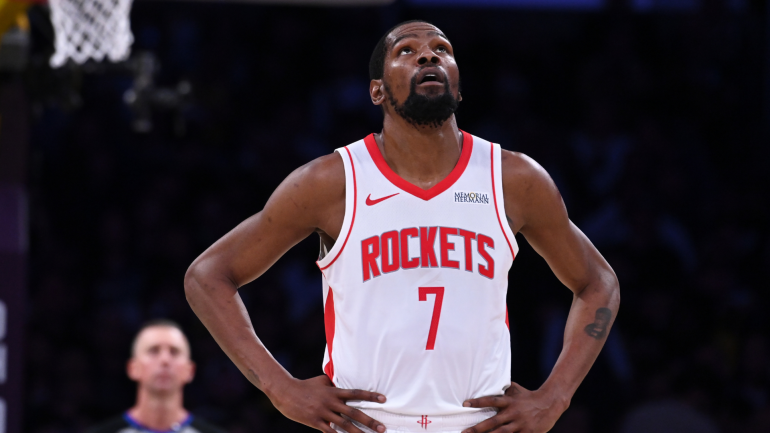
Since leaving the Bay in 2019, Durant’s path has been a cycle of high-stakes experimentation and diminishing returns. The Brooklyn Nets era, intended to be his “indie” masterpiece alongside Kyrie Irving, collapsed under the weight of injuries, trade requests, and off-court drama. Now in Phoenix, he finds himself once again at the center of a hand-picked roster, yet the invincibility of the Warriors years has vanished, replaced by a glaring vulnerability.
The Friction of the Online Persona
The reaction to Durant’s post-Warriors trajectory has been a mix of awe for his individual talent and skepticism toward his leadership. Unlike contemporaries like Stephen Curry or LeBron James, who have cultivated expansive media empires and stable brand identities, Durant has chosen a path of digital combat. His frequent interactions with “trolls” and media personalities like Charles Barkley have created a feedback loop of controversy that often overshadows his on-court brilliance.
Industry peers and media outlets have increasingly framed Durant as a “basketball nomad,” a player who possesses the skill of a GOAT candidate but the stability of a temp worker. The backlash isn’t just about his team-hopping; it’s about the perceived lack of “organizational equity.” When the Nets failed, or when the Suns struggle, the blame often lands on Durant’s inability to build the culture he so effortlessly inherited in Golden State. This media framing has influenced his credibility, shifting the conversation from “How many rings will he win?” to “Do these rings count the same as others?”
The Admission of the “Pure” Hooper
Durant has rarely been shy about his motivations, though his explanations often shift with the wind. In moments of rare candor, he has admitted to the burnout of the Warriors’ scrutiny and the desire to control his own destiny. “I don’t need to be a leader. I’m one of the guys,” he told The Boardroom, his own media platform. Yet, this humble-hooper defense is consistently undercut by his sensitivity to criticism.
His strategy has been one of radical autonomy. By signing short-term deals and demanding trades, he has exercised a level of power that players of previous generations couldn’t imagine. But this power comes with a tax: the loss of a “home” narrative. In his own words, Durant has expressed a desire for relevance that isn’t tied to the approval of others, yet his behavior—monitoring mentions, responding to podcasts, and defending his legacy at 3:00 AM—suggests a man who is acutely aware that his cultural authority is contested.
The Fragmentation of Legacy

The Durant saga reveals a fundamental shift in how we define greatness in the modern media ecosystem. We are living in an era where “legacy” is no longer a static monument built over fifteen years in one city; it is a fluid, SEO-optimized narrative that can be edited in real-time.
Durant represents the Relevance vs. Legacy conflict. In the attention economy, staying relevant—being the center of the trade deadline, the subject of the viral tweet, the “Pure Hooper” archetype—is often more profitable than the slow burn of building a legacy. He has traded the traditional “franchise player” identity for a “mercenary” model that prioritizes individual autonomy over collective history.
This also speaks to the Authenticity vs. Performance divide. Durant claims his online presence is his most authentic self—a guy who just wants to talk hoops. To the public, however, it often feels like a performance of insecurity. In a world where cultural authority is increasingly gained through “vibes” and curated personas, Durant’s refusal to play the corporate superstar role is both refreshing and self-sabotaging. He has the power to move franchises, but he lacks the influence to silence the asterisk that follows his championships.
The Weight of the Unshared Ring
As the first round progresses, the stakes for Kevin Durant are uniquely existential. For a player of his caliber, another early exit would not just be a playoff failure; it would be a confirmation of his critics’ loudest argument. Since leaving the 73-9 “infrastructure” of the Warriors, Durant has been searching for a win that belongs entirely to him—a championship that doesn’t feel like an add-on to someone else’s dynasty.
In today’s shifting cultural landscape, where loyalty is often viewed as a lack of ambition and player empowerment is the law of the land, Durant is the ultimate test case. Can a player be one of the five greatest to ever touch a basketball and still feel like a footnote in his own era? His current strategy of high-ceiling, low-floor super teams in Phoenix may provide the highlights, but it has yet to provide the definitive answer his legacy requires. In the end, Durant’s greatest opponent isn’t the team across the court; it’s the persistent, digital ghost of a 2017 championship that he hasn’t been able to replicate on his own terms. Whether his brand of “pure hooping” still carries the weight of true cultural authority remains the most compelling question of his career