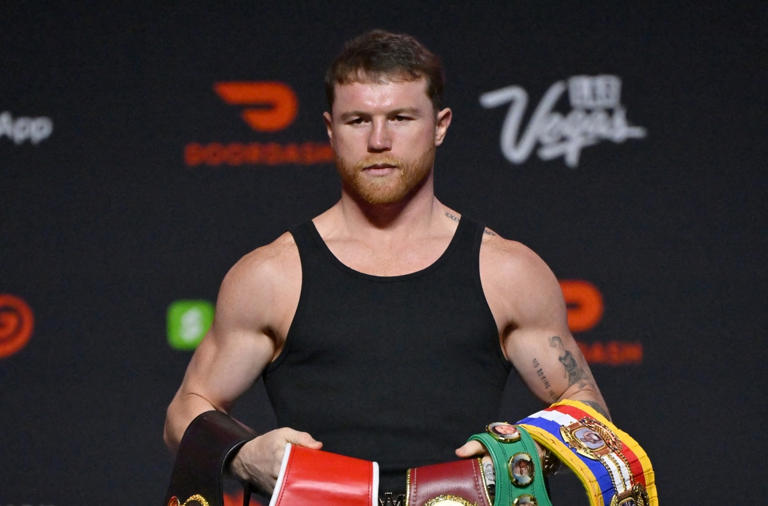
In the wake of Canelo Alvarez’s recent loss to Terence Crawford, discussions about the future of the boxing superstar have reached a fever pitch. Fans and analysts alike have begun to speculate whether Canelo should switch trainers, with some suggesting he needs a black trainer to elevate his game, akin to Oscar De La Hoya’s late-career decision to work with Floyd Mayweather Sr. However, the implications of such a move are complex and warrant a deeper examination.
Canelo has made it clear in the past that he values loyalty to his team, particularly to his trainer Eddie Reynoso. “I don’t switch trainers; I know what happened, and I’m going to be with my trainers all my life,” he has stated. This loyalty stems from a mutual respect and friendship that has developed over many years of collaboration. As Canelo himself reflects, fighting the best—like Floyd Mayweather—has provided invaluable experience that contributes to his growth as a fighter.
However, the recent loss has ignited debate among fans and pundits. Some argue that Canelo’s performance against Crawford exposed weaknesses that could be addressed by bringing in a new trainer, specifically one from a different background. The rationale is that a fresh perspective could introduce new strategies and techniques that might enhance his boxing style. Yet, this perspective overlooks the fundamental issue of timing and loyalty.
Firstly, it is essential to recognize Canelo’s current stage in his career. At 35, he is not only an experienced fighter but also one who has achieved considerable success. The question remains: at this juncture, can he adapt to a new training regimen and style? The consensus among some analysts is that it may be too late for such a drastic change. Transitioning to a new trainer often requires time to develop chemistry and trust, something that is not easily established overnight, especially after a significant defeat.
Moreover, Canelo’s relationship with Reynoso is deeply rooted in trust and understanding—qualities that are paramount for a successful trainer-fighter dynamic. To abandon that relationship after a loss would not only be seen as a betrayal but could also undermine his confidence moving forward. As the boxing community reflects on Canelo’s journey, it is crucial to balance the desire for immediate solutions against the reality of building a successful team.
Another layer to this discussion is the mental and physical toll that comes after a defeat. Canelo’s loss to Crawford was not just a physical setback; it was a mental hurdle that he must overcome. The embarrassment of being bested by a smaller opponent can weigh heavily on a fighter’s psyche. Many have noted that mental defeat can be more debilitating than physical defeat, making the path to recovery and reinvention even more challenging.

In the past, fighters like Deontay Wilder have faced similar scrutiny when switching trainers. Many questioned whether changing strategies late in their careers would yield positive results. Ultimately, success in boxing often hinges on a fighter’s ability to adapt and evolve, but such evolution takes time—something that is in short supply for seasoned athletes.
As fans and analysts debate Canelo’s potential training changes, it is vital to recognize that loyalty and continuity in training are significant factors in an athlete’s success. Instead of seeking quick fixes through trainer changes, perhaps the focus should be on refining existing skills and addressing weaknesses within the current framework. Canelo’s legacy as one of boxing’s greats is secure, and while the road ahead may be filled with challenges, it is also an opportunity for growth and adaptation.
In conclusion, the conversation surrounding Canelo Alvarez and potential trainer changes highlights the intricate dynamics of loyalty, timing, and personal growth in boxing. While some may call for a new direction, the true test lies in Canelo’s ability to learn from his experiences, refine his approach, and continue to build on the foundation he has established with his team. As he moves forward, the boxing world will be watching closely to see how he navigates this critical juncture in his career.