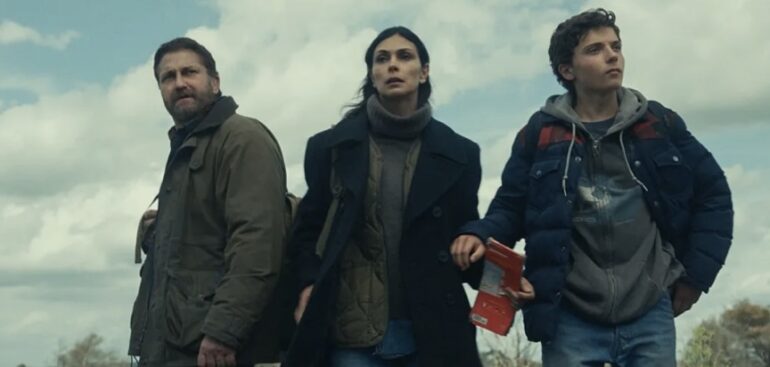
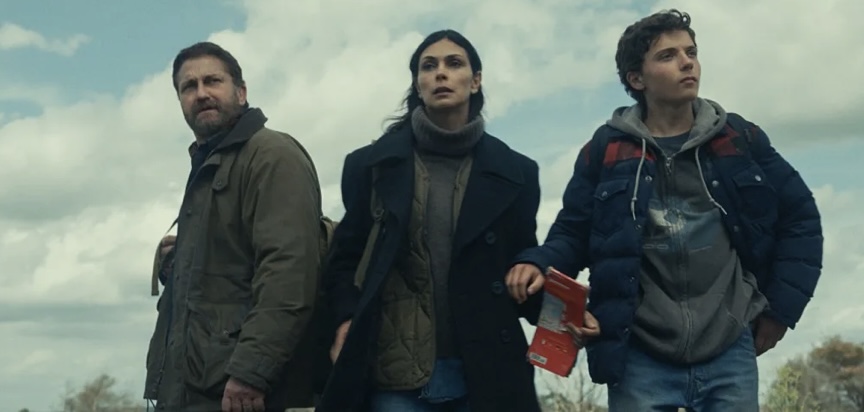
While the original Greenland (2020) surprised audiences with its grounded approach to apocalyptic chaos, the sequel raises the stakes, introducing new characters, expanded world-building, and a heightened sense of urgency. For fans of disaster films, Migration feels less like a simple sequel and more like an escalation—bigger, louder, and more emotionally resonant.
A Sequel Built on Escalation and Evolution
One of the biggest differences between Greenland and Greenland 2: Migration is its increased focus on action. The first film leaned heavily on tension, dread, and emotional survival, capturing the fear of a family navigating the collapse of modern civilization. It was more about the psychological terror of extinction than explosive set pieces.
Migration, on the other hand, shifts into higher gear. With new characters entering the story and the world further along in its collapse, the sequel embraces a more adventurous, high-stakes tone. Action sequences are more frequent, the pacing is faster, and the sense of danger feels constant rather than looming.
This evolution reflects a common pattern in sequels: once the audience understands the premise, the story can expand outward. In Migration, that expansion means broader landscapes, new threats, and a world that feels fully reshaped by catastrophe.
The Challenges Behind the Original Film
The first Greenland faced significant production challenges, particularly related to environmental conditions and the climate in which filming took place. Disaster movies often require harsh, remote locations to achieve realism, and Greenland was no exception.
Filming under unpredictable conditions created logistical chaos for the cast and crew. Weather, terrain, and the physical demands of shooting intense survival scenes added complexity to production. Despite these obstacles, the film ultimately delivered a compelling and emotionally grounded experience, resonating with audiences who appreciated its realism.
What made the first film memorable wasn’t just the spectacle—it was the emotional core. The story of a family trying to survive an extinction-level event felt intimate and human, making the disaster feel personal rather than abstract.
More Action, New Characters, Bigger World
In Greenland 2: Migration, the story expands beyond the initial survival journey, introducing new characters who bring additional dynamics and conflict to the narrative. New personalities mean new motivations, alliances, and tensions—elements that naturally drive more action and drama.
The sequel leans into the idea that survival is no longer just about escaping disaster, but about adapting to a transformed world. Migration itself becomes a theme, representing not just physical movement, but emotional and psychological evolution.
Action sequences are more frequent and more intense, reflecting the idea that humanity is no longer reacting to catastrophe—it is living inside it. From survival challenges to confrontations with the environment and other survivors, the film amplifies its stakes at every turn.
Gerard Butler’s Return and the Franchise’s Identity
Gerard Butler’s return anchors the franchise. His presence connects Migration to the emotional core of the original film while allowing the sequel to expand in scale. Butler’s character continues to embody resilience, parental instinct, and the moral dilemmas of survival in a collapsed world.
In many ways, Butler’s performance is the emotional through-line of the franchise. While the world grows bigger and more chaotic, his character keeps the story grounded in human emotion. That balance between spectacle and sincerity is what separates Greenland from many generic disaster films.
From Survival Thriller to Emotional Epic
While Migration increases its action, it doesn’t abandon the emotional tone that made the first film resonate. Disaster films often struggle to balance spectacle with character development, but the Greenland franchise has consistently prioritized emotional storytelling.
The sequel reportedly builds on that foundation, delivering moments of tension, sacrifice, and hope. In a genre often dominated by explosions and CGI destruction, Migration continues to focus on relationships—between family members, between strangers, and between humanity and its changing world.
This emotional continuity is crucial. Without it, the sequel would risk becoming just another loud action film. Instead, it aims to remain a survival drama with blockbuster elements.
Why Disaster Films Still Matter
Disaster movies have always reflected societal fears. From nuclear annihilation during the Cold War to climate collapse in modern cinema, the genre evolves alongside real-world anxieties.
Greenland arrived at a time when global uncertainty felt especially real, and its grounded portrayal of societal breakdown resonated with audiences. Migration builds on that relevance, exploring what happens after disaster—how people rebuild, adapt, and redefine survival.
The sequel’s focus on migration mirrors real-world themes of displacement, resilience, and survival in the face of environmental and societal upheaval. In that sense, the film is more than entertainment—it’s a reflection of contemporary fears and hopes.
A Bigger Sequel with a Deeper Message
Greenland 2: Migration represents a natural evolution for the franchise. The first film established the emotional stakes; the sequel expands the world and intensifies the action. New characters, larger set pieces, and deeper world-building give the story a broader scope, while returning emotional elements keep it grounded.
For fans of the original, Migration offers more of what worked—tension, heart, and survival drama—while delivering the spectacle expected from a big-budget sequel. For newcomers, it serves as a high-stakes entry point into a franchise that prioritizes both action and humanity.
Final Thoughts: A Sequel That Aims Higher
In a genre crowded with CGI-heavy spectacles, Greenland 2: Migration stands out by attempting to balance action with emotional storytelling. The added action and new characters give the sequel momentum, while the returning themes of family and survival provide continuity and depth.
Whether Migration surpasses the original will depend on how well it maintains that balance. But one thing is clear: the franchise is no longer just about surviving the end of the world—it’s about what comes after.
And in a world that often feels uncertain, that message might be the most compelling disaster story of all.