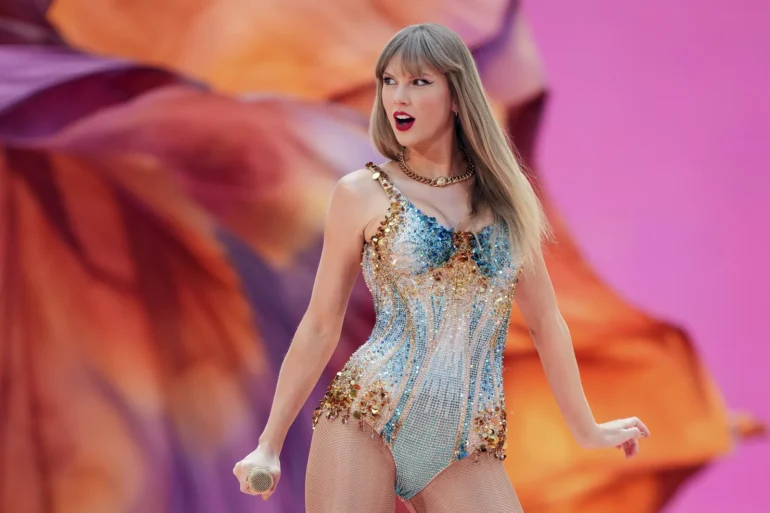
Taylor Swift, once the introspective singer-songwriter crafting narratives of heartbreak and revenge, now stands as the radiant queen of the NFL, declaring that Travis Kelce makes her “happy, confident, and free.” This pronouncement, delivered during an awards speech, wasn’t just a personal affirmation; it was the latest, and perhaps most definitive, stroke in a carefully orchestrated rebrand. But beneath the veneer of effortless bliss lies a complex calculation: How much of this happiness is genuine, how much is strategic, and what does it reveal about the evolving dynamics of fame, power, and authenticity in the 21st century?
Swift’s journey from Nashville ingénue to global icon has been marked by distinct phases, each meticulously managed. Her early career, built on country twang and teenage diary entries, established her as an accessible, relatable voice for young women. Tracks like “Teardrops on My Guitar” and “You Belong With Me” resonated with a generation navigating the complexities of adolescence. This persona was carefully cultivated, with Swift engaging directly with fans and presenting herself as the girl next door who just happened to write catchy songs. As her fame grew, Swift began to shed her country roots, experimenting with pop sensibilities and bolder lyrical themes. Albums like *Red* signaled a shift, incorporating electronic elements and exploring more mature subject matter. This transition was not without its critics, some of whom accused Swift of abandoning her original fanbase in pursuit of mainstream success.
The mid-period saw Swift grappling with her public image, particularly in the face of intense media scrutiny and high-profile feuds. The infamous Kanye West incident at the 2009 VMAs cast a long shadow, shaping Swift’s narrative as a victim of celebrity culture. The release of *Reputation* in 2017 marked a turning point. Embracing a darker, edgier aesthetic, Swift seemed to be reclaiming control of her narrative, acknowledging and even satirizing the unflattering portrayals of her in the media. She declared, “There will be no further explanation. There will just be reputation,” signaling a newfound willingness to engage with controversy on her own terms.
However, the recent elevation of her romance with Kansas City Chiefs tight end Travis Kelce represents a stark departure from even the *Reputation* era. The once intensely private Swift has embraced the spotlight, appearing at Kelce’s games, befriending his family, and unabashedly celebrating their relationship. This visibility reached a fever pitch during the 2024 Super Bowl, where Swift’s presence dominated headlines and captivated a global audience. Her post-game celebrations with Kelce became instant memes, solidifying their status as pop culture’s power couple. This overt display of affection and support stands in sharp contrast to Swift’s earlier, more guarded approach to relationships, leading some to question the authenticity of the pairing.
The public reaction to Swift’s romance with Kelce has been predictably polarized. While many fans have celebrated her newfound happiness, others have criticized what they perceive as an excessive display of affection and a calculated attempt to further elevate her brand. Some have accused Swift of using Kelce to tap into a new demographic, while others have questioned the sincerity of their relationship, suggesting it is a mutually beneficial publicity stunt. The constant media coverage has also drawn criticism, with some commentators arguing that it overshadows the achievements of other athletes and perpetuates harmful stereotypes about female fans.
The NFL itself has been accused of capitalizing on the Swift-Kelce phenomenon, strategically incorporating Swift’s presence into its broadcasts and marketing campaigns. This has led to accusations of pandering to female viewers and diluting the sport’s traditional appeal. Even Kelce himself has acknowledged the increased attention, jokingly referring to the “Swifties” who have flocked to NFL games. During an interview he stated: “I’m not gonna lie, when I met her I definitely felt a little pressure”.
Swift’s own statements, while seemingly innocuous, offer glimpses into her motivations. Her declaration of being “happy, confident, and free” can be interpreted as a deliberate attempt to counter previous narratives of heartbreak and victimhood. By aligning herself with Kelce, a charismatic and successful athlete, Swift is projecting an image of strength, empowerment, and unwavering support. This carefully curated image resonates with her fanbase, many of whom see her as a role model for female ambition and success. However, it also raises questions about the pressure to maintain a flawless public image and the potential for sacrificing authenticity in the pursuit of fame and relevance. As Jia Tolentino wrote in *The New Yorker* about the pressures of internet visibility, the always-on nature of modern celebrity demands a constant performance of self.
This situation reveals much about the current cultural moment, particularly the blurring lines between authenticity and performance. In an era dominated by social media and reality television, the pressure to curate a perfect online persona is immense. Celebrities are increasingly expected to be transparent and relatable, yet also aspirational and flawless. This creates a paradoxical situation, where authenticity becomes a commodity to be carefully crafted and marketed. Swift’s embrace of her relationship with Kelce can be seen as a response to this pressure, an attempt to project an image of genuine happiness and connection in a world often perceived as cynical and superficial.

Furthermore, the Swift-Kelce phenomenon highlights the evolving dynamics of power, attention, and influence in the modern media ecosystem. In the past, celebrities relied on traditional media outlets to shape their public image. Today, however, they have more direct control over their narratives, using social media and personal appearances to communicate directly with their fans. Swift has mastered this art, carefully cultivating her brand and leveraging her influence to shape public perception. Her ability to dominate headlines and generate buzz underscores the enduring power of celebrity in a fragmented media landscape. As *Variety* has noted, Swift’s influence extends far beyond the music industry, impacting fashion, sports, and even politics.
However, the long-term impact of this strategy remains to be seen. In a world increasingly skeptical of celebrity culture and authenticity, Swift’s carefully curated image may eventually lose its luster. The constant pressure to maintain a flawless public persona can be exhausting, and the risk of alienating fans with perceived insincerity is ever-present. As cultural tastes evolve and new voices emerge, Swift will need to adapt and reinvent herself to remain relevant. The question is whether she can do so without sacrificing the authenticity that initially endeared her to millions.
Ultimately, Taylor Swift’s journey from indie darling to NFL royalty is a cautionary tale about the price of fame and the challenges of maintaining authenticity in a hyper-mediated world. While her current strategy may be generating headlines and boosting her brand, it remains to be seen whether it will ultimately enhance her legacy. In a rapidly changing cultural landscape, the pursuit of happiness and relevance is a constant negotiation, and the terms of that negotiation are constantly being rewritten. Whether Swift’s current positioning carries weight in the long run will depend on her ability to adapt, evolve, and, perhaps most importantly, remain true to herself, however that self may evolve.