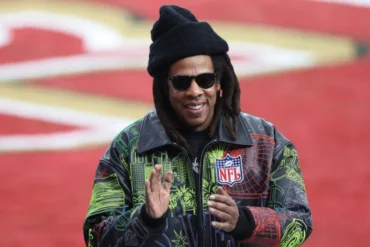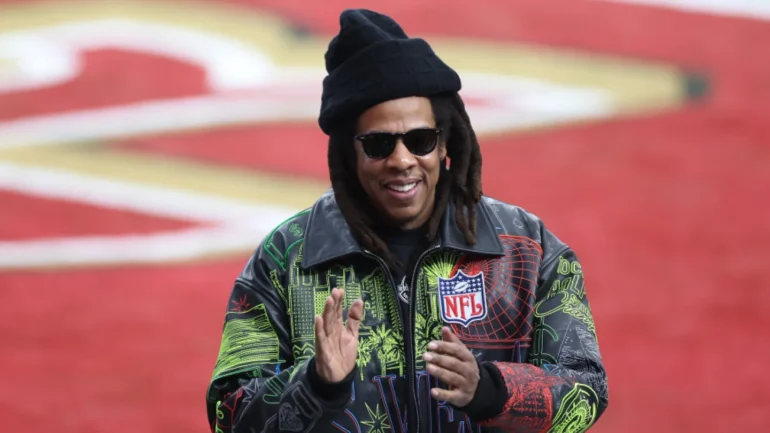
The announcement that Jay-Z will headline the Roots Picnic in 2026 lands with the familiar thud of seismic industry news, yet it also echoes with a complex, almost meta-textual resonance. For an artist who has meticulously cultivated an image of strategic withdrawal and unparalleled business acumen, whose public appearances are less frequent concerts and more carefully curated events, this return to the festival stage, especially one as rooted in hip-hop’s foundational spirit as the Roots Picnic, represents more than just a performance. It’s a statement, a negotiation with his own legend, and a potent reflection of the ever-shifting tides of cultural relevance in an era defined by constant content churn and the relentless pursuit of attention.
Jay-Z’s trajectory has always been a masterclass in brand evolution, a carefully choreographed dance between artistic integrity and commercial empire-building. From the gritty authenticity of his early work on Reasonable Doubt (1996), which painted vivid portraits of street life and aspiration, to the polished, globally recognized mogul persona of today, his public narrative has been one of upward mobility and strategic reinvention. His early pronouncements often focused on survival, authenticity, and the hustle, famously articulating a desire to transcend his environment through sheer force of will and talent. Tracks like ‘Hard Knock Life (Ghetto Anthem)’ cemented his status as a voice for the voiceless, a testament to overcoming adversity. Even as his wealth and influence grew, symbols of his initial struggle and authenticity remained embedded in his mythology, a grounding element for a brand that would soon reach stratospheric heights. He positioned himself not just as a rapper, but as a visionary, a blueprint for Black entrepreneurship in a system designed to limit it.
However, as his empire expanded – encompassing music labels, streaming services, fashion lines, and spirits brands – the lines between artist and executive began to blur, and with them, the perception of his artistic output. The late 2000s and 2010s saw Jay-Z increasingly take on the mantle of elder statesman, his music becoming less about raw catharsis and more about sophisticated pronouncements on success, power, and legacy. This shift, while natural for an artist entering the latter stages of his career, also invited scrutiny. For some, the entrepreneurial triumphs overshadowed the artistic impulse, leading to accusations of becoming detached from the very culture he helped to shape. His highly publicized move to Tidal, a streaming service he championed for artist rights, became a focal point for discussions about his commercial interests, sometimes overshadowing the artistic merit of the music released on it. This period was marked by a deliberate cultivation of a narrative of control and strategic positioning, where even his silences and infrequent releases felt like calculated moves within a larger game.
The Roots Picnic announcement crystallizes this evolution. After years of relative quiet on the touring and festival circuit, punctuated by sporadic, high-profile but contained events like his joint tour with Beyoncé, the decision to headline a major festival signifies a deliberate re-engagement with the live performance arena. This isn’t just a concert; it’s a cultural event. The backlash, while not yet overt, simmers in online discourse. Critics and fans alike will undoubtedly dissect this move: is it a genuine desire to connect with his roots and celebrate hip-hop culture, or a strategic play to reaffirm his relevance in a landscape where new artists constantly vie for dominance? The very nature of a headlining festival slot places him in direct competition for cultural bandwidth, a stark contrast to the curated, almost rarefied atmosphere of his previous solo appearances.
Jay-Z has, at various points, offered glimpses into the motivations behind his public persona. While he rarely engages in direct confessions of strategic maneuvering, his lyrics and interviews often hint at a deep-seated awareness of perception and a desire to control his narrative. In his own words, or through the lens of his artistic output, there’s a consistent theme of calculated risk and self-preservation. He’s spoken about the business of music, the need to evolve, and the imperative of maintaining influence. For instance, in his 2017 album 4:44, he addressed personal and professional matters with a vulnerability that suggested a willingness to confront his own complexities, albeit framed through his established persona. He stated in an interview surrounding the album, “The context is, you know, I’m a human being, I was in a real relationship, I’ve been in a marriage… I’m in the context of my life. So that’s what it is.” This suggests an acknowledgment that even his most personal art is inextricably linked to his public life and the need to communicate it effectively.

Jay-Z’s return to the festival stage at the Roots Picnic is a microcosm of broader cultural trends. It speaks to the eternal tension between legacy and relevance. For artists who have achieved legendary status, the question is no longer just about creating new work, but about how to maintain a connection with a contemporary audience without alienating their established fanbase or compromising their artistic evolution. Authenticity, once the bedrock of hip-hop, has become a more fluid concept, a performance in itself. Is Jay-Z performing the role of the returning icon, or is this a genuine expression of his current artistic and cultural desires? In the modern media ecosystem, power and influence are often measured by attention. A high-profile festival performance is a powerful tool for commanding that attention, reminding the world that even decades into his career, Jay-Z remains a significant cultural force. It’s a strategic assertion of his enduring influence, a way to demonstrate that his power is not solely vested in his business ventures, but also in his ability to command a crowd and resonate with the zeitgeist.
Ultimately, Jay-Z’s headline slot at the Roots Picnic 2026 is less about a singular performance and more about the ongoing narrative of an artist who has mastered the art of reinvention and cultural negotiation. The question that lingers is whether this strategic re-emergence, this seemingly deliberate embrace of a more public, performative role, still holds the same power in an era where everyone is a curator of their own online spectacle. Can the legend of Hov, when placed on the grand stage of a festival, transcend the spectacle itself and deliver a message that resonates beyond the immediate thrill of the performance, or will it become another chapter in the carefully constructed mythology of a man who has always understood the value of being seen, and the even greater value of knowing when to disappear?