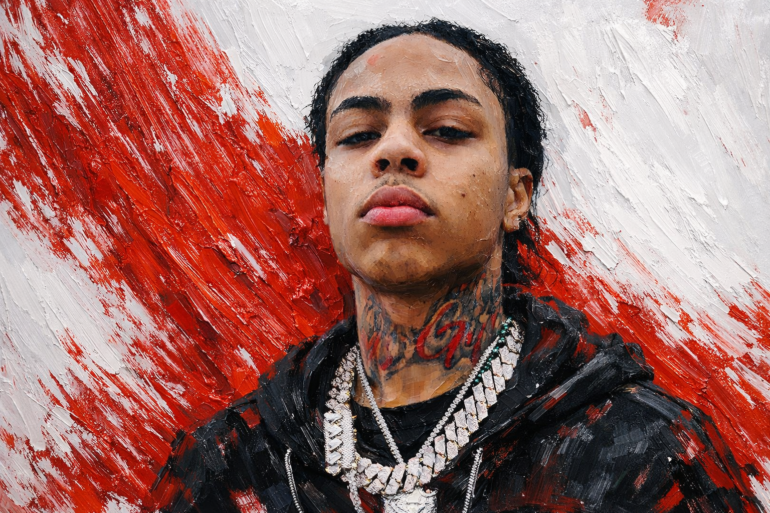
Kay Flock’s rise was fast. His fall was faster.
On Tuesday, a federal judge sentenced the Bronx drill rapper — born Kevin Perez — to 30 years in prison, effectively ending a career that once looked like one of New York drill’s most promising breakthroughs. The sentence followed Perez’s conviction on racketeering conspiracy, attempted murder, and weapons charges tied to a violent spree in the Bronx between 2020 and 2021.
Judge Lewis J. Liman didn’t mince words.
“You taunted, you celebrated, and you helped create a cycle of violence,” Liman said, emphasizing that Perez’s conduct wasn’t just criminal — it was influential.
That influence is the part that matters most.
A Career That Already Had an Exit Ramp
Kay Flock wasn’t sentenced because of lyrics. He wasn’t punished for imagery or bravado alone. He was sentenced because prosecutors proved that the violence was real, repeated, and coordinated — and that it continued after the music opportunity arrived.
That distinction is critical.
Perez had already signed to a label. He had momentum. He had national attention. The exit ramp existed. Instead of taking it, he doubled down on street activity, even as his profile grew. Prosecutors argued — and the court agreed — that the violence didn’t derail his music career; it was used to fuel it.
That choice is what separates this case from the romanticized narratives often invoked in hip-hop lore.
Proof the Door Was Already Open: “Shake It” and the Cardi B Moment
If there was ever a moment that made Kay Flock’s trajectory unmistakably clear, it was “Shake It.”
The 2022 single — featuring Cardi B, Dougie B, and Bory300 — wasn’t just another drill release. It was a cosign from one of New York’s most powerful artists, a signal that Perez had crossed from neighborhood buzz into mainstream visibility. Cardi B does not casually attach her name to emerging artists, especially those without real momentum, and her appearance on the record placed Kay Flock squarely inside a lineage of Bronx-to-global success stories.
The collaboration mattered beyond streams and charts. It represented institutional validation — label confidence, industry belief, and a viable path forward that very few drill rappers ever reach. In practical terms, it was the clearest evidence that Perez no longer needed street validation to sustain relevance. The music alone was opening doors that violence never could.
That’s what makes the outcome so stark. When prosecutors argued that Perez continued engaging in violent activity even after his career accelerated, “Shake It” was the unspoken exhibit. The opportunity wasn’t hypothetical. It had already arrived. And unlike so many cautionary tales in rap history, this wasn’t about someone never being given a chance — it was about what happened after the chance was unmistakably given
The King Von Comparison — And Why It Matters
Kay Flock himself has spoken publicly about King Von as an influence — a comparison that inevitably surfaced as the sentencing reverberated across the culture.
But the two stories are not the same.
King Von’s most notorious legal troubles pre-dated his rap career. He was not a successful recording artist while allegedly committing the acts that later landed him in court. He was acquitted, then went on to build a formidable rap career rooted in vivid storytelling and authenticity — until his life was cut short by violence unrelated to a conviction.
Kay Flock’s reality is harsher — and more instructive.
Perez was already a rapper. Already visible. Already positioned to leave the streets behind. Yet he chose to remain active in them. The court made clear that this wasn’t about past mistakes catching up to him — it was about ongoing conduct while opportunity was knocking.
King Von was fortunate in court. Kay Flock was not. And the reason why isn’t mystery or fate — it’s timing, choices, and evidence.
A Familiar Pattern, Repeating Faster
Kay Flock’s sentence lands amid a growing list of rappers whose careers collided with federal prosecutions:
- Tekashi 6ix9ine survived a RICO case by cooperating — a decision that saved him decades but permanently altered his standing in the culture.
- Casanova received more than 15 years after pleading guilty in a federal racketeering case.
- The Troy Ave–Taxstone saga, while not a RICO prosecution, remains a cautionary tale of how street conflicts can permanently derail careers — through prison time, legal limbo, or reputational collapse.

These cases differ in detail, but the pattern is consistent: federal courts are not impressed by artistic success. If anything, visibility can worsen the outcome.
The Message Young Artists Are Finally Hearing
For years, the industry debated whether drill music causes violence or merely documents it. Kay Flock’s sentence sidesteps that argument entirely.
This wasn’t about expression.
This was about participation.
Judge Liman acknowledged Perez’s youth, his traumatic upbringing, and the violence he witnessed growing up. But he also made clear that none of that outweighed the harm caused — or the lack of remorse shown afterward.
“To date, you’ve shown no real concern for your victims,” the judge said.
That line lingered.
Because if there is a shift happening in hip-hop right now, it’s this: the illusion that fame insulates street behavior is collapsing. Younger artists are watching peers disappear into federal custody not after decades, but after months of visibility.
Kay Flock’s career wasn’t stolen from him.
It was interrupted by decisions made after success arrived.
And that may be the most uncomfortable truth of all.