For decades, the American way of war was defined by a singular, gold-plated aesthetic: the sleek, multi-million-dollar silhouette of the MQ-9 Reaper or the Tomahawk cruise missile. These were the high-tech avatars of a superpower that preferred to fight from the stratosphere, wielding “exquisite” technology that few other nations could afford, let alone replicate. To look at an American drone was to look at a symbol of untouchable, expensive hegemony.
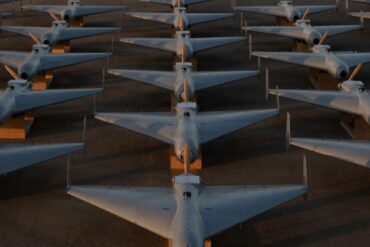
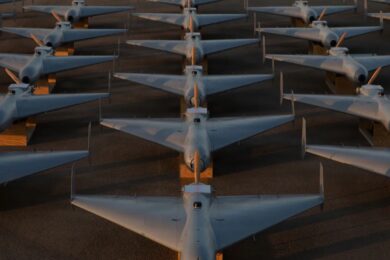
But last week, over the desert skies of the Middle East, that silhouette fundamentally changed. During Operation Epic Fury, U.S. Central Command (CENTCOM) confirmed the first combat deployment of the Low-cost Unmanned Combat Attack System (LUCAS), a “one-way” kamikaze drone that looks remarkably—and intentionally—familiar. It is a 1:1 reverse-engineered clone of the Iranian Shahed-136. By striking Iranian targets with a weapon modeled after Tehran’s own signature export, Washington has done more than just update its arsenal; it has entered a “Mirror War.” This shift marks a profound cultural and strategic transformation, where the world’s most sophisticated military has decided that the best way to beat an insurgent power is to stop acting like a superpower and start acting like the competition.
The Blueprint of Retribution
The transformation of the U.S. military from a purveyor of high-end platforms to a producer of “attritable” clones did not happen overnight. It is the result of a rapid, almost desperate, evolution triggered by the changing winds of global conflict.
• The Age of the Predator (2001–2021): For twenty years, the U.S. drone reputation was built on the Predator and Reaper programs—expensive, reusable, and piloted from half a world away. These were symbols of a “surgical” war, where cost was no object in the pursuit of precision.
• The Shahed Shock (2022–2024): The paradigm shifted when Russia began launching thousands of Iranian-made Shahed-136 drones against Ukraine. Suddenly, the world saw that a $35,000 “lawnmower in the sky” could overwhelm multi-million-dollar air defense systems. The U.S. military, watching from the sidelines, realized its high-end interceptors were being defeated by the simple math of the “cost-exchange ratio.”
• Task Force Scorpion Strike (2025–2026): In December 2025, Secretary of War Pete Hegseth directed the formation of Task Force Scorpion Strike. Their mandate was blunt: “flip the script.” By reverse-engineering a captured Shahed, the U.S. military produced the LUCAS, a drone that matches the Iranian design in form, fit, and function. The recent strikes in Iran represent the crystallization of this “American-made retribution.”
The Irony of the Clone
The deployment of the LUCAS drone has sparked a firestorm of debate, though the “feud” is less about the ethics of the strike and more about the symbolism of the weapon. Industry insiders at The War Zone and DefenseScoop have noted the high irony: the U.S. is now using a “counterfeit” of an adversary’s technology to defend its status as a global leader.
Reaction from the defense establishment has been a mix of pragmatic applause and quiet existential dread. Some argue that by adopting the Shahed design, the U.S. is finally admitting that the era of “exquisite” dominance is over. Others, particularly within the traditional aerospace lobby, see the LUCAS as a threat to the long-standing military-industrial complex that thrives on billion-dollar contracts. Meanwhile, on social media, the framing of “American-made retribution” has turned the drone into a mascot for a new, more aggressive brand of digital-age nationalism.
Strategy Over Symbolism
The U.S. military has been uncharacteristically transparent about its motivations. This isn’t a secret black-op; it’s a public performance of strategic mimicry. Navy Capt. Tim Hawkins, a CENTCOM spokesperson, told reporters that the adoption of low-cost drones is “part of the joint force effort to neutralize imminent threats.”
Implicit in the Pentagon’s budget documents and public statements is the admission that the U.S. can no longer afford to be “too good” to use cheap tools. Former special operations soldiers, like Brett Velicovich, have emphasized that the use of an Iranian-modeled design was “intentional.” It is a psychological play: telling Tehran that their most successful asymmetric advantage has been neutralized, duplicated, and improved upon.
Cultural Analysis: The Superpower in the Mirror

Zooming out, the “LUCAS-Shahed” saga reveals a deeper shift in the modern cultural and media ecosystem. We are moving away from an era of Legacy Authority—where power was derived from exclusive, proprietary secrets—to an era of Tactical Performance, where power is derived from the ability to iterate and weaponize the zeitgeist faster than your opponent.
• Authenticity vs. Utility: In the past, the U.S. military prided itself on the “authenticity” of its innovation. Now, it is embracing the “performance” of the copy. This reflects a broader cultural pattern where the “original” matters less than the “effective.” We see this in everything from fashion “dupes” to software open-sourcing; the U.S. military is effectively “dupe-ing” its way to victory.
• The Democratication of Destruction: By lowering the cost of a strike from $16 million to $35,000, the U.S. is participating in the democratization of high-intensity warfare. It signals a move toward “swarming” and “mass,” mirroring how information and influence move in the modern internet age—through volume and saturation rather than single, authoritative voices.
• Loss of the “Superpower” Aesthetic: There is a certain loss of prestige in using a clone. By mirroring Iran, the U.S. risks losing the “moral” or “technological” high ground that its unique silhouettes once provided. It suggests that in 2026, cultural authority is no longer granted by being different; it is contested by being better at being the same.
Conclusion: Retribution or Regression?
The deployment of the LUCAS drone places the United States in a strange new position in the global landscape. While the strikes have been tactically successful, they leave us with a reflective question: Does the strategy of mimicry still carry the weight of a superpower?
By using Iran’s blueprint, Washington has successfully “flipped the script,” but it has also validated the very tactics that have plagued traditional defenses for years. In a world where everyone is now using the same low-cost, high-impact playbook, the difference between a global guardian and a regional insurgent becomes dangerously thin. As the Mirror War continues, the U.S. must decide if it wants to be the architect of the future, or merely the world’s most efficient copycat