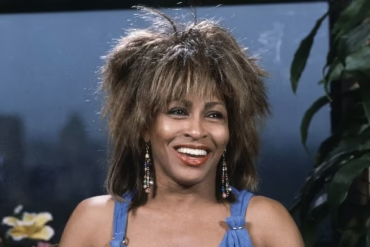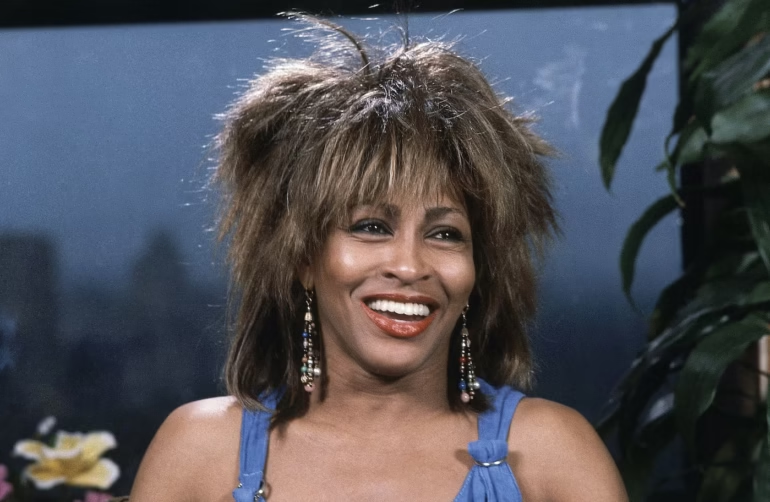
Tina Turner, a titan of rock and roll whose voice and image embodied fierce independence and raw power, has recently seen the majority of her music rights, name, and likeness sold to the investment firm Pophouse. This transaction, reported to be in the nine-figure range, represents more than just a business deal; it signifies a profound cultural moment in how the legacies of music icons are managed, monetized, and ultimately, preserved in the digital age. It’s a stark contrast to the image of the self-made artist battling against the grain, a narrative that defined Turner’s public persona for decades.
Turner’s career was a masterclass in reinvention and resilience. From her early days with Ike Turner in the 1960s, she endured a tumultuous personal and professional relationship that she later detailed in her memoir, transforming herself from a victim of abuse into a global solo superstar. Her 1980s comeback, fueled by albums like Private Dancer and anthems such as “What’s Love Got to Do with It” and “The Best,” cemented her status as an enduring icon. Her live performances were legendary, pulsating with an energy that belied her years, and her image—a cascade of powerful hair and electrifying stage presence—became synonymous with strength and liberation. This era positioned her not just as a musician, but as a symbol of overcoming adversity and reclaiming one’s narrative.
Throughout her career, Turner often emphasized artistic control and personal agency. Her powerful stage persona and public statements consistently underscored a fierce dedication to her craft and a refusal to be marginalized. While the details of her personal finances were never a public spectacle, her artistic integrity and the control over her image appeared paramount. This public perception of a self-determined artist, one who had fought for every inch of her success, makes the recent sale of her name, image, and music catalog a notable pivot. It’s a transaction that speaks to the evolving financial realities for artists, particularly those whose peak earning years have passed but whose legacies continue to hold immense commercial value.
The sale itself has generated considerable discussion. Pophouse, a firm co-founded by ABBA member Björn Ulvaeus, specializes in acquiring and developing music IP, aiming to build sustainable businesses around artists’ estates. Their investment in Turner’s catalog signals a belief in the long-term marketability of her brand, viewing her name, image, and music as valuable assets in an increasingly fragmented entertainment landscape. This approach, while financially shrewd, invites scrutiny regarding the commodification of an artist’s life and work, particularly an artist who so powerfully represented personal autonomy. For fans who grew up with Turner as a symbol of unyielding spirit, the idea of her enduring legacy being managed by a corporate entity can feel dissonant.
The public reaction, while not a widespread outcry, has been characterized by a degree of contemplation. Critics and fans alike have pondered what this means for the ‘ownership’ of an artist’s legacy. In an industry where artists have historically fought for control over their masters and their image, such large-scale sales to investment firms represent a new frontier. While artists have always licensed their music for commercial use, the outright sale of name, likeness, and a majority of music rights is a more comprehensive approach to monetizing a career’s worth of creative output. This trend is not unique to Turner; numerous artists, from Bruce Springsteen to Bob Dylan, have sold substantial portions of their music catalogs in recent years, primarily to secure their financial future and that of their heirs, but also to leverage their IP in new ventures.
Turner herself, in her later years, had begun to step back from the intense demands of global superstardom. She retired from performing in 2009 and largely withdrew from public life, focusing on her private life in Switzerland. Her 2018 documentary, Tina, offered a candid look at her life, including the hardships she faced, and her 2020 memoir, My Love Story, further explored her personal journey. While these projects offered new insights, they also served as a form of narrative curation, a way to shape her public story before her passing. The Pophouse deal, executed posthumously, can be seen as a continuation of this narrative management, ensuring her artistic and commercial presence continues, albeit under new stewardship.

This transaction reflects a broader cultural shift in how we engage with the legacies of cultural icons. In an era dominated by streaming, social media, and the constant demand for new content, established artists’ catalogs are increasingly viewed as stable, high-yield assets. The ‘value’ of an artist is no longer solely tied to their ongoing creative output but to the enduring appeal and commercial potential of their past work and brand. The tension between ‘legacy’ and ‘relevance’ is palpable. While Turner’s music remains timeless, its commercial future is now intricately linked to strategies designed to maintain and grow its market presence through Pophouse’s expertise. This raises questions about authenticity versus performance; while Turner’s performances were undeniably authentic expressions of her artistry, the ongoing management of her legacy becomes a form of performance in itself, managed by others to maximize its commercial and cultural footprint.
The modern media ecosystem is one where attention is the ultimate currency. For artists, especially those past their touring prime, ensuring continued relevance and influence often means finding new ways to engage audiences and leverage their intellectual property. The sale to Pophouse is a strategic move to ensure Turner’s brand remains a potent force, capable of generating new revenue streams through synchronization, merchandise, and potential new projects leveraging her name and music. It speaks to the power dynamics inherent in the industry, where even the most iconic figures eventually become part of a larger economic machine that seeks to optimize their value for future generations.
Ultimately, the sale of Tina Turner’s name, image, and music rights to Pophouse is a complex transaction that mirrors the evolving economics of cultural influence. It’s a testament to Turner’s enduring power and the sustained demand for her artistic output. Yet, it also underscores a significant cultural transformation: the professionalization and financialization of legacy. As artists and their estates navigate the digital age, such deals represent a pragmatic approach to ensuring a lasting impact and financial security. The question remains, however, whether this corporate stewardship, however well-intentioned, can fully capture the untamed spirit and defiant independence that made Tina Turner an unparalleled force in the first place. Her legacy, now a carefully managed asset, continues to resonate, but its future narrative will be shaped not just by her indelible work, but by the strategic vision of those who now hold the keys to her empire.