If 2025 proved anything, it’s that albums still matter — not as streaming bundles or algorithm fodder, but as cultural markers with measurable impact. This was the year where artists either dictated terms with numbers and narratives, or chased relevance in a crowded market and barely registered. Below are the five albums that actually shaped the year.
1) Cardi B — AM I THE DRAMA?
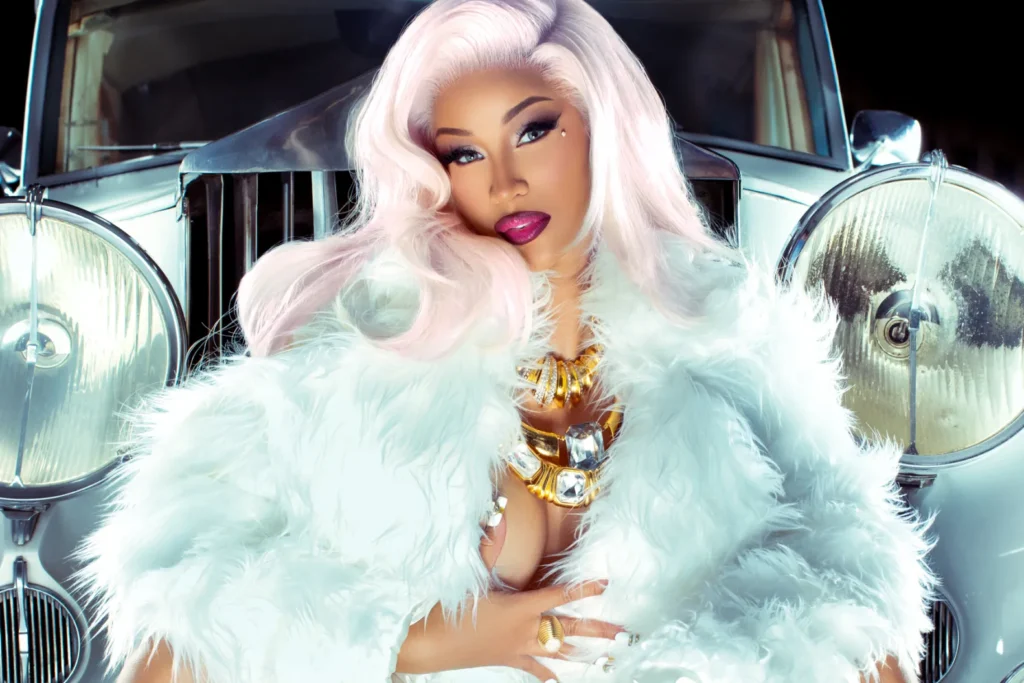
Key week: Debuted No. 1 on the Billboard 200 with 200,000 first-week equivalent units, driven by 145.72M on-demand streams (SEA). Source: Billboard
Cardi B didn’t just come back — she returned on her own turf. Am I the Drama? arrived as one of the most anticipated sophomore albums in history, and the Bronx queen’s promotional campaign echoed that fact by leaning into the very streets she once rode daily. True to her roots, Cardi took the album directly to New Yorkers, hitting the NYC subway system with pop-up promo events, posters, and even herself appearing down in the stations to hype Am I the Drama? where so many of her daily commutes once began and ended.
But Cardi didn’t leave the campaign to posters and platform appearances. In a culturally tuned partnership with DoorDash, she and the delivery platform launched The Cardi Bodega inside the DoorDash app, letting fans order curated snacks, signed CDs, and vinyl copies of the album alongside their food — a playful convergence of music and everyday life straight to people’s doors.
This wasn’t stunt marketing. It was Cardi B reframing the way a major album rollout can feel intimately local and unabashedly personal. Where most pop stars treat NYC as a backdrop, she treated it like home — the place that shaped her cadence, her jokes, her best lines.
On the record itself, she made up for nearly a decade of waiting with a fiery return that refuses to coast on nostalgia. Am I the Drama? carries every bit of the personality that made her a star, and then asks for more: more attitude, more confrontation, more unforgettable one-liners. Cardi lands harder because she’s seen every rumor, lived through every headline, and now uses all of it as ammunition for one of the boldest statements in rap all year.
And behind the theatrics — the Hitchcock-tinged visuals, the explosive opening cut, the roster of features that range from Cash Cobain to Tyla, and high-spirited pop turns with Selena Gomez and Janet Jackson — there’s a sense that Cardi’s finally letting the music take center stage again. She isn’t just reclaiming her place in the culture — she’s asserting it with the brash confidence that made her a defining figure in hip-hop the first time around.
In 2025, Am I the Drama? didn’t just land — it exploded back into the conversation, on the platforms she grew up with and the streets that helped make her one of the most distinctive voices in music.
2) Taylor Swift — The Life of a Showgirl
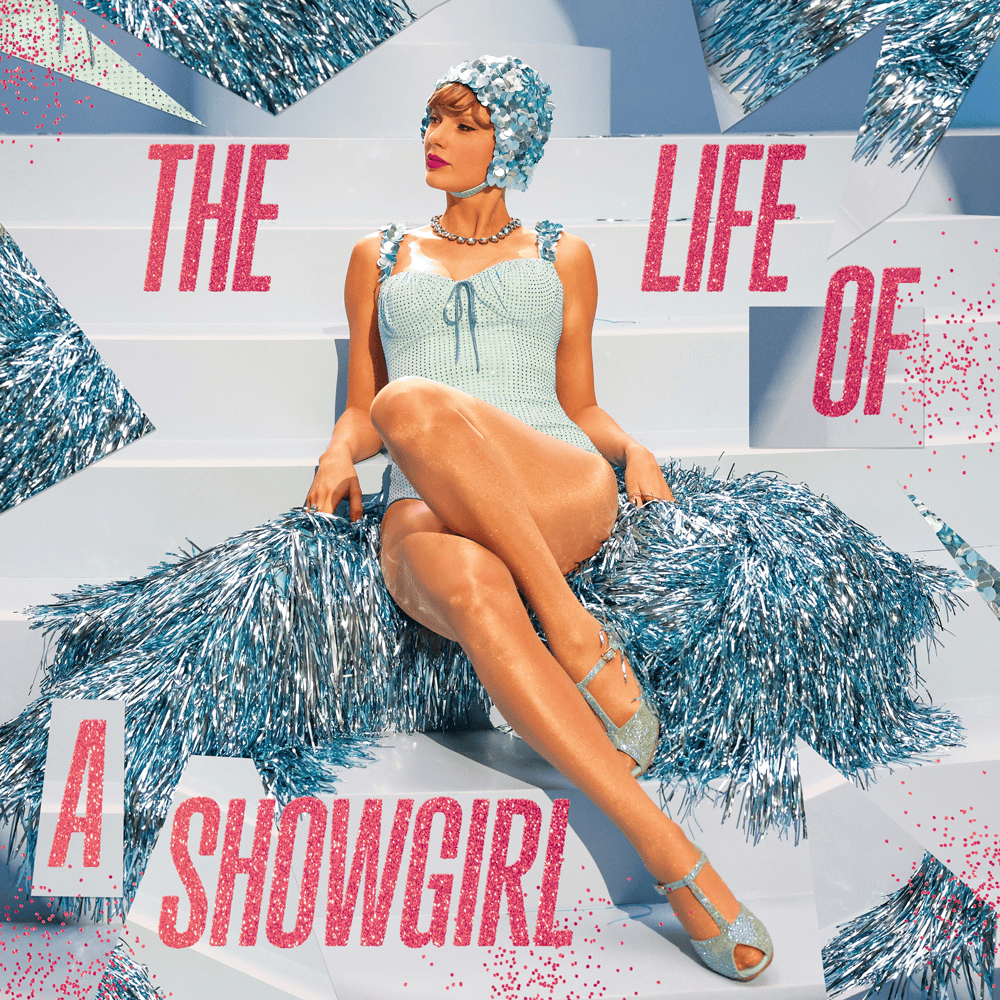
Key week: Debuted No. 1 on the Billboard 200 with a reported 4.002 million equivalent album units in the U.S. Source: Billboard
Taylor Swift entered 2025 with a luxury no other pop artist enjoys: she didn’t need a hit to win the year. She already owned it. Before The Life of a Showgirl even arrived, it was functionally inevitable — the biggest pop album of the year by default, powered by the Eras Tour, algorithmic dominance, and a catalog so massive it continues to generate new No. 1s years after release. When Swift dropped the album, it didn’t feel like a launch. It felt like a coronation.
Showgirl is Swift at full command of spectacle. The rollout alone bordered on performance art: announcing the album on Travis Kelce’s podcast, premiering an extended “official release party” film in hundreds of AMC theaters nationwide, Target exclusives, mall activations, TikTok effects, themed cupcakes. It was pop stardom rendered infrastructural. Swift wasn’t just releasing music — she was activating an economy.
And the songs arrived as prized commodities, as they always do. Swift understands better than anyone that attention is affection, and The Life of a Showgirl is obsessed — knowingly — with fame, romance, marriage, legacy, and the performance of happiness under a microscope. On “Elizabeth Taylor,” she toys with celebrity mythmaking and marital gossip, folding old Hollywood symbolism into her own tabloid-scale life. It’s clever, self-aware, and very Swift: world-historic gossip repackaged as pop confession.
Musically, the album signals a conscious pivot away from bloat. Twelve tracks. No Jack Antonoff. The return of Max Martin and Shellback. The framing suggested a comeback to big, fun, retro-leaning pop — rhinestones, glitter, momentum. And at its best, Showgirl delivers exactly that. Swift remains unmatched at writing melodies that feel instantly lived-in, and even when you think you’re tired of her, a song will pull you back in the way “Wildest Dreams” always does.
But The Life of a Showgirl doesn’t ultimately feel like a reinvention — and that’s the one reason it doesn’t take the top spot. This isn’t Reputation. It isn’t Folklore. It doesn’t redraw the map. Instead, it consolidates territory Swift already owns. The album moves confidently through familiar terrain: memoir-as-myth, diss records, high school memory, romantic destiny, happily-ever-after inching closer. The soundalikes are intentional, obvious, almost brazen — famous songs refracted through the genre of “Taylor Swift song.” It’s less about discovery than replication at the highest possible level.
That predictability doesn’t sink the album — it contextualizes it. The Life of a Showgirl is not about evolution so much as maintenance of dominance. Swift doesn’t need to chase culture anymore; culture waits for her to arrive and adjusts itself accordingly. Even when the production feels conservative, even when the sonic turns aren’t as “new” as advertised, the machine still runs flawlessly.
And there are moments where the ambition peaks. The title track, featuring Sabrina Carpenter, hints at a bigger idea — a glamorous pageant of pop stardom, camaraderie, and artifice — that briefly suggests something bolder. Swift remains a peerless writer of bridges, heel turns, and self-mythologizing lines that stick whether you want them to or not.
If this were judged purely on scale, The Life of a Showgirl would be No. 1 without debate. It dominated charts, conversation, and physical space. Swift ruled the year. She just didn’t change it.
That’s why The Life of a Showgirl lands at No. 2: a masterclass in control, spectacle, and pop architecture — historic in reach, immaculate in execution — but just a step short of being transformative.
3) Olivia Dean — The Art of Loving
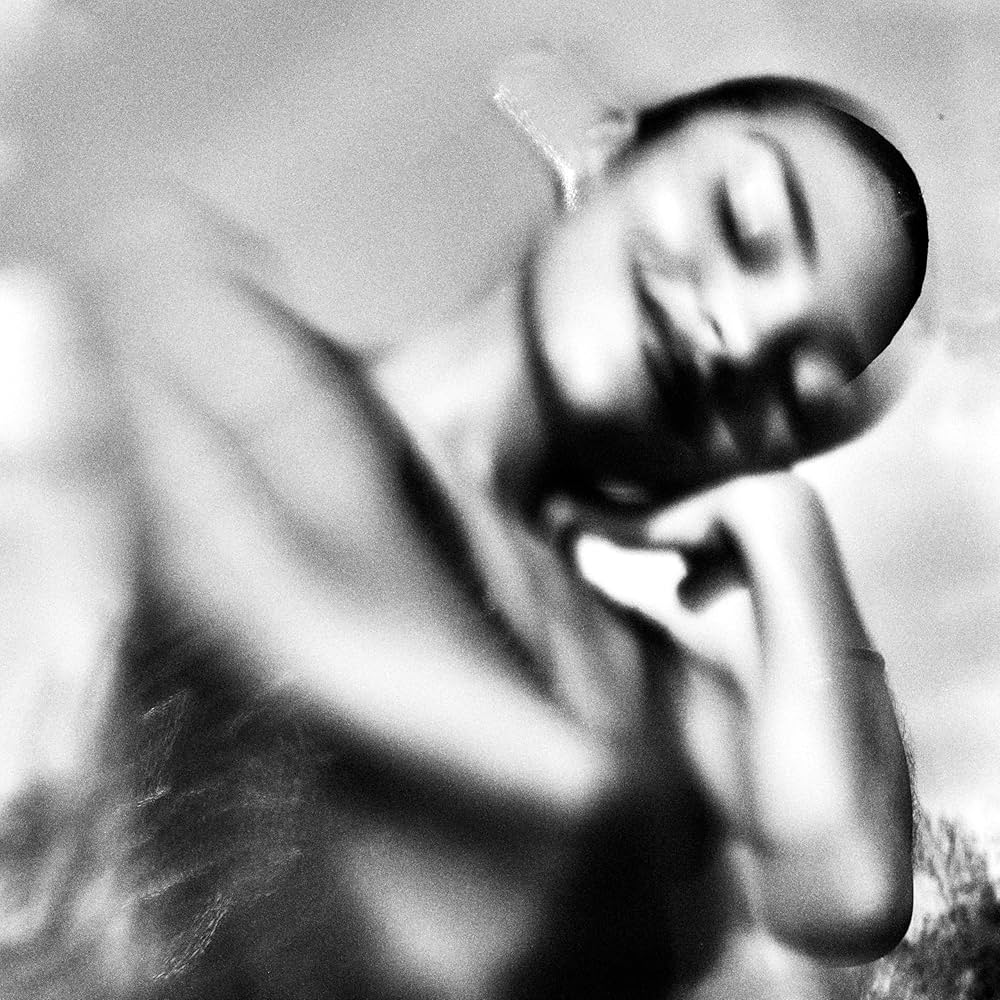
Chart moment: The album hit No. 1 on the U.K.’s Official Albums Chart (and later returned to No. 1). Source: Official Charts
Olivia Dean didn’t compete for attention in 2025 — she let the year come to her. By the time The Art of Loving arrived, her ascent already read like a blueprint for classic British stardom: BRIT School training, early work as a backing vocalist for Rudimental, gradual recognition through BBC Introducing, Glastonbury, and Jools Holland. None of it felt rushed. None of it felt manufactured. The album landed not as a breakthrough grab, but as a natural arrival.
The Art of Loving is built around a deceptively simple idea: love, explored patiently, from every angle. Dean draws from a lineage she’s never hidden — Amy Winehouse, Carole King, the Supremes, Nat King Cole — and doesn’t modernize those references so much as inhabit them. The result feels timeless without being nostalgic, elegant without being stiff. It moves like music from a bygone era that may never have existed, yet feels instantly familiar.
The album’s foundation is restraint. Alongside executive producer Zach Nahome, Dean favors economy over excess: spare bongos that feel borrowed from a Laurel Canyon open mic, a Brill Building–era Rhodes organ, Motown-style vocal flourishes placed exactly where they’re needed. Small details become the emotional center — a delicate piano motif on “Nice to Each Other,” a sudden burst of double-time horns on “Let Alone the One You Love.” Nothing is loud. Everything is intentional.
What keeps the album from feeling precious is Dean herself. Her voice carries an unfussy warmth — neither operatic nor icy, but grounding, steady, and inviting. It’s the kind of voice that doesn’t demand attention so much as reward it. On “So Easy (To Fall in Love),” she captures her own appeal perfectly: “I’m the perfect mix of Saturday night and the rest of your life.” The line lands because the album lives up to it.
There’s an everyday grace to The Art of Loving. Songs like “Man I Need” move with the gentle momentum of a great first date, rhythms keeping time with a quiet optimism. This is music designed to exist alongside life — to score cooking, cleaning, walking, thinking — and in doing so, elevate all of it. The album doesn’t chase drama; it trusts that intimacy is enough.
Dean is also keenly aware of the tradition she’s working within. The visual language around the album — soundstage settings, silver-screen framing — acknowledges the artifice of classic pop without breaking the spell. Her songwriting shines brightest in moments of precision, capturing emotional shifts in a few carefully chosen lines, turning ordinary intimacy into something quietly cinematic.
In a year dominated by scale, spectacle, and speed, The Art of Loving stood out by moving slowly and landing deeply. It didn’t burn hot and disappear. It stayed. And by the end of 2025, Olivia Dean wasn’t just one of the year’s best voices — she was one of its most trusted ones.
4) Bad Bunny — Debí Tirar Más Fotos
Chart moment: Climbed to No. 1 on the Billboard 200, earning 203,500 equivalent units in the U.S. that week. Source: Billboard
Bad Bunny has spent the last six years proving a rare point: you can make music for the masses without sanding down your culture. By the time he entered his 30s, Benito Martínez had nothing left to prove commercially — only something to protect. DeBÍ TiRAR MáS FOToS arrived at a moment when música urbana had fully crossed into the global mainstream and risked being diluted by the very success it fought for. Bad Bunny could have chased features, trophies, and algorithmic scale. Instead, he went home.
Released on January 5 — the eve of Día de los Reyes — DeBÍ TiRAR MáS FOToS is not just an album but a reflection on history, memory, and responsibility. The date alone matters. Puerto Rican identity has long been shaped by exile, resistance, and cultural preservation, dating back to el Grito de Lares in 1868 and the revolutionary networks that formed abroad when political expression was stifled at home. On opener “NUEVAYoL,” Bad Bunny mirrors that lineage, launching his own musical declaration from New York City — the same place exiled revolutionaries once designed the Puerto Rican flag. The track fuses a 1975 El Gran Combo salsa sample with dembow chaos, slicing through generations of Boricua sound like a machete through sugarcane.
This album is deliberate in a way few global pop records dare to be. DTMF threads salsa, plena, bolero, old-school perreo, bachata, and modern urbano into a single body of work without flattening their differences. Hand drums and Afro-Indigenous rhythms live comfortably beside sub-heavy bass and hypnotic synths. Nothing is ornamental. Every reference earns its place.
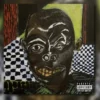
That intention peaks on “BAILE INoLVIDABLE,” a six-minute salsa epic that feels designed to hurt beautifully. Performed with students from el Libre de Música San Juan, the song frames heartbreak as a party that eventually ends — horns swelling, cowbells ringing, grief dancing until it sweats itself out. When Benito sings, “Tú me enseñaste a querer / Me enseñaste a bailar,” it lands less like regret and more like gratitude. The track evokes Tito Nieves in the ’90s and Héctor Lavoe in the ’70s — salseros who understood that joy and pain are not opposites, but partners.
But DTMF is not nostalgia for nostalgia’s sake. It exists in the present tense of Puerto Rico’s reality. Rolling blackouts, aggressive gentrification, tax-incentivized displacement, and the quiet violence of overtourism loom over the record. “TURiSTA” frames romance as a transactional metaphor, while “BOKeTE” uses potholes as a stand-in for deception and neglect. These aren’t protest songs in the traditional sense — they’re lived-in observations, sung from inside the problem.
Bad Bunny extends that lineage through collaboration, centering Puerto Rican voices instead of flattening them. Omar Courtz, Dei V, RaiNao, Wisin, Lorén Aldarondo, and Los Pleneros de la Cresta all appear not as cameos, but as cultural anchors. “CAFé CON RON” resurrects plena — el periódico cantado — as living journalism. “EoO” resurrects perreo sucio as defiance, calling back to the ’90s crackdowns that tried and failed to erase reggaetón from the streets. Even the album’s short film, starring Jacobo Morales, imagines a future Puerto Rico emptied of Boricuas — a warning disguised as fiction.
Perhaps the album’s greatest achievement is who it reached. Older generations who once dismissed música urbana as noise found themselves emotionally pulled back in. Parents. Abuelas. Diasporicans reconnecting through photos, videos, and shared memory. DeBÍ TiRAR MáS FOToS didn’t just preserve culture — it repaired a generational rift.
Bad Bunny brought perreo to the global main stage years ago. With DTMF, he did something harder: he reminded the world where it comes from, why it exists, and what gets lost when success forgets its roots. This wasn’t expansion. It was consolidation — of identity, history, and purpose. And in 2025, that kind of clarity mattered more than any crossover ever could.
5) PARTYNEXTDOOR & Drake — $ome $exy $ongs 4 U (aka $$$4U)
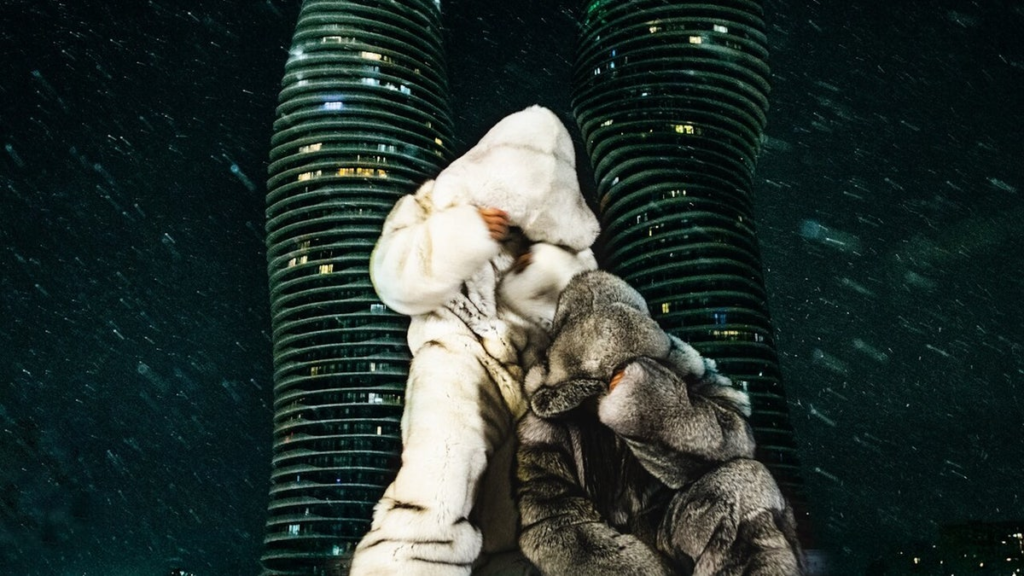
Drake and PARTYNEXTDOOR didn’t need a reinvention in 2025 — they needed alignment. $ome $exy $ongs 4 U arrived without the spectacle of a career reset, yet debuted at No. 1 on the Billboard 200 with 246,000 first-week units, driven almost entirely by streaming. All 21 tracks landed on the Hot 100 in the same week. No viral campaign. No narrative rescue. Just automatic dominance doing what it always does when Drake decides to press play.
What made $$$4U matter wasn’t shock value — it was inevitability. The album didn’t feel like a takeover; it felt like gravity reasserting itself. Even in a year where Drake was framed as reactive, defensive, or past his peak, the industry still reorganized around him. The charts didn’t ask for permission. They made room.
Sonically, the album leaned into what fans always hoped a Drake–PND joint project would sound like: moody, underwater R&B with tension baked into the melodies. The opener, “CN TOWER,” sets the tone like a postcard from home. Two Toronto voices, local symbolism, heartbreak framed against an icon. It doesn’t overreach — it just establishes mood, which is often all this duo needs.
That promise comes into focus on “Somebody Loves Me,” the album’s clearest mission statement. Vintage toxic R&B, stripped of irony, delivered with confidence. When the idea of a Drake–PND album first floated years ago, this is the type of record fans imagined — and it lands exactly where it’s supposed to.
PARTYNEXTDOOR gets his space, too. “Deeper” is quintessential PND — sensual, slippery, fully committed to the dive. It quieted any concern that this would turn into a Drake-heavy event with PARTY reduced to background vocals. Instead, it plays like a reminder of why his presence still matters in this lane.
Then there’s “Gimme a Hug,” the record that turns the temperature up. Drake brings back a familiar competitive energy — punchlines, beat switches, and just enough confrontation to dominate conversation without spiraling into explanation. It’s the sound of someone who knows exactly how loud he still is when he wants to be.
But $$$4U is also unmistakably a 2025 Drake album in one key way: it doesn’t know when to leave. Even in victory, discipline isn’t the priority. The back half drifts. “Meet Your Padre,” featuring Chino Pacas, aims for sultry Spanglish crossover but stretches past its natural lifespan. What could’ve been a sharp moment becomes an extended expedition. “Moth Balls” lands as run-of-the-mill Drake — familiar, functional, unremarkable. “Celibacy” reaches for classic vulnerability but registers more as filler than revelation.
And yet, those weaker cuts almost underline the larger point. Drake doesn’t need a perfect album to control oxygen anymore. He needs a handful of undeniable records, a trusted collaborator, and the gravitational pull does the rest. Even when the album bloats, the ecosystem still tilts in his direction — playlists, discourse, numbers, all recalibrating automatically.
That’s why $ome $exy $ongs 4 U earns its place here. Not because it’s flawless, but because it operated in real time like a reset button. A No. 1 debut. Every track charting. Enough peak Drake–PND chemistry to remind the industry that this lane is still theirs — and still crowded only because everyone else keeps trying to enter it.