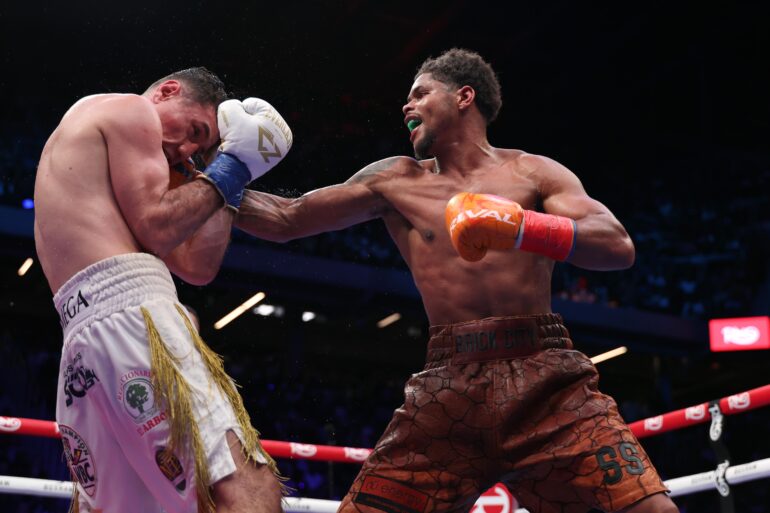
In a recent interview, Shakur Stevenson dropped a bombshell regarding his fight against William Zapeda, sparking a flurry of discussions among boxing enthusiasts. The young champion, known for his strategic prowess in the ring, revealed that his aggressive approach during the bout was partly a response to public criticism of his fighting style.
Stevenson explained that he opted for a more offensive strategy in this fight, wanting to defy the expectations of fans who often labeled him as a ‘runner.’ “Certain times, fighters expect you to do one thing, and sometimes you want to give a fighter the opposite of what they expect you to do,” he said, emphasizing the tactical nature of his decision.
However, what seemed like a calculated move may not be the whole story. I believe that his advisor, Turkey Alashik, played a crucial role in shaping this aggressive style. Alashik’s critique of ‘Tom and Jerry’ fights—where fighters tend to evade rather than engage—has reportedly influenced Stevenson to adopt a more entertaining approach, leading to questions about the authenticity of his strategy.
Critics argue that Stevenson’s performance against Zapeda was more about pressure from fans and his team rather than a genuine desire to showcase his ability. Fighters should not compromise their natural style for crowd approval, as this can lead to unnecessary risks and physical tolls.
In fact, after the fight, Stevenson admitted feeling sore, stating, “I never left the ring feeling like that in none of my fights.” This acknowledgment raised eyebrows and led to a deeper analysis of his fighting capabilities; it appears that the aggressive style he adopted might have posed greater challenges than anticipated.
Furthermore, the debate over whether Zapeda truly possesses knockout power is gaining traction. Stevenson’s comments suggest he felt the weight of Zapeda’s punches, yet some experts contend that big punchers typically don’t need to throw a high volume of punches to be effective. This raises questions about the true nature of Zapeda’s striking ability and whether Stevenson’s performance should indeed be lauded or scrutinized.
As Shakur prepares for future bouts, including a potential clash with Teofimo Lopez, fans are left wondering how this experience will shape his approach moving forward. Will he revert to his defensive style that earned him acclaim, or continue to experiment with his game plan in hopes of appeasing a demanding audience? The boxing community eagerly awaits his next move.
Ultimately, Stevenson’s admission sheds light on the complex dynamics within boxing, where performance expectations and personal style often clash. As we unpack these developments, it serves as a reminder that in boxing, authenticity is key, and fighters must stay true to their own abilities to maintain their edge in the ring.