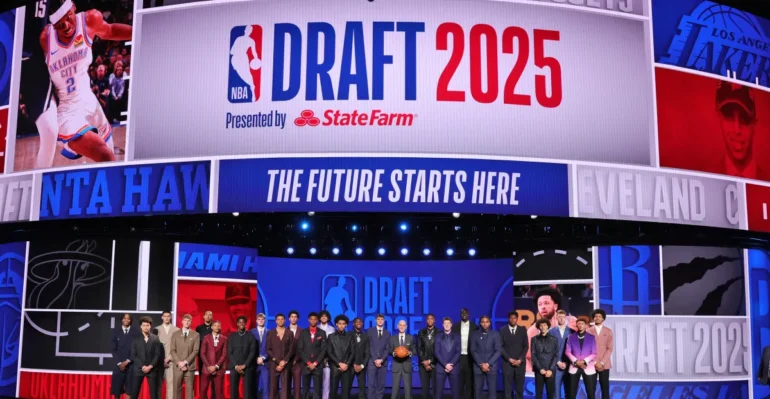
The National Basketball Association’s Board of Governors has enacted significant changes to its draft lottery system, a move poised to reshape the league’s competitive landscape. Sources familiar with the decision, speaking to ESPN, revealed that the lottery will now encompass 16 teams, an expansion from the previous 14. Furthermore, a “relegation zone” has been introduced, where the bottom three teams in the league will face penalties, including diminished chances of securing the No. 1 overall pick. These adjustments are coupled with flattened odds, meaning the gap between the worst teams and those just outside the playoff picture will be narrowed in terms of draft positioning.
This overhaul represents a deliberate effort by the NBA to curb “tanking,” a strategy where teams intentionally underperform to improve their draft prospects. The league has long grappled with the perception that some franchises prioritize future assets over present competitiveness, leading to an uneven playing field and potentially diminishing fan engagement. The new rules aim to disincentivize such practices by making the pursuit of top draft picks less predictable and more challenging for the league’s struggling franchises.
The expansion of the lottery to 16 teams means that more than half of the league’s franchises will now have a theoretical chance at a top draft pick. Historically, only the 14 non-playoff teams were eligible. This broader inclusion, however, is counterbalanced by the introduction of the relegation zone. The three teams with the worst records will now face a more severe penalty, receiving worse odds than previously for the No. 1 pick. This dual approach—widening the net of potential lottery participants while simultaneously penalizing the absolute worst—underscores the league’s attempt to strike a delicate balance.
Flattened odds are another critical component of the new system. Under the previous structure, the teams with the fewest wins had a significantly higher probability of landing the top pick. The revised odds aim to create a more equitable distribution, reducing the advantage held by the teams at the very bottom. This change is intended to make the draft lottery outcome less predictable and to encourage all teams, regardless of their record, to compete throughout the season.
The cultural implications of these changes are substantial. For years, the NBA draft has been a focal point for rebuilding teams, with the allure of a generational talent often fueling fan hope. The “tanking” narrative, while often criticized, also became an intrinsic part of the league’s offseason discourse. By altering the lottery mechanics, the NBA is seeking to shift this narrative away from strategic underperformance and towards a more consistent emphasis on on-court competition. This move aligns with the publication’s focus on incisive cultural criticism, examining how such structural shifts impact the broader sports ecosystem and fan perception.
The relevance of these changes extends beyond mere mathematical adjustments. They speak to the NBA’s ongoing evolution as a business and a cultural phenomenon. As [Variety](https://variety.com/) has often reported, the league is constantly seeking ways to optimize fan engagement and maintain competitive parity. This anti-tanking initiative can be viewed as a significant transformation in the league’s approach to team building and season-long competition. The question now is whether these new rules will indeed foster a more balanced and compelling league, or if teams will find new ways to game the system, a perennial challenge in professional sports.

The legacy of the NBA draft is one of transformative impact, with numerous stars emerging from lottery picks. However, the method by which teams acquire these picks has been a persistent point of contention. Authenticity in competition is paramount for maintaining the integrity of the sport, and the NBA’s latest policy aims to reinforce this principle. By penalizing overt tanking, the league is signaling a commitment to rewarding genuine effort and strategic development over calculated losses. This shift from performance-based incentives to a more balanced competitive structure is a significant development worthy of careful analysis.
The effectiveness of these new rules will be closely watched. Will the expanded lottery and the relegation zone truly deter tanking, or will teams adapt their strategies to exploit the new framework? The flattened odds might introduce more randomness, but the fundamental incentive to acquire top talent through the draft remains. As [Billboard](https://www.billboard.com/) might observe in the music industry, innovation often leads to unforeseen consequences. The NBA’s bold move represents a calculated risk, an attempt to refine the game’s narrative and ensure a more compelling product for fans across all 30 franchises. Only time will tell if this drastic measure will achieve its intended outcome of fostering a more balanced and fiercely competitive league from top to bottom.