
Women’s Golf 2026
For nearly a century, Augusta National Golf Club functioned as the ultimate fortress of sporting exclusivity—a place where the grass was manicured to an impossible perfection and the membership roster was guarded with a severity that bordered on the theological. To the public, the club was defined by its “No Women Allowed” policy, a stance famously and contentiously defended for decades as a matter of private club rights. Yet, as the sun sets on the 2026 Augusta National Women’s Amateur (ANWA), the tension is no longer about whether women belong on those hallowed fairways, but rather how the club’s embrace of the women’s game has transformed from a reluctant concession into a masterclass in brand preservation and cultural soft power.
The shift is jarring. We have moved from an era of protest and picketing outside the gates to an era where the world’s best amateurs compete for a trophy that carries the weight of the Masters’ own legacy. This evolution reflects a broader cultural pattern: the realization by legacy institutions that the only way to remain relevant in a diversifying world is to curate the terms of their own disruption.
From Protests to Par-5s: A Timeline of Transformation
The reputation of Augusta National was long anchored in its resistance to change. In the early 2000s, the club became the center of a national firestorm when Martha Burk and the National Council of Women’s Organizations challenged the club’s all-male membership. The response from then-chairman Hootie Johnson was iconic in its defiance: the club would not be forced to change its rules “at the point of a bayonet.” This positioning established Augusta as a symbol of the “Old Guard,” a relic of 20th-century social hierarchies that prioritized tradition over egalitarianism.
By the mid-2010s, however, the silence began to crack. The club admitted its first female members, including Condoleezza Rice and Darla Moore, in 2012. It was a pivotal “mid-period” shift—a moment of strategic ambiguity where the club signaled progress without fundamentally altering its core identity as an elite bastion. This set the stage for the 2018 announcement of the Augusta National Women’s Amateur.
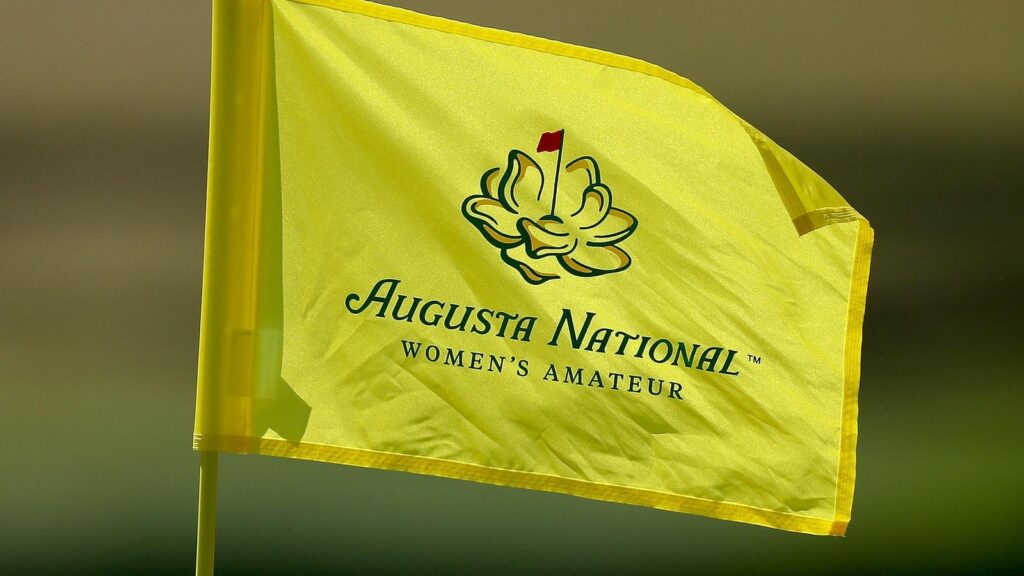
The inaugural event in 2019 was a watershed moment, but the 2026 tournament has crystallized the new reality. No longer is this a “test case.” With a global broadcast reach and an elite field that rivals any professional major, the ANWA has become a cornerstone of the golf calendar. The narrative has shifted from “Why won’t they let them in?” to “Look how much they’ve done for the game.”
The Friction of Progress: Reactions and Industry Pushback
This transformation has not been without its critics. While the industry and media have largely lauded the ANWA as a triumph for golf, there remains a persistent undercurrent of pushback regarding the tournament’s structure. Because only the final round is played at Augusta National—with the first two rounds held at the nearby Champions Retreat—some observers argue the event is a “gilded cage” that offers the appearance of equality while maintaining a spatial hierarchy.
The media framing has been a study in contradictions. Major outlets often oscillate between celebrating the “magic of Augusta” and questioning the performative nature of a three-day tournament that only grants one day on the actual Masters course. Peer reactions within the golf world are similarly split; while LPGA legends have praised the visibility the event provides, some have pointed out the irony that the world’s best female professionals still do not have a recurring major championship presence at the club. This tension reveals a credibility gap: is the ANWA a genuine tool for growth, or is it a shield used to deflect pressure for a full-scale professional Women’s Masters?
Curating Growth: The Strategy of Selective Access
Augusta National’s leadership has been uncharacteristically vocal about their motivations, though the language is often wrapped in the rhetoric of “growing the game.” Former Chairman Fred Ridley and current leadership have frequently cited the desire to inspire young girls as the primary driver behind the ANWA. However, implicitly, there is an acknowledgment of the need for strategic relevance. In an era where corporate sponsors—the IBMs and Mercedes-Benzes of the world—demand alignment with contemporary social values, the ANWA is an essential piece of corporate diplomacy.
By controlling the narrative of inclusion, the club manages its own legacy. It isn’t just about golf; it’s about power and the ability to dictate the speed of social change. As Ridley once noted during a Masters press conference, the club’s mission is to ensure that Augusta remains “the most important place in golf.” To achieve that, they had to move from being an obstacle to being an architect of the sport’s future.
The Macro View: Authenticity and the New Media Ecosystem
The ANWA is a microcosm of a larger cultural phenomenon: the “institutional pivot.” In the modern media ecosystem, legacy brands—from luxury fashion houses to elite universities—are finding that rigid exclusivity is a liability. However, they are also finding that “total” inclusion can dilute the very prestige that makes them valuable.
This creates a tension between authenticity and performance. When we watch the final round of the ANWA, are we seeing a genuine shift in the club’s values, or are we witnessing a highly choreographed performance of progress? Today, cultural authority is gained by those who can successfully navigate this middle ground. Augusta National has managed to keep the “mystique” of the Green Jacket while successfully rebranding itself as a champion of women’s sports. It is a masterful use of influence, proving that in 2026, the most effective way to maintain a hierarchy is to occasionally invite people to the top.
The Weight of the Tradition
As the 2026 Augusta National Women’s Amateur concludes, the subject remains one of the most fascinating case studies in cultural survival. The tournament is undeniably a success—it produces high drama, creates stars, and provides a platform that didn’t exist a decade ago. Yet, the lingering questions about its limitations suggest that the “Augusta Model” of inclusion is still being contested.
In a changing environment where transparency and flat hierarchies are increasingly valued, the club’s strategy of curated, high-stakes inclusion still carries immense weight. But the question remains: for how long? As the audience grows and the players become more prominent, the pressure for the “rest of the story”—a professional women’s event, a full three rounds on the course—will only intensify. For now, Augusta National has bought itself time and relevance by opening its gates just enough to let the world in, while making sure it still holds the keys.