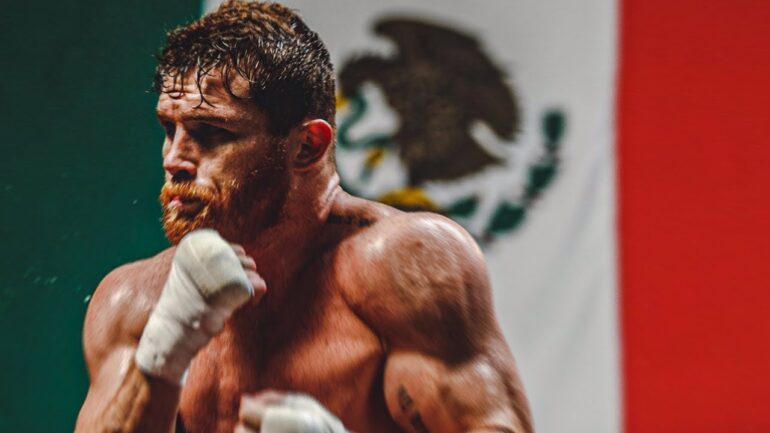
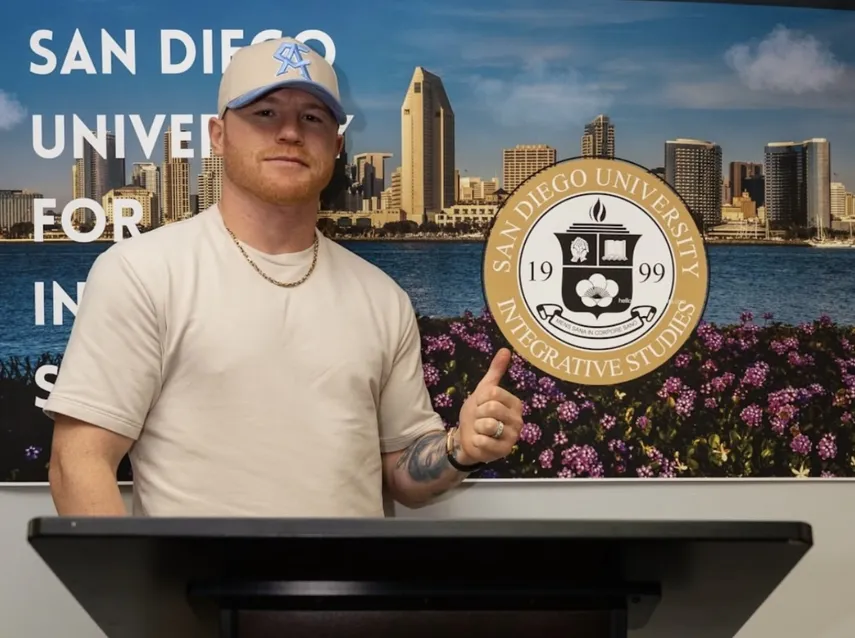
Canelo Alvarez returned back to school on April 2026.
For the better part of two decades, Saul “Canelo” Alvarez has been defined by a singular, violent geometry. His public identity was built on the physics of the counterpunch and the cold calculus of the multi-division title chase. To the world, he was the stoic avatar of Mexican boxing tradition—a man of few words and heavy hands who treated the ring as a laboratory for physical dominance. However, as the 2020s progress, the man once known exclusively for his “No Boxing, No Life” mantra is undergoing a profound transformation. The fighter who once let his fists do the talking is increasingly focused on the lecture, the lesson, and the legacy of institutional knowledge. Canelo is, quite literally and figuratively, heading back to school.
This shift represents more than just a veteran athlete eyeing a post-career retirement plan. It is a calculated move into the realm of cultural and educational authority. By positioning himself as a mentor, a business strategist, and a formal student of the industries he once merely participated in, Alvarez is challenging the “bruised warrior” trope that has historically followed elite pugilists into their twilight years.
The Evolution of the Cinnamon King
The story began with a reputation for precocious, almost silent efficiency. Debuting as a professional at just 15 years old, his early career was characterized by a stoic adherence to the “Old School” of boxing. There was a clear, unshakeable positioning: Canelo was the prodigy who respected his elders but eclipsed them through sheer work ethic. This era was defined by his relationship with the , a partnership that emphasized discipline and a closed-loop inner circle.
The mid-period of his career saw the first cracks in this rigid shell. As he ascended to the status of a , the contradictions began to surface. He was the traditionalist who nevertheless broke away from the traditional promotional structures of Golden Boy Promotions, engaging in a to reclaim his autonomy. This was the moment Alvarez transitioned from a managed asset to a self-managed entity—a student of the business of boxing, even if he hadn’t yet donned the literal cap and gown.
Recent events have crystallized this narrative of the “Scholar-Athlete.” Whether it is his documented interest in or his expanding portfolio of gas stations, the public perception has shifted. He is no longer just the man in the ring; he is the man in the boardroom, and increasingly, the man in the classroom, seeking to formalize the street-smart intuition that built his empire.
The Friction of Authority
This pivot has not been without its detractors. In the hyper-masculine world of professional boxing, any move toward formal education or “soft” intellectualism is often met with skepticism. The often centers on the idea that Canelo has become “distracted” by his pursuit of varied excellence. When a fighter starts talking about business models or educational frameworks, the industry response is often a cynical call to “get back to the gym.”
Furthermore, his peer reactions have been a mix of reverence and rivalry. Younger fighters look to him as a blueprint for financial independence, while veterans often frame his extracurricular interests as a sign of a waning “killer instinct.” The media framing has similarly evolved; what was once a narrative of a champion’s dominance has become a broader discussion on his . Is he a fighter who happens to be smart, or a mogul who happens to fight?
The Strategy of the Pivot
Alvarez has been uncharacteristically transparent about this motivation. He has implicitly acknowledged that the physical gift of boxing is a depreciating asset. “I want to be a billionaire in business,” he told and other outlets in various iterations, “but I also want to learn the why behind the success.” This isn’t just about wealth; it’s about control.
His move toward pedagogical pursuits—whether through formal courses or the mentorship of his own promotional stable—is a strategy for relevance. By becoming a “teacher” of the sport and the business, he ensures that his influence outlasts his reflexes. This is the “back to school” mindset: an admission that the tools used to reach the top are not the same tools required to stay there. It is a move born out of a sophisticated fear of the “ex-athlete” vacuum, a desire to replace the fleeting adrenaline of the knockout with the sustained power of institutional authority.
The Cultural Classroom: Relevance vs. Legacy
Zooming out, Canelo’s evolution reveals a significant shift in how we perceive athletic greatness in the modern media ecosystem. We are witnessing the death of the “pure” athlete. In an era where , Alvarez is participating in a broader cultural pattern where authority must be multi-dimensional to be sustained.
Historically, cultural authority in boxing was gained through tragedy or longevity. Today, it is contested through the mastery of diverse domains. Canelo is navigating the tension between Relevance (the immediate noise of the next fight) and Legacy (the permanent footprint of an intellectual and commercial pioneer). His “back to school” approach reflects a cultural moment where the “polymath” is the new archetype of success. We no longer want our heroes to just be the best at one thing; we want them to be the architects of their own legend, capable of explaining the blueprints.
This reflects a shift in power. In the past, the “brains” were the promoters and the “brawn” was the fighter. By seeking to bridge that gap through formalizing his knowledge, Alvarez is attempting to reclaim the intellectual property of his own career. He is arguing that a fighter’s wisdom is just as valuable as a manager’s strategy, provided it is polished by the rigors of education and systematic thinking.
A New Kind of Championship
As Canelo Alvarez continues to balance the demands of the ring with the rigors of his expanding intellectual and business interests, he stands as a case study for the modern icon. The question is no longer whether he can still take a punch, but whether his “new” identity carries weight in a landscape that is increasingly cynical toward celebrity reinvention.
Does a master of the ring lose his edge when he becomes a student of the world? Or is this the ultimate evolution—a realization that the most important fight is the one for intellectual autonomy? For now, Canelo seems to be betting on the latter. He is proving that while his boxing career will eventually reach its final bell, his tenure as a student of influence is only just beginning. In the shifting sands of today’s cultural landscape, the most dangerous man in the room is no longer the one with the fastest hands, but the one with the most comprehensive syllabus.