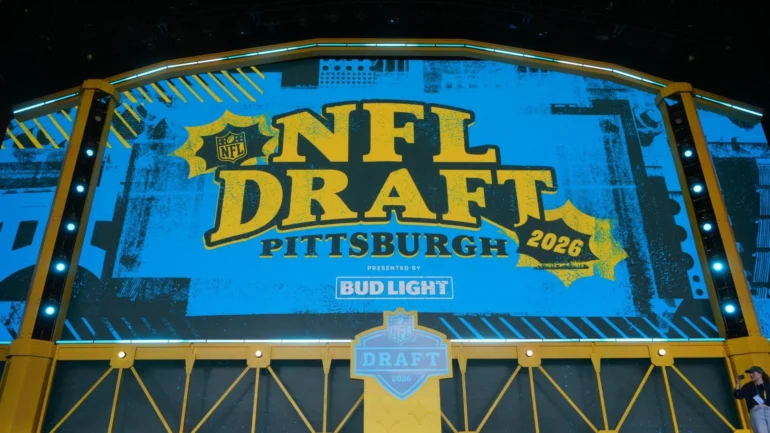
2026 NFL Draft is going to be hosted in Pittsburgh.
In 1936, the inaugural NFL Draft was held in a smoke-filled room at Philadelphia’s Ritz-Carlton Hotel. There were no cameras, no fans, and certainly no billion-dollar marketing engines. Selection was a functional necessity, a way to keep a fledgling league from collapsing under its own regional imbalances. Fast forward ninety years to Pittsburgh, and the 2026 NFL Draft has transformed into a neo-industrial spectacle, expected to draw over 700,000 people to the banks of the Allegheny.
But beneath the high-definition pyrotechnics and the “Draft Experience” fan festivals, a tectonic shift has occurred that has little to do with hospitality and everything to do with the fundamental mechanics of the “American Dream” pipeline. For decades, the Draft was the ultimate symbol of upward mobility—the moment a young man’s labor finally met its market value. Today, the 2026 class is defined by a paradox: the most talented players are the ones who aren’t there.
The Great Retention: A Timeline of Stalled Departure
The reputation of the NFL Draft was built on the “early entrant”—the generational talent who outgrew the collegiate system and demanded their professional dues. This was the era of Caleb Williams and Drake Maye, where the path to the pros was a sprint.
By the mid-2020s, however, the math began to change. The introduction of Name, Image, and Likeness (NIL) rights didn’t just give players pocket money; it gave them a reason to wait. In 2024, the draft landscape saw the first tremors of this shift as high-tier prospects weighed the risk of a mid-round rookie contract against the immediate liquidity of college collectives.
By March 2026, the trend has crystallized into a mandate. The official list of underclassmen declaring for the draft has plummeted to just 42 names, a staggering drop from the 130-plus declarations seen only a few years prior. The most glaring absence is at the quarterback position. While Fernando Mendoza of Indiana has emerged as the consensus No. 1 overall pick, he is an outlier. Elite prospects like Arch Manning and Dante Moore have chosen the safety of the collegiate harbor over the turbulence of the NFL’s middle-class wage scale.
The Backlash to the “Old School” Narrative
This mass retention has triggered a predictable, if increasingly irrelevant, backlash from the traditional scouting establishment. Critics—often framed by media narratives that prioritize “NFL readiness” and “competitive fire”—have voiced concerns about a “diluted” draft pool. The argument is that by staying in school, players are avoiding the fire that forges greatness.
But the industry response is more nuanced. While Mel Kiper Jr. and other analysts debate the developmental ceilings of older prospects, NFL front offices are forced to confront a new reality: the “Day 2” pick is becoming an endangered species. If a quarterback projects as a third-round selection with a standard rookie contract worth roughly $1 million annually, they are often financially incentivized to remain in college, where NIL deals for starting QBs at major programs can easily exceed five million dollars.
This isn’t a “fear of competition,” as some older pundits suggest; it is a rational response to a market that finally offers an alternative to the NFL’s monopoly on athletic labor.
Strategy Over Symbolism
The subjects of this cultural shift are no longer hiding their motivations behind platitudes about “getting an education.” In the modern media ecosystem, relevance is a commodity, and control is the ultimate goal. Arch Manning’s potential return to Texas, despite massive NFL hype, reflects a family strategy that prioritizes legacy and long-term stability over a quick payday.
The evidence is in the numbers: out of the 63 total players with remaining eligibility who entered the 2026 pool, only one—Alabama’s Ty Simpson—is a quarterback. The rest have implicitly acknowledged that the NFL’s entry-level “opportunity” is no longer the most attractive offer on the table. As one YouTube commentary bluntly put it: “Why take a 4th-round risk when you’re already making more than a 4th-round salary?”
The Performance of Permanence
Zooming out, the 2026 NFL Draft reveals a broader cultural pattern: the death of the “Leap of Faith.” In the 20th century, the American ethos was defined by the bold move—the high school dropout who starts a tech firm, the singer who heads to Nashville with $40 in their pocket, the junior who leaves school early for the pros.
Today, we are in an era of “Talent Retention.” In a volatile economy, the strategy has shifted from seeking influence to preserving it. The NFL Draft, once a celebration of the “new,” has become a celebration of the “proven.” We see this in how prospects are now evaluated; teams increasingly value the “thousands of collegiate snaps” of a 24-year-old rookie over the raw potential of a 20-year-old.
This reflects a modern media ecosystem where authenticity is traded for performance. The college star isn’t just a player; he is a brand with a localized, loyal audience and a guaranteed income stream. Leaving that for the anonymity of an NFL practice squad is no longer a step up—it’s a lateral move at best, and a demotion at worst.
A Changing Landscape
As the Pittsburgh skyline prepares to host the 2026 spectacle, the event finds itself at a crossroads. The NFL has successfully turned the Draft into a “global phenomenon,” as described by NFL Operations, yet the product itself is changing. The “magic” of the draft relied on the idea that the league was plucking the very best talent from the amateur ranks.
But if the best talent is increasingly choosing to stay amateur because “amateurism” pays better, the Draft loses its luster as the definitive arbiter of merit. The 2026 class proves that cultural authority is being contested. The NFL can provide the stage, but it can no longer unilaterally dictate the timing of the performance.
In a world where Arch Manning can wait for the perfect familial landing spot and mid-tier stars can out-earn their pro counterparts while finishing a degree, the “Draft” is no longer a gateway. It is merely one option in a complex ecosystem of influence and equity. The 2026 NFL Draft isn’t just about football; it’s about the moment the laborers realized they held the keys to the factory.