
For more than a decade, Courtney Kemp’s reputation has been tied to one thing: building one of television’s most successful crime franchises.
Through Power and its growing universe of spinoffs, Kemp mastered a recognizable formula. An ambitious antihero. Shifting loyalties. Family conflict. A constant tension between power, survival, and legitimacy. Viewers always understood the central gravity of the story, even when its characters operated in moral gray areas.
With Nemesis, she has done something far more difficult.
She has walked away from the blueprint that made her famous.
When Kemp left Starz and Lionsgate for a landmark deal with Netflix, questions naturally followed. Could the creator behind one of premium cable’s defining franchises evolve beyond the storytelling formula that built her career? Could her voice translate to a global streaming audience without simply recreating Power in a different setting?
Six episodes into Nemesis, the answer appears increasingly clear.
This is not Power on the West Coast.
It is something entirely different.
Rather than asking audiences to rally behind a singular protagonist, Nemesis constantly destabilizes viewer allegiance. The series operates as a psychological chess match between expert thief Coltrane Wilder and detective Isaiah Stiles, refusing to provide the comfort of a clearly defined hero. One moment viewers find themselves invested in Coltrane’s survival. The next, they are rooting for Stiles to gain the upper hand.
That uncertainty has become one of the show’s greatest strengths.

The most impressive aspect of Nemesis is its willingness to continuously reassign narrative importance. Early episodes introduce Amos “Nightmare” Stiles as a relatively minor figure. By episode six, that same character has become the center of a sprawling manhunt involving law enforcement, Isaiah Stiles, and Wilder’s crew. What initially appears insignificant gradually transforms into one of the season’s primary engines.
In an era when many prestige dramas reveal their entire hand within the first few episodes, Kemp demonstrates a remarkable willingness to shift focus and reshape audience expectations. With two episodes remaining, the series still feels unpredictable—a rare achievement in modern television.
That unpredictability aligns with Kemp’s own understanding of the material.
As she recently explained during an interview with NPR:
“One thing I’ve learned in years of making TV: you don’t have to like what a character does. We wanted to address the idea of a nemesis, someone who takes you down because of you. You blow up your whole life by making bad choices.”
The geographical shift is equally significant.
Where Power was deeply rooted in New York City, Nemesis relocates its energy to Los Angeles. The move is more than cosmetic. It changes the atmosphere, pacing, and visual language of the series. The tight, territorial structure that defined Power gives way to a broader and more psychologically driven environment, helping establish an identity that feels distinct from Kemp’s previous work.
Thematically, the contrast is just as striking.
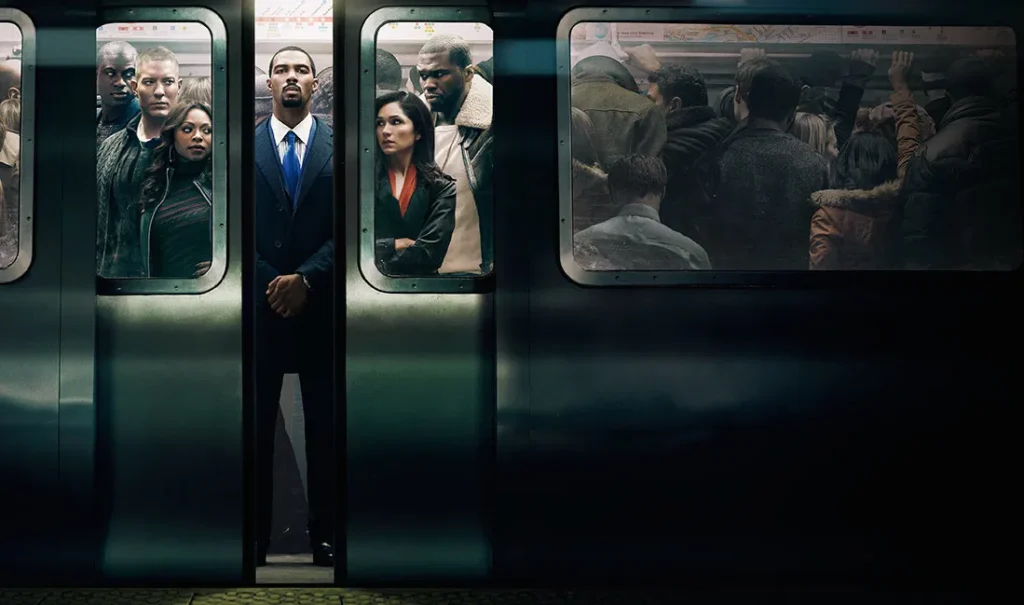
Much of the Power universe was built around the pursuit of empire. Characters were driven by ambition, status, influence, and survival. Nemesis trades that framework for something far less glamorous and far more unsettling. Instead of exploring the rise and maintenance of power, it examines obsession, self-destruction, and the psychological consequences of unresolved trauma.
The father-son tensions that have appeared throughout much of Kemp’s work remain present, but they arrive in a completely different form. In Power, parental conflict often functioned as an inheritance of the game. In Nemesis, the relationship between Isaiah and his father becomes an emotional wound that actively compromises judgment, blurring the lines between hero and villain until neither category feels entirely useful.
That distinction speaks to a larger conversation about legacy and relevance.
Many successful creators spend their careers recreating the project that first made them famous. Audiences reward familiarity, and networks often encourage it. Kemp instead appears interested in proving range. The recognizable themes remain, but they are presented through an entirely different lens.

The strongest television creators eventually face a question larger than ratings: are they repeating a successful performance, or are they still evolving as artists?
Six episodes into Nemesis, Kemp appears determined to choose evolution.

Netflix’s scale only amplifies the opportunity. While the Power franchise generated enormous viewership, cultural influence, and multiple successful spinoffs, it often existed outside the awards ecosystem that traditionally defines prestige television. Backed by one of the industry’s largest platforms, Kemp now finds herself operating with greater visibility than ever before.
Few television creators successfully build a franchise universe of Power’s scale.
Even fewer successfully step away from that formula and create something that feels fundamentally different.
That may ultimately become the most impressive accomplishment of Nemesis.
The series does not work because it reminds audiences of Power.
It works because it refuses to.
With two episodes remaining (as of writing), there are still questions to answer and storylines to resolve. But one conclusion already feels difficult to dispute. Courtney Kemp’s success was never tied to a single formula, a single city, or a single franchise.
If Power established her legacy, Nemesis is making the case for her relevance.