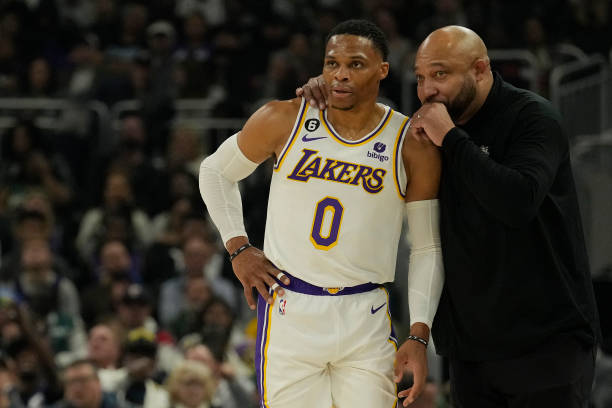
Patrick Beverley says former Los Angeles Lakers head coach Darvin Ham asked for Russell Westbrook’s number so he could call and apologize, an exchange Beverley described after seeing Ham in Las Vegas. Beverley relayed that he had warned Ham early on that ‘you gotta coach everybody,’ and that Ham told him, ‘I just wanted to tell you, you was right. You and Russ was right. Y’all were the leaders of my team… You got Russ number?’ Beverley’s reaction was blunt: ‘It’s too late then.’
The anecdote, which Beverley shared on Sept. 21, 2026, highlights how locker room dynamics and coaching approaches can linger well after a season ends. By framing himself and Westbrook as the team leaders, Beverley casts Ham’s reported outreach as an attempted reconciliation that arrived after trust had already frayed.
Beverley’s telling centers on a simple complaint about consistency. ‘You gotta coach everybody,’ he said, suggesting that players perceived uneven attention or treatment from the coaching staff. Ham’s reported request for Westbrook’s number reads like an acknowledgement of that critique, but Beverley’s closing line underscores that recognition alone does not erase the impact of how a team was led.
From a sports analysis perspective, the exchange illustrates two persistent realities. Player leadership often shapes a locker room’s culture as much as schemes and rotations do, and coaches who fail to build consistent relationships risk leaving lasting divides. For coaches, late apologies can matter to legacy but do little to retroactively alter the day-to-day reality players experienced.

The larger implications extend beyond personalities. For observers and front offices, Beverley’s account will feed conversations about accountability, how coaching styles are evaluated, and how much weight is given to player voices in assessing a coach’s fit. Whether Ham’s outreach is seen as sincere or merely belated will depend on follow-up from the parties involved.
At its core the exchange is a reminder that decisions made in real time — who gets coached, who is empowered, and who is held to the same standard — reverberate long after the season ends. Beverley’s version frames Ham’s words as too late to change what players remember, and that lingering memory is often the clearest metric of a coach’s true footprint.