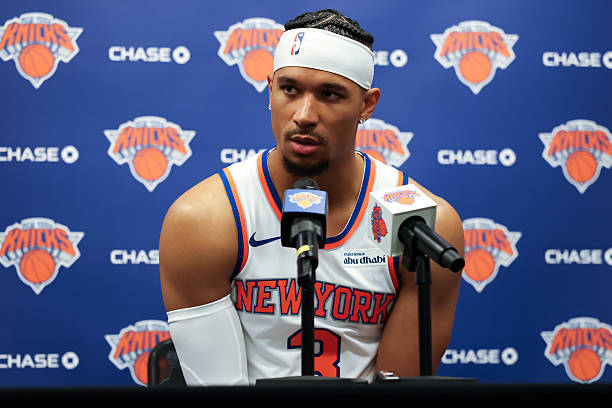
On September 30, 2026, Josh Hart took to Twitter to reveal a hand injury and warned that surgery could be career-ending. The blunt public message from a player known for his physical, high-contact style immediately raised hard questions about the diagnosis, the treatment options and what this means for Hart’s short- and long-term playing future.
Hart’s game depends on hand strength, grip and fine motor control. Whether securing rebounds, finishing through contact or executing quick passes and a reliable release, any meaningful loss of dexterity or power in a shooting hand can blunt the particular skill set that defines a player of his profile.
At this stage the public record is limited to Hart’s own post; there are no publicly released imaging studies or a detailed surgeon’s report available to evaluate the exact injury. That lack of clinical detail matters: the phrase “could be career-ending” might reflect a worst-case surgical prognosis, a candid surgeon’s warning about risks, or the understandable alarm of an athlete confronting a serious injury. Without radiographs, CT or MRI findings and a clear operative plan, prognostication is necessarily provisional.
There are several types of hand and wrist injuries common in basketball that sometimes require surgery. Displaced metacarpal or phalangeal fractures, intra-articular fractures that disrupt joint surfaces, scaphoid fractures in the wrist, hamate hook fractures from impact with equipment, ligament avulsions and tendon or digital nerve injuries each carry different implications for function. The mechanism of injury — a fall onto an outstretched hand, a direct blow, or a crushing incident — helps determine which structures are damaged and whether nonoperative treatment is plausible.
Surgical approaches depend on the injured structure and the goals of reconstruction. Open reduction and internal fixation with plates, screws or pins is common for displaced fractures; scaphoid fractures sometimes need bone graft and screw fixation because of the bone’s delicate blood supply. Tendon lacerations are repaired and require a staged rehabilitation protocol, while hamate hook fractures can be treated with hook excision and often have comparatively quicker recoveries. In the most severe situations — extensive intra-articular comminution, significant cartilage loss or major nerve disruption — surgeons may perform reconstruction or fusion procedures that carry a higher risk of permanent functional change.
For an NBA player, the surgical risks that matter most are those that produce persistent loss of range of motion, grip strength, fine motor control, sensation or chronic pain. Scar contracture, hardware complications, nonunion, infection and post-traumatic arthritis can translate into measurable declines in shooting, handling and finishing. Multiple procedures or failure to restore articular congruity substantially increase the odds that an athlete will be unable to return to their previous level of play — and that is the clinical circumstance most reasonably described as career-ending.
Recovery timelines vary widely. Simple metacarpal fractures treated nonoperatively or with straightforward fixation can allow light ballhandling within weeks and full contact in a matter of months when healing is uncomplicated. Tendon repairs and complex intra-articular reconstructions typically demand longer immobilization and intensive hand therapy, with return to sport measured in months rather than weeks. Complex reconstructions, complications like nonunion or infection, or procedures that sacrifice joint motion for stability can extend recovery to a year or more and still leave lingering deficits.
Hart’s public warning suggests either a diagnosis with a legitimately poor prognostic profile, a surgeon’s stark assessment of worst-case outcomes, or a player speaking candidly under duress. It does not, on its own, prove that surgery is inevitable or that his career is finished. Many professional players return to high-level performance after hand surgeries when the injuries are appropriately repaired and rehabilitation is successful; the decisive variables are which tissues are involved, the degree of articular damage, the quality of reconstruction and the post-operative course.

From a team and front-office perspective, the practical consequences depend on timing and projected duration of absence. Short interruptions can be absorbed through rotation adjustments; prolonged recoveries or permanent functional loss affect minutes, role and even contract considerations depending on age and deal status. Teams will be watching imaging and surgeon timelines closely as they plan.
What to watch next: the formal medical diagnosis and imaging findings, whether a surgical plan is announced, the nature of the proposed procedure (minimally invasive fixation versus large reconstruction), the named surgeon and the rehabilitation timeline. Early outcomes in therapy — range of motion, return of strength and any persistent sensory deficits — will be the clearest early indicators of long-term prognosis.
In short, Hart’s message is a serious red flag that deserves careful attention, but it is not a definitive obituary for his career without further medical detail. The difference between a repair that interrupts a season and one that permanently limits a player’s ability lies in the clinical details doctors see on scans and in the operating room. Until those details are disclosed, the prudent response is cautious concern combined with recognition that many hand surgeries, when indicated and well executed, allow players to resume productive NBA careers.
This analysis is based on Hart’s public statement and general surgical principles; we will update with verified medical information and official team reports as they become available.