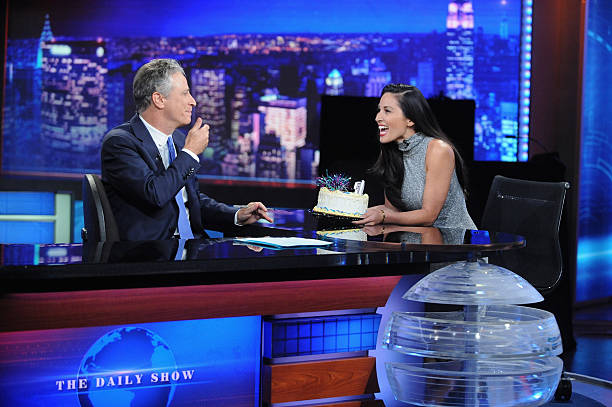
In a move that felt both unexpected and perfectly timed, Jon Stewart’s recent appearance on The Daily Show offered a meta-commentary on the very nature of farewell tours in late-night television. The segment, featuring a surprise cameo from Olivia Munn, humorously satirized the extended goodbyes that have become a hallmark of the genre, particularly Stephen Colbert’s recent multi-week sendoff from The Late Show. Munn’s deadpan delivery of the line, “No one cares if you leave,” served as a sharp, albeit comedic, critique of the industry’s tendency to milk nostalgia for departing hosts.
The juxtaposition of Stewart, a figure synonymous with incisive political satire, engaging in this self-referential humor highlights a shift in the landscape of late-night. Once a bastion of topical commentary and political skewering, the genre now finds itself in a period of transition, marked by the departures of long-standing hosts and the subsequent attempts to capture audience attention during these farewells. Colbert’s extended goodbye, which began in early May 2026 and was slated to conclude in late June, became an event in itself, prompting discussions about legacy, audience engagement, and the emotional weight attached to these transitions.
Stewart’s return to the Daily Show desk, even for a satirical segment, taps into his own legacy. He helmed the show from 1999 to 2015, transforming it into a cultural touchstone for political commentary. His brief return in 2024 as a weekly guest host, leading up to the 2024 election, was already a significant event. This latest appearance, however, takes a different tack, using comedy to question the very spectacle of departure. Munn, who has a history of comedic roles and a keen eye for cultural observation, delivered her lines with a precision that underscored the absurdity of prolonging a farewell. “It’s like, we get it, you’re leaving. Can we move on?” she quipped, perfectly encapsulating the sentiment that the extended goodbyes can sometimes detract from the host’s actual work and the show’s core mission.
The segment implicitly contrasts the perceived authenticity of Stewart’s earlier tenure with the more performative aspects of modern late-night farewells. While Colbert’s departure is a genuine end of an era for his show, the protracted nature of the goodbyes can often feel like an extended performance designed to elicit maximum emotional response. Stewart, by having Munn deliver such a blunt assessment, seems to be playfully poking at this very performance. The cultural analysis here centers on the evolving relationship between hosts, their audiences, and the media’s framing of these departures. In an era of fragmented media consumption, the extended farewell becomes a concentrated moment of shared cultural experience, albeit one that can border on excessive.

The relevance of this satirical moment lies in its ability to cut through the sentimentality. Stewart, a master of deconstruction, applies his skills to the very industry that birthed him. His legacy is built on challenging norms and speaking truth to power, or in this case, speaking a blunt truth to the conventions of late-night television. The legacy of shows like The Daily Show and The Late Show is tied to their ability to reflect and shape cultural discourse. By lampooning the extended goodbye, Stewart and Munn are questioning whether this current strategy of prolonged farewells truly carries the weight of genuine cultural significance, or if it’s merely a manufactured moment of collective nostalgia. The question remains whether these farewells, in their current iteration, are a testament to a host’s impact or a symptom of a genre searching for its next act.