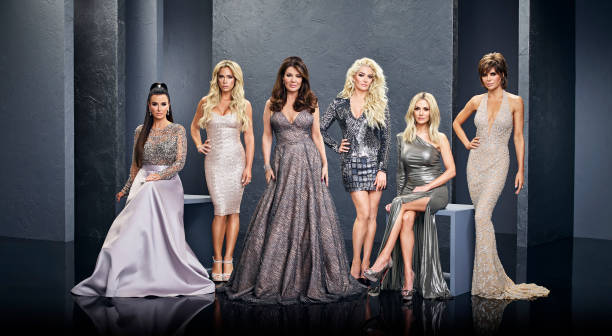
The digital hum surrounding Bravo’s reality television empire has reached a fever pitch with the recent release of a first-look video for ‘The Real Housewives Ultimate Girls Trip: Roaring 20th.’ This particular iteration promises a potent cocktail of nostalgia, manufactured drama, and the perennial question of whether these larger-than-life personalities can truly recapture the magic that once defined their individual legacies. Yet, beneath the glossy veneer of opulent settings and carefully curated conflict, the teasing of this reunion special speaks to a deeper cultural conversation about relevance, performance, and the ever-shifting sands of celebrity in the digital age.
The concept of an ‘Ultimate Girls Trip’ is not new, but the branding of this season as ‘Roaring 20th’ signals a deliberate attempt to tap into a specific cultural zeitgeist. It evokes an era of excess, societal upheaval, and bold self-expression, mirroring, perhaps, the current cultural moment where public figures often engage in performative displays of authenticity and carefully constructed narratives. The initial reputation of many of these housewives was built on a foundation of perceived candor, even if that candor was often amplified and edited for television. They were presented as unfiltered women navigating complex personal lives under the glare of the spotlight. Early seasons of shows like *The Real Housewives of Orange County* or *The Real Housewives of New York City* prided themselves on showcasing the unvarnished — or at least, the seemingly unvarnished — realities of affluent women.
However, the trajectory of reality television, and the careers of its stars, has evolved dramatically. What began as a raw, almost voyeuristic look into private lives has transformed into a highly strategic game of maintaining visibility and influence. The mid-period of many housewives’ careers saw a noticeable shift. The initial shock value wore off, and the need to innovate, to create bigger storylines, and to engage with an increasingly savvy audience became paramount. This led to more manufactured drama, feuds that felt increasingly scripted, and a blurring of the lines between personal reality and television persona. The ‘ambiguity’ in these periods often manifested as fans questioning the authenticity of the conflicts, while simultaneously being drawn deeper into the spectacle. The ‘Roaring 20th’ theme, therefore, is not just about the decade; it’s about a perceived return to a more decadent, perhaps less inhibited, version of themselves and the franchises they represent, a move that itself is a calculated performance.
The release of a first-look video is a strategic move designed to generate buzz and anticipation, but it also invites scrutiny. Public reactions to these ‘Ultimate Girls Trip’ seasons have been mixed, often oscillating between fervent enthusiasm from loyal fans eager for a reunion of favorite personalities and sharp criticism from those who feel the franchise has become stale or overly produced. The backlash often stems from a perceived lack of authenticity or a reliance on tired tropes. Industry responses, too, are telling. Bravo, as a network, has mastered the art of leveraging nostalgia while simultaneously pushing the boundaries of reality television. Peer reactions, though rarely public, are often whispered about in fan forums and gossip columns, hinting at the complex web of alliances and rivalries that extend beyond the screen. Media framing has played a crucial role, with outlets often oscillating between celebrating the enduring appeal of these women and dissecting their increasingly complex public personas.
While direct admissions of strategic maneuvering are rare, the actions of the housewives themselves often betray a keen awareness of the attention economy. Their social media presence, their carefully worded interviews, and their very participation in reunion specials like this suggest a motivation that extends beyond simple camaraderie. When a housewife like Ramona Singer, a prominent figure in the *Real Housewives of New York City* franchise, is featured in such a special, it’s often in the context of her larger-than-life personality and her willingness to be provocative. While she may not explicitly state, “I am doing this for relevance,” her consistent presence in high-profile, often controversial, situations speaks volumes. The “Roaring 20th” theme itself can be interpreted as a bid for renewed attention, a desire to evoke a sense of glamour and excitement that might have waned in recent years. It’s a performance designed to recapture the spotlight, a strategy to remain in the cultural conversation.

This particular *Real Housewives* special, and the discourse surrounding it, offers a microcosm of broader cultural trends. The tension between ‘relevance’ and ‘legacy’ is palpable. These women, many of whom have been on television for over a decade, are grappling with how to maintain their relevance in an entertainment landscape that is constantly evolving. The desire for ‘authenticity’ is constantly at odds with the inherent ‘performance’ required for reality television stardom. The modern media ecosystem is one where power, attention, and influence are fluid commodities. Gaining cultural authority today is less about traditional merit and more about the ability to capture and hold the audience’s attention, often through manufactured controversy or aspirational displays. The ‘Roaring 20th’ theme taps into this by suggesting a return to a more extravagant, perhaps more ‘authentic’ in its excess, era, even as the production itself is a testament to modern media’s artifice.
Ultimately, ‘The Real Housewives Ultimate Girls Trip: Roaring 20th’ and its promotional rollout serve as a potent reminder of the complex relationship between celebrity, reality, and audience expectation. As these women gather, ostensibly to relive past glories and forge new memories, they are, in essence, performing a critical act of self-preservation within the cultural marketplace. The question remains whether this curated return to a bygone era of glamour and perceived uninhibitedness can truly resonate with an audience that has grown increasingly discerning, or if it will simply be another fleeting moment in the long, and often bewildering, history of reality television. In a landscape saturated with content and a public increasingly aware of the mechanisms of fame, the weight of such performances is constantly being re-evaluated, leaving one to wonder if the roar of the twenties can truly echo in the digital age, or if it’s merely a whisper lost in the noise.