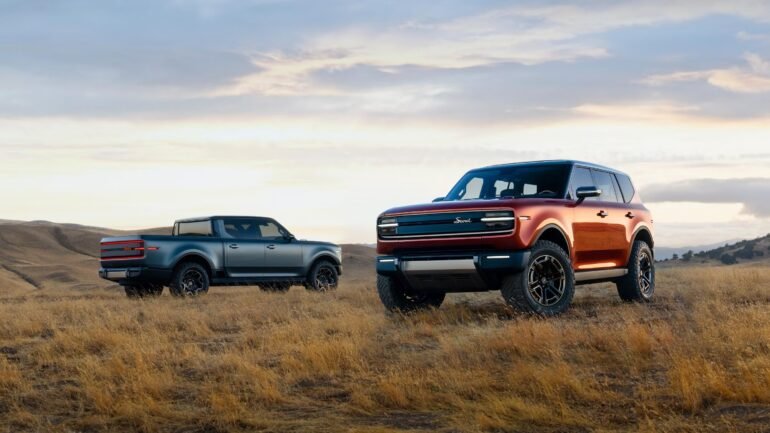
Scout Motors is one of the more interesting bets in the American auto business right now, and on Thursday it put a fresh number on the table. The Volkswagen-backed brand has roughly 212,000 reservations for its Terra pickup and Traveler SUV, CEO Scott Keogh told CNBC during an interview at the company’s plant site in Blythewood, outside Columbia, South Carolina.
The Numbers Behind the Buzz
That total is up from the more than 160,000 reservations Scout reported earlier this year, and it comes as the company’s more than $2 billion factory enters its final phase of construction. Keogh put the plant at about 85% complete, with supporting infrastructure and a $300 million supplier park still being installed.
The mix of demand is telling. About 87% of reservation holders have chosen extended-range electric vehicles, known as EREVs, which use a gas engine as a generator to recharge the battery. About 75% of reservations are for the SUV. Full production is expected next year, with customer deliveries starting in 2028.
“It’s been a consistent drumbeat,” Keogh said, adding that he believes reservations could climb past 400,000 by the time customer production begins.
A Brand That Changed Course
Scout was an American nameplate from 1961 to 1980, and Volkswagen originally revived it as an all-electric brand. Slower-than-expected EV adoption and higher costs pushed the company to add the range-extended option, and the reservation data suggests that pivot was the right call. Scout now plans to launch the EREV versions first, followed by the fully electric models.
It also plans to start with mid-level trims instead of the most expensive versions, a departure from common industry practice. Keogh’s stated priority is reaching 100,000 units as quickly as possible, which he sees as the threshold where a new brand can break through.

Reservations Are Not Sales
The caution flag is obvious. Highly anticipated electric trucks such as the Ford F-150 Lightning and Tesla Cybertruck drew strong early interest that did not translate into the volume many expected. Keogh acknowledged as much, saying the real goal is converting interest into firm orders. He wants an order book covering 12 to 18 months of production before the line starts running for customers.
Scout also faces a legal fight over how it sells. Two Volkswagen dealers sued earlier this year over the brand’s direct-to-consumer model, arguing it breaches their franchise agreements, and the case is seeking class-action status.
What to Watch
For Volkswagen, which has long struggled to gain ground in the truck-and-SUV-heavy U.S. market, Scout is a strategic test as much as a product launch. The reservation count proves curiosity. The next 18 months will show whether that curiosity becomes signed contracts, and whether the range-extended truck is the bridge American buyers have been waiting for.