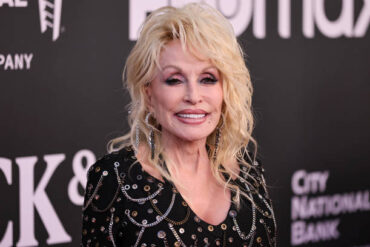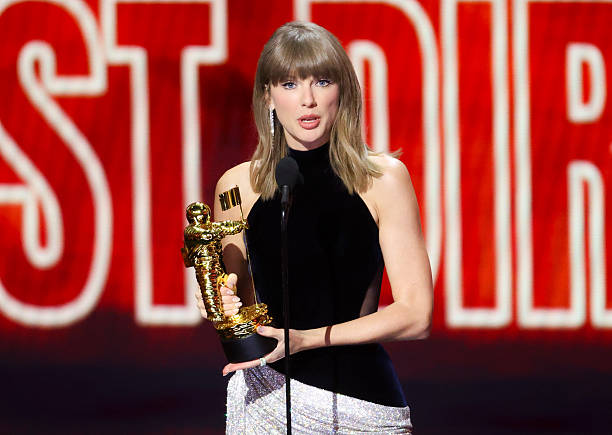
On September 27, 2026, at the MTV Video Music Awards, Taylor Swift accepted the Video of the Year trophy and used her brief acceptance to pay tribute to Dolly Parton, invoking a lineage of songwriting and showmanship that stretches from classic country to today’s pop-dominated charts.
The moment landed as part ceremony, part cultural punctuation. Dolly Parton’s name on a VMA stage is more than celebrity cross-reference; it’s an invocation of an older American music tradition that has long informed Swift’s songwriting instincts. Swift’s career—born from country roots and matured through pop, folk and indie reinventions—has frequently traced that through line, and Wednesday’s speech made that connection explicit for a mass audience.
Video of the Year is an award about narrative and image as much as it is about song. Swift’s visuals have become a core part of how her work is received, turning albums into chapters and tours into communal events. The win underscored how the artist continues to use cinematic storytelling to convert private emotion into public spectacle—a strategy that helped make this year’s video a cultural moment rather than just a release.
Honoring Parton on an awards stage does several things at once: it centers a woman whose career spans decades, it situates contemporary pop within a longer musical tradition, and it signals the importance of mentorship and influence in an industry that often prizes novelty. Parton’s career has long symbolized persistence, craftsmanship and crossover appeal—qualities Swift has both admired and emulated.
For the industry, the exchange is instructive. Awards moments like this rewrite short-term narratives about genre boundaries and commercial priority, reminding fans and gatekeepers that popular music’s lineage matters. It also reframes the VMAs themselves: a network ceremony that still functions as cultural shorthand for who gets credited, who gets uplifted, and which histories are called forward into the mainstream conversation.

Looking ahead, the tribute opens obvious creative possibilities—guest appearances, duet rumors, or staged homages on tour—but its larger effect is symbolic. It normalizes cross-generational acknowledgments on big stages and puts a premium on artists who can translate private influence into public recognition. For younger performers it’s a reminder that legacy can be both inspiration and marketing currency.
At its best, the exchange between Swift and Parton is less about one-upmanship and more about continuity: a recognition that pop culture’s biggest moments often stand on the shoulders of earlier ones. Wednesday’s acceptance speech served as a small but resonant bridge between two careers and two eras, and it reinforced an idea that feels increasingly central to popular music in 2026—that influence, like a memorable hook, travels forward.