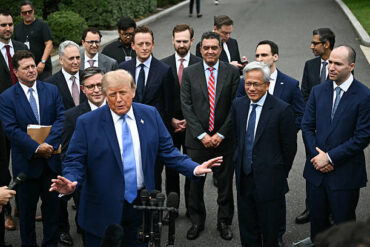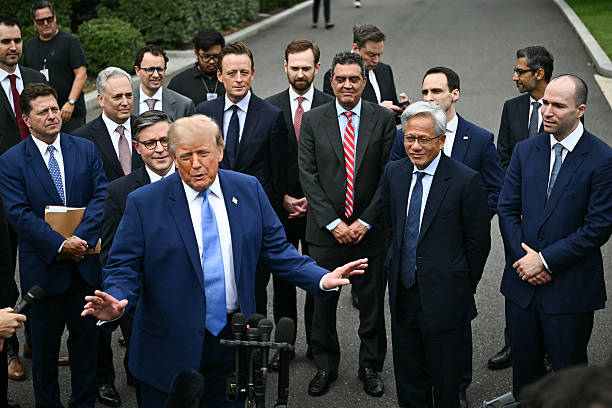
President Trump said Wednesday, September 30, 2026, that he is “very close” to naming a national AI czar and praised recent agreements by major technology companies to pursue voluntary self-regulation on artificial intelligence.
The president did not name a nominee or provide a timetable for a formal appointment, and the administration has not released details about the role’s authority, reporting structure, or whether the position would require congressional confirmation.
The move signals an administration strategy that would pair an executive coordinator with industry cooperation to centralize federal policy and streamline interagency work on AI safety, research standards, procurement, and international engagement.
The announcement comes amid intensified debate over how best to govern AI. Lawmakers and advocacy groups have called for statutory guardrails and stronger enforcement, while many firms argue that voluntary frameworks and industry-led standards preserve innovation and speed necessary for commercial competitiveness.
If established with significant coordinating power, an AI czar could shape federal procurement rules, research oversight, export controls, and cross-agency responses to emergent risks. If the post remains advisory and is coupled primarily with voluntary industry pacts, critics warn it could leave enforcement gaps and limit public accountability.
Industry players who have signed self-regulation agreements are likely to view the development as validation of a cooperative approach, but civil liberties organizations, competition advocates, and some members of Congress have already indicated they will press for enforceable measures, transparency about the czar’s mandate, and avenues for oversight.

What happens next is expected to hinge on the White House releasing specifics: a formal announcement, a description of duties and authority, and clarity on oversight and confirmation. Those elements will determine whether the administration pursues an executive coordination model, new statutory rules, or a hybrid approach.
The announcement marks the latest chapter in a fast-moving debate over U.S. AI governance, with potential implications for innovation, national security, markets, and public trust. Stakeholders across industry, academia, and government will be watching closely as the administration moves from statements to concrete policy steps.