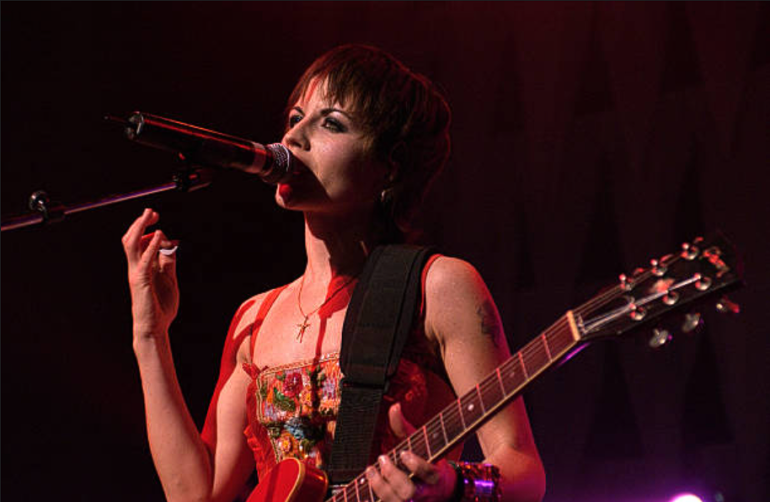
Dolores O’Riordan, the voice of a generation grappling with the complexities of love and identity, is no longer with us. Yet, her ethereal vocals on The Cranberries’ 1993 hit, “Linger,” refuse to fade into the background. Instead, the song has experienced a resurgence, finding new life on TikTok, in film soundtracks, and across a landscape vastly different from the one in which it was born. But this isn’t merely a nostalgic revival; it’s a deeper connection, a haunting echo resonating with contemporary anxieties and a yearning for something genuine in an increasingly synthetic world.
“Linger,” with its delicate balance of vulnerability and strength, initially positioned The Cranberries as purveyors of dream-pop introspection. The song’s success propelled their debut album, *Everybody Else Is Doing It, So Why Can’t We?*, to platinum status, solidifying their place in the alternative rock scene. O’Riordan’s distinctive yodel and heartfelt lyrics about the pangs of unrequited love became the band’s signature. They followed up with politically charged albums like *No Need to Argue*, featuring the hit “Zombie,” a stark departure in tone that addressed the Troubles in Northern Ireland. This demonstrated a willingness to engage with heavier themes, broadening their artistic scope beyond romantic ballads. However, it was the wistful melancholia of “Linger” that cemented their initial appeal, defining them as artists capable of capturing the universal experience of longing.
The mid-period of The Cranberries’ career saw a navigation between these two poles: the delicate beauty of “Linger” and the raw power of “Zombie.” Albums like *To the Faithful Departed* and *Bury the Hatchet* showcased a band experimenting with their sound, incorporating elements of alternative rock and even some grunge influences. However, this evolution wasn’t always met with critical acclaim, and some perceived a dilution of their initial charm. O’Riordan herself battled with mental health issues, openly discussing her struggles with bipolar disorder and depression. This transparency, while admirable, arguably shifted the public’s perception, adding layers of complexity to the band’s narrative. The Cranberries, once seen as the embodiment of dreamy introspection, became a symbol of both artistic exploration and the fragility of the human spirit.
Fast forward to the present day, and “Linger” is enjoying an unexpected renaissance. Its resurgence can be attributed, in part, to its prominent placement in popular culture. The song’s inclusion in films like *Click* and TV series such as *Derry Girls* has introduced it to new generations. But more significantly, “Linger” has found a thriving community on TikTok, where users have embraced its ethereal quality, using it as a soundtrack for everything from melancholic montages to comedic skits. This newfound popularity, however, has also sparked debate. Some argue that the song’s original meaning is being diluted, stripped of its emotional depth and reduced to a fleeting trend. Others celebrate its accessibility, viewing its presence on TikTok as a testament to its timeless appeal. This divide highlights a tension between preserving artistic integrity and embracing the democratizing power of social media.
The renewed interest in “Linger” coincides with a broader cultural fascination with the 1990s, a decade often romanticized for its perceived authenticity and analog charm. In an era dominated by digital filters and manufactured realities, the raw emotion and unpolished sound of “Linger” offer a welcome respite. O’Riordan’s voice, with its imperfections and vulnerability, stands in stark contrast to the auto-tuned perfection that pervades much of contemporary pop music. This yearning for authenticity is not limited to music; it extends to fashion, film, and even social media, where users are increasingly seeking out genuine connections and unfiltered experiences.
O’Riordan’s death in 2018 undoubtedly contributed to the song’s renewed resonance. Her passing transformed “Linger” from a song about heartbreak into a poignant elegy, a reminder of the artist’s enduring legacy. While O’Riordan never explicitly commented on the song’s long-term impact, her interviews reveal a deep understanding of its emotional power. She spoke of channeling her own experiences of longing and vulnerability into her music, creating a connection with listeners who shared those feelings. This commitment to authenticity, even in the face of personal struggles, is perhaps the key to the song’s enduring appeal. In a 1994 interview with MTV, O’Riordan said, “We just want to be real. We don’t want to be fake. We don’t want to pretend to be something we’re not.” This sentiment encapsulates the band’s ethos and explains the enduring relevance of their work.

The cultural authority once held by established institutions like record labels and media outlets has been increasingly decentralized. Social media platforms now serve as powerful tastemakers, capable of catapulting obscure songs to viral fame. This shift has democratized the music industry, giving artists greater control over their careers and allowing niche genres to find wider audiences. However, it has also created a more fragmented and chaotic landscape, where attention is a scarce commodity and trends can rise and fall with alarming speed. In this context, the enduring popularity of “Linger” is a testament to the power of timeless artistry. It suggests that true emotional resonance can transcend fleeting trends and connect with audiences across generations.
The story of “Linger” is not just a story about a song; it’s a story about cultural memory, the search for authenticity, and the enduring power of human connection. It is a story about how a song released in the early 1990s can continue to resonate in a world that has changed beyond recognition. While the landscape of music consumption may continue to evolve, the longing and vulnerability captured in “Linger” remain timeless, offering a haunting reminder of the enduring power of music to connect us to ourselves and to each other. The fact that the song continues to linger so strongly suggests that its emotional weight has not diminished, but has rather been amplified by the passage of time and the collective experience of loss and longing that defines our current cultural moment.