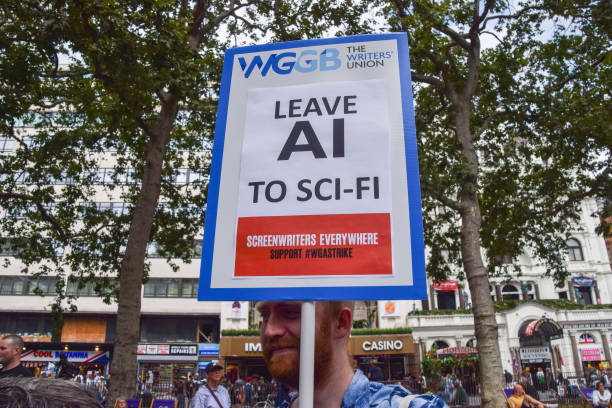
The digital doppelgänger has arrived, and Hollywood’s most recognizable faces are sounding the alarm. More than 16,000 members of SAG-AFTRA, the union representing actors and other media professionals, have signed a letter urging Congress to pass the NO FAKES Act. This proposed legislation aims to ban the creation and distribution of unauthorized AI-generated images and videos that mimic real people, a move that signals a profound reckoning with the accelerating power of artificial intelligence in creative industries.
For years, the conversation around AI in entertainment felt like a distant science fiction premise. Early discussions revolved around AI as a tool for efficiency—automating tedious post-production tasks, generating background characters, or even assisting in scriptwriting. The prevailing sentiment, particularly among actors who build careers on their unique likeness and performance, was one of cautious optimism or, at best, mild concern about future job displacement. However, the rapid advancements in generative AI, capable of producing eerily realistic deepfakes with minimal effort, have transformed this abstract threat into an immediate existential crisis. The sheer volume of signatures on the SAG-AFTRA letter—representing a significant portion of the union’s membership—underscores the widespread fear that without legal protections, an actor’s most valuable asset, their own image, could be exploited without consent or compensation.
The trajectory of this concern can be traced through several key phases. Initially, AI’s presence in Hollywood was largely confined to the technical periphery. Companies explored AI for visual effects, soundtrack generation, and even early forms of digital de-aging, often presented as enhancements rather than replacements. The symbolism of AI was often benign, a futuristic gadget rather than a disruptive force. The mid-period saw a growing unease, particularly after the 2023 Hollywood strikes, where AI’s potential to devalue human labor became a central bargaining chip. SAG-AFTRA’s interim agreement, which allowed some independent productions to continue filming while the strike was ongoing, included provisions for AI, but these were seen by many as temporary measures in a rapidly evolving landscape. The recent push for the NO FAKES Act crystallizes the current narrative: AI is no longer just a tool, but a potential weapon capable of weaponizing identity itself. The union’s demand for federal legislation is a stark departure from earlier, more incremental discussions about AI’s role.
The reaction to the accelerating capabilities of AI has been swift and varied. For actors, the primary concern is the unauthorized use of their likeness. Imagine an actor’s face being used in advertisements, political propaganda, or even adult content without their permission or payment. This isn’t a hypothetical scenario; instances of deepfakes have already proliferated across the internet, often targeting public figures. The fear is that AI could enable studios or bad actors to create new performances using an actor’s digital likeness indefinitely, effectively circumventing the need for the actual performer. This has led to significant backlash from within the industry. Fellow actors have voiced their support, recognizing that this issue transcends individual careers and threatens the fundamental value of creative work. Peer reactions have ranged from vocal endorsements of the NO FAKES Act to participation in union actions. The media framing has largely shifted from curiosity about AI’s potential to a more urgent focus on the ethical and legal challenges it presents, amplifying the urgency of the union’s demands.
While the SAG-AFTRA letter is a collective plea, individual actors have also begun to speak out, often implicitly acknowledging the underlying motivations driving this legislative push. The desire for control over one’s own image and career is paramount. This isn’t merely about financial compensation, though that is a critical component. It’s about agency—the power to decide how one is represented and to prevent the exploitation of one’s identity. When actors like Tom Hanks have publicly expressed concerns about AI replicating their likeness, they are not just voicing personal anxieties; they are highlighting a broader fear of losing control over their digital selves. The demand for legislation like the NO FAKES Act is, in essence, a demand for the right to define and protect one’s own persona in an era where digital replication is becoming indistinguishable from reality. This speaks to a deep-seated need for authenticity and ownership in a performance-driven culture.

This situation reveals a profound cultural shift in how we perceive identity, performance, and ownership in the digital age. The current moment is characterized by a tension between the allure of technological innovation and the fundamental human need for control and authenticity. The rise of AI challenges the traditional notions of cultural authority, which have historically been tied to demonstrable skill, unique talent, and personal presence. Now, AI can mimic these qualities, raising questions about what constitutes genuine creativity and who truly owns a performance. The modern media ecosystem, driven by constant attention and influence, is particularly vulnerable to the disruptive potential of AI. Deepfakes can be weaponized to manipulate public opinion, erode trust in media, and undermine the credibility of public figures. The struggle over AI regulation is, therefore, not just an industry issue; it is a fundamental battle over the nature of truth, identity, and influence in the 21st century.
As Hollywood mobilizes for legislative action, the question remains whether this strategy will be enough to secure the future of human performance in an AI-saturated world. The demand for the NO FAKES Act reflects a powerful, unified front against the unchecked proliferation of AI-generated content. However, the speed of technological advancement often outpaces regulatory efforts. The actors’ collective voice is a critical intervention, but it represents a defensive posture against an offensive technological wave. Whether this push for legal safeguards can truly preserve the value of human artistry and personal likeness, or whether it merely attempts to dam a digital flood, remains to be seen. In a cultural landscape where authenticity is increasingly performed and legacy is constantly being redefined by algorithms, the fight for control over one’s digital self is a defining battle of our time, one that will shape the future of entertainment and beyond.