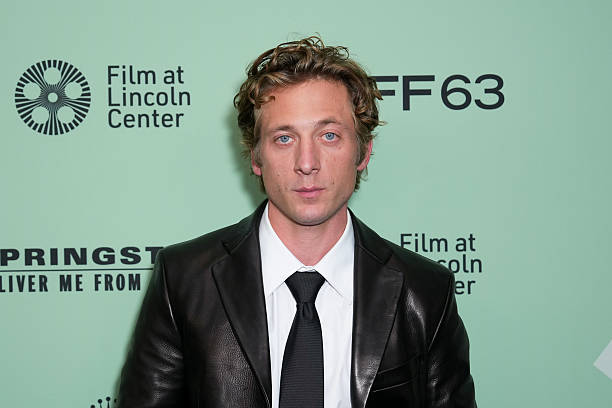
Jeremy Allen White, the actor whose meteoric rise has been intrinsically linked to a certain raw, unfiltered vulnerability, has recently voiced a sentiment that feels like a stark departure from the digital-native persona many younger celebrities embody. His public endorsement of the United Kingdom’s consideration of banning social media for individuals under 16, coupled with his assertion that “there needs to be a correction,” positions him not as a product of the online ecosystem, but as a critic of its pervasive influence on young minds. This stance, coming from someone whose own public image has been shaped and amplified by the very platforms he now questions, offers a potent lens through which to examine the evolving relationship between cultural figures, digital life, and the growing unease surrounding its impact.
White’s early career was largely defined by his breakout role as Phillip ‘Lip’ Gallagher in Showtime’s Shameless, a character known for his intelligence, self-destructive tendencies, and a complex, often troubled, upbringing. This portrayal, while fictional, resonated with audiences for its unflinching depiction of working-class struggles and raw human emotion. His subsequent starring role as Carmen ‘Carmy’ Berzatto in FX’s The Bear catapulted him into a new stratosphere of critical acclaim and mainstream recognition. Carmy, a fine-dining chef grappling with grief, addiction, and the immense pressure of culinary excellence, further solidified White’s image as an artist drawn to intense, psychologically complex characters. This persona, characterized by a certain brooding intensity and authentic emotional depth, was largely cultivated through traditional media and word-of-mouth, though its amplification has undeniably been aided by social media. Early on, his public presence was relatively curated, focusing on his craft and the projects he was involved in. There was less emphasis on constant online engagement, allowing his work to speak for itself and fostering an aura of artistic dedication.
The mid-period of White’s public life saw a gradual but significant increase in his digital footprint, mirroring the broader trend of celebrity engagement with social media. As The Bear gained traction, so too did White’s presence on platforms like Instagram. He began to share more behind-the-scenes glimpses, engage with fan interactions, and participate in the digital discourse surrounding the show. This phase was marked by a growing awareness of the power of social media to build a direct connection with an audience, to humanize the often-intimidating figure of a critically acclaimed actor. However, this period also began to hint at the inherent tension. While his online presence often showcased a more relaxed, accessible side, it also underscored the performative aspect of celebrity in the digital age. The carefully chosen photos, the witty captions, the participation in trending conversations—all contributed to a curated persona that, while effective, stood in subtle contrast to the raw, unvarnished characters he so compellingly portrayed. The ambiguity lay in navigating the space between the artist dedicated to his craft and the public figure leveraging digital tools for wider reach and connection.
The crystallizing moment that brings White’s current narrative into sharp focus arrived with his statements regarding the U.K.’s proposed social media ban for minors. Reports from outlets like The Independent and Daily Mail detailed his remarks, where he expressed strong support for such measures, stating, “I think there needs to be a correction.” This wasn’t a casual observation; it was a declarative statement of concern about the impact of digital platforms on developing minds. This marked a clear departure from the passive acceptance of social media’s role in celebrity culture, signaling a more critical and perhaps even anxious perspective. It’s a position that directly challenges the prevailing narrative of digital immersion as an inevitable, even beneficial, aspect of modern youth, particularly for those who have benefited from its reach.
The reaction to White’s comments has been varied, reflecting the polarized views on social media regulation and digital well-being. While many parents and child development advocates have lauded his stance, seeing it as a voice of reason from a popular figure, others, particularly within the tech and social media industries, might view it with skepticism, perhaps as an outsider’s misunderstanding of the digital landscape’s complexities. The framing of his remarks in the media has often leaned towards the “celebrity speaks out” angle, which, while accurate, can sometimes oversimplify the underlying cultural anxieties he taps into. This isn’t a feud in the traditional sense, but rather a subtle industry-wide tension between the platforms that drive engagement and the artists whose work, ironically, often gains visibility through them. His peers, many of whom are deeply embedded in the digital world, may find themselves in a complex position, balancing their own use of these platforms with the growing concerns about their impact. The pushback, if any, is likely to be implicit—a quiet disagreement or a continued embrace of digital strategies, rather than an overt confrontation.
White himself has offered glimpses into his motivations, though not always explicitly tied to this specific issue. In interviews discussing his approach to acting and fame, there’s an underlying current of seeking authenticity and grappling with the pressures of public life. While he hasn’t directly admitted to using social media for strategic attention-seeking or fear of losing relevance, his comments about needing a “correction” imply a recognition of an imbalance. He’s speaking from a position of someone who has observed the pervasive nature of these platforms and, perhaps, feels a responsibility to advocate for a healthier environment, especially for younger generations. His appreciation for the U.K.’s potential legislative action suggests a belief in external intervention as a necessary corrective measure, indicating that he sees the problem as systemic, not merely individual. This is not about personal fear or control, but about a broader societal concern that he, as a public figure, feels compelled to address, perhaps drawing from his own experiences or observations of those around him.

White’s advocacy for social media limits for minors speaks volumes about the current cultural moment, which is increasingly characterized by a crisis of attention and a struggle for genuine connection amidst a sea of curated performances. The theme of relevance versus legacy is palpable here. While social media offers immediate relevance and a constant stream of visibility, it often comes at the expense of building a lasting legacy, which is typically forged through sustained artistic integrity and thoughtful engagement with the world. The tension between authenticity and performance is at the heart of celebrity culture today; White’s public persona, while amplified by digital tools, seems to yearn for the authenticity he embodies in his roles. His stance suggests a cultural fatigue with the constant need to perform online, a desire for a return to more grounded forms of interaction and self-expression. Power, attention, and influence are inextricably linked in the modern media ecosystem, and White’s voice, emerging from the rarefied air of critical acclaim, carries a unique weight. He is not an influencer by trade, but his art has granted him a platform, and he is using it to question the very mechanisms that often dictate cultural authority. The battle for cultural authority is no longer solely waged on traditional media stages but is increasingly contested in the digital arena, where authenticity is both the currency and the commodity.
In conclusion, Jeremy Allen White’s call for a societal “correction” regarding social media use among young people is more than just a celebrity endorsement of a policy debate. It is a significant cultural statement from an artist whose own career trajectory highlights the complex interplay between artistic merit and digital visibility. His position challenges the prevailing notion that pervasive social media engagement is an unalloyed good, especially for those still forming their identities. As he navigates his own rising fame, his willingness to critique the digital landscape that has, in part, propelled him forward, raises important questions. Does his measured, yet firm, stance resonate with a broader public sentiment of unease? In an environment where attention is the ultimate currency, can a voice advocating for less digital immersion still command influence, or is he risking a disconnect with the very audience his art seeks to reach? White’s strategy, if it can be called that, is a bold one—a testament to a perceived need for a recalibration of our digital lives, suggesting that true cultural authority might, ironically, be found in stepping back from the relentless noise.