Alanis Morissette, the high priestess of 90s angst and confessional pop, once famously sang about the ironic rain on her wedding day. Michael Bublé, Canada’s crooning ambassador of smooth jazz and holiday cheer, has built a career on an almost aggressively optimistic, feel-good brand. Their joint appearance to kick off a major international sporting event in Canada, therefore, felt less like a harmonious duet and more like a peculiar collision of cultural titans, prompting a reevaluation of what it means for artists to engage with the mainstream spectacle of globalized entertainment.
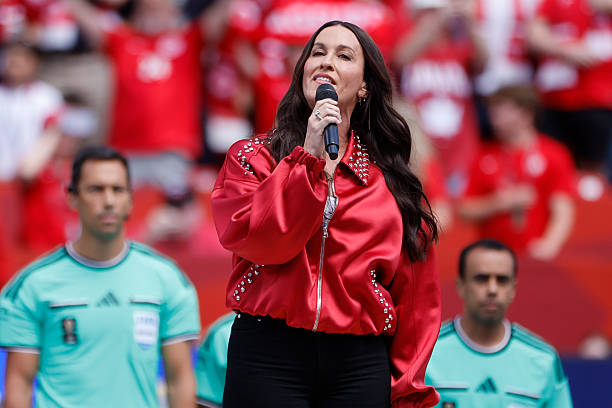
The image of Morissette, whose raw, often cathartic lyrics explored the complexities of female rage and vulnerability in hits like “You Oughta Know,” standing alongside Bublé, whose signature song is “Haven’t Met You Yet,” at the opening ceremony for the 2015 FIFA Women’s World Cup in Vancouver, was striking. It represented a significant departure from the fiercely independent, almost anti-establishment persona Morissette cultivated in her early career. Her 1995 album, Jagged Little Pill, was a cultural phenomenon, resonating with a generation disillusioned by polished pop and seeking authenticity. Its raw emotional honesty and unapologetic delivery cemented her status as a voice for a certain kind of unvarnished truth. Bublé, on the other hand, emerged in the early 2000s, offering a polished, retro-tinged sound that appealed to a broad audience, becoming a reliable purveyor of polished sentiment and nostalgic charm. His early work and public image were characterized by a smooth, accessible appeal, a stark contrast to Morissette’s more confrontational artistic stance.
The mid-2000s saw Morissette gradually navigate the evolving music industry, releasing new material that explored spiritual and personal growth, sometimes diverging from the raw angst that defined her early fame. While she never abandoned her core artistic integrity, the sheer cultural ubiquity of her initial output meant any shift was observed with a keen eye by fans and critics alike. Bublé’s trajectory was more consistently upward, marked by massive global sales and a solidifying reputation as a world-class performer, particularly adept at holiday music, which further cemented his image as a universally beloved entertainer. The 2015 World Cup ceremony, however, placed these two artists, each representing distinct facets of Canadian musical identity and career arcs, onto a single stage, signaling a moment where their individual narratives converged under the banner of national pride and international sporting spectacle. It was a moment that, for many, blurred the lines between artistic conviction and the demands of large-scale event production.
The public reaction to their joint appearance was a microcosm of the ongoing debate surrounding artistic authenticity in the age of commercial endorsements and high-profile events. While many lauded the ceremony as a celebration of Canadian talent and a unifying moment for sport and culture, a segment of Morissette’s original fanbase expressed a sense of bewilderment, if not outright disappointment. The juxtaposition of Morissette’s legacy of raw, critical introspection with the polished, celebratory nature of a World Cup opening ceremony felt, to some, like a compromise of her artistic identity. Online discussions, particularly on platforms like Twitter and Reddit, highlighted this tension, with comments ranging from “What happened to the Alanis who sang about rage?” to more pragmatic observations about the financial and professional opportunities such high-profile gigs present. Critics noted that while Bublé’s participation was largely expected given his mainstream appeal, Morissette’s presence invited deeper scrutiny. The media, in turn, largely framed the event as a triumphant showcase of Canadian stars, often glossing over the potential underlying artistic dissonance.
While neither artist has explicitly detailed a strategic calculus for their participation in such events, their career choices can be interpreted through the lens of evolving motivations. Morissette, in various interviews over the years, has spoken about evolving as an artist and a person, suggesting a desire to move beyond the confines of her early persona. In a 2014 interview with the Guardian, she reflected on the enduring power of her early work but also her growth, stating, “I’m so grateful for the way it’s been received, but also, I’m not that person anymore.” This sentiment suggests a conscious move towards embracing a broader public role, one that might include nationalistic or celebratory platforms. Bublé, whose career has always been deeply entwined with accessible, feel-good entertainment, likely saw the event as a natural extension of his brand. His public statements often emphasize positivity and connection, aligning perfectly with the aspirations of a global sporting event aiming to foster unity and excitement.
This convergence speaks volumes about the current cultural moment, where the lines between legacy artist, brand ambassador, and public figure are increasingly blurred. The relentless pursuit of relevance in a saturated media landscape often compels artists to engage with platforms that extend far beyond their original artistic milieu. The tension between maintaining an authentic artistic identity and capitalizing on opportunities for broader influence and financial reward is a defining characteristic of contemporary celebrity. For artists like Morissette, whose early success was built on a foundation of perceived authenticity and a critique of mainstream culture, participating in a highly commercialized event like a World Cup opening ceremony raises questions about how cultural authority is maintained. Is it through unwavering artistic purity, or by strategically engaging with the dominant cultural forces to shape their narrative and retain influence? The modern media ecosystem rewards visibility and adaptability, often prioritizing performance over a static, idealized version of an artist’s past self. This dynamic challenges the traditional notions of artistic integrity, suggesting that a successful career today might depend as much on navigating the spectacle as it does on creating groundbreaking art.
Ultimately, the sight of Alanis Morissette and Michael Bublé sharing a stage for the 2015 World Cup opening ceremony serves as a potent symbol of the evolving nature of artistic engagement in the 21st century. It highlights a cultural shift where artists are increasingly expected to be multifaceted public figures, capable of embodying diverse roles. For Morissette, it represents a potential evolution from an icon of millennial angst to a national cultural representative, a transition that invites debate about the enduring power of her original message versus the perceived compromises of mainstream participation. As the cultural landscape continues to fragment and reconfigure, the question remains whether such strategic positioning, while potentially securing contemporary relevance, can truly fortify a lasting legacy in the long run. The stage may have been set for a celebration, but for many observers, it also became a platform for contemplating the complex calculus of contemporary artistic identity.