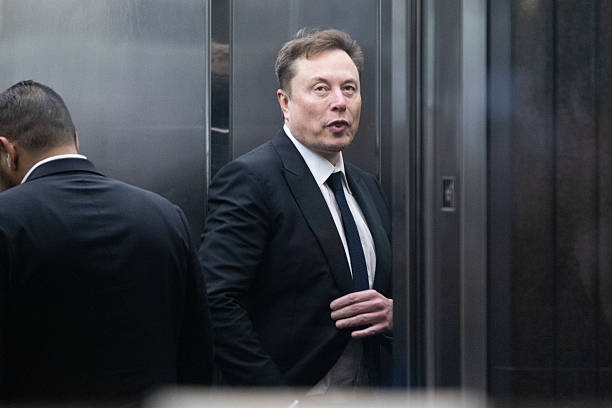
Elon Musk, a figure whose name has become synonymous with audacious technological ambition and a certain brand of disruptive swagger, has reportedly crossed the threshold into trillionaire status. This isn’t just another financial milestone; it’s a number that dwarfs even the most astronomical figures previously associated with him, like his net worth, which has fluctuated in the hundreds of billions. It prompts a re-evaluation of the narrative that has surrounded him for years – a narrative that often positioned him as a visionary outsider battling entrenched systems, a modern-day titan forging a path towards a multi-planetary future. But as the zeros accumulate, a more complex, and perhaps more telling, picture emerges, one that speaks less to singular genius and more to the shifting sands of cultural influence, personal branding, and the insatiable appetite for spectacle in the digital age.
Musk’s ascent wasn’t always paved with such staggering wealth. In the early 2000s, he was primarily known as the co-founder of Zip2 and the architect of X.com, which later merged with Confinity to become PayPal. His early public persona was that of a determined, if somewhat eccentric, entrepreneur. He famously poured much of his PayPal fortune into SpaceX and Tesla, betting his entire fortune on the belief that humanity needed to become a spacefaring civilization and that electric vehicles were the future of transportation. These were not just business ventures; they were presented as missions, imbued with a sense of urgency and a grander purpose. His early pronouncements often focused on the existential threats facing humanity – climate change, the potential for asteroid impacts, and the eventual need to colonize other planets. This framing cast him as a latter-day Prometheus, stealing fire from the gods of inertia and apathy to propel humanity forward.
The mid-period of Musk’s public life saw a gradual, yet noticeable, shift. While the grand visions of Mars colonization and electric car dominance remained central, his public interactions began to take on a different texture. His use of Twitter (now X) evolved from occasional company updates to a more direct, often unfiltered, channel for personal commentary, memes, and, increasingly, controversial statements. Moments of ambiguity arose as his pronouncements on product timelines or technological breakthroughs occasionally proved overly optimistic, leading to scrutiny. The acquisition of Twitter itself in late 2022 marked a pivotal moment, transforming him from a powerful observer of the digital sphere to its de facto owner and chief architect. This move, ostensibly to protect free speech, also placed him at the center of a maelstrom of content moderation debates, platform instability, and widespread employee upheaval, starkly contrasting with the focused, mission-driven image of his earlier years.
The crystallizing narrative of Musk today is one of a figure who wields immense power not just through his companies but through his direct, often volatile, engagement with public discourse. His recent actions, from battles over his compensation packages to his controversial pronouncements on geopolitical events and his unpredictable platform management, have cemented a public perception that is less about the distant stars and more about the immediate, often chaotic, present. The trillion-dollar valuation, while a testament to the market’s faith in his enterprises, also underscores a persona that has increasingly become a performance piece, a curated spectacle designed to maintain attention and influence.
This evolution has not gone unnoticed, nor has it been without significant backlash. Musk has engaged in public feuds with journalists, regulators, and even other prominent figures in the tech industry. His management style at Twitter, characterized by rapid firings and sweeping policy changes, has led to significant industry responses and widespread audience pushback, with advertisers fleeing and user engagement patterns shifting. The media framing has often oscillated between celebrating his entrepreneurial genius and dissecting his increasingly erratic public behavior, creating a feedback loop where controversy itself seems to fuel his relevance. His willingness to court these reactions, to engage in provocations, suggests a strategic calculus where attention, regardless of its valence, is a currency he is adept at accumulating.
Crucially, Musk himself has offered glimpses into his motivations, often couched in his characteristic blend of futurism and provocation. While he rarely admits to seeking mere attention, his actions and statements often betray a deep-seated desire to provoke thought, challenge norms, and, by extension, remain at the center of the cultural conversation. When discussing his often-controversial takes on social issues or his management of X, he frequently invokes principles of free speech or the need for robust debate, framing his actions as essential, albeit uncomfortable, steps towards a more open society. For instance, his justification for reinstating controversial accounts on X was framed as a commitment to open discourse, even as it alienated advertisers and drew sharp criticism for amplifying hate speech. This framing suggests a performance of ideological conviction, where the act of challenging prevailing sentiments is as important as the substance of the claims themselves. It’s a strategy that ensures he remains a constant, unavoidable presence, regardless of the specific topic at hand.

What does this trillion-dollar spectacle reveal about our current cultural moment? It highlights a profound tension between relevance and legacy. In an era saturated with information and fleeting trends, maintaining relevance often requires constant reinvention and a willingness to push boundaries, sometimes to the point of self-destruction. Musk’s trajectory suggests that for some, the pursuit of relevance has eclipsed the slower, more deliberate cultivation of a lasting legacy. The line between authenticity and performance has blurred to an almost indistinguishable degree. Is he the driven visionary, or a master of calculated provocation? The answer, likely, is both, and the ambiguity is precisely what sustains his omnipresence. This era also underscores the outsized role of power and attention in the modern media ecosystem. Influence is no longer solely derived from institutional authority or established expertise, but from the ability to capture and direct the public’s gaze, often through sheer force of personality and a willingness to engage in public spectacle. Cultural authority is fluid, contested, and increasingly performative, with individuals like Musk demonstrating how to build and maintain it through a relentless engagement with the digital public square.
As Elon Musk’s financial empire continues to expand, reaching figures that were once confined to science fiction, one must question the enduring resonance of his chosen methods. The trillion-dollar mark is a staggering achievement, a testament to his business acumen and the market’s validation of his ventures. Yet, the constant need for provocation, the embrace of controversy, and the performance of a singular, often unpredictable, persona raise questions about the sustainability of this model. In a world increasingly weary of manufactured outrage and longing for genuine substance, does this strategy of perpetual spectacle still carry the same weight? Or is this the hallmark of a cultural moment where the loudest voice, regardless of its message, commands the most attention, leaving us to wonder what truly defines a legacy when the numbers become almost incomprehensible?