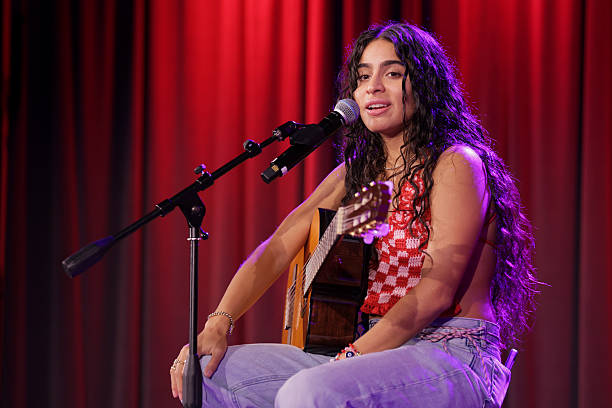
Jessie Reyez, an artist who has consistently projected an image of raw vulnerability and unflinching authenticity, recently declared herself “f— tired” and announced a drastically scaled-back tour of only ten shows. This candid admission, starkly contrasting with the relentless touring schedules often expected in the music industry, opens a window into a broader conversation about the pressures of modern artistry, the commodification of personal struggle, and the ever-present tension between an artist’s well-being and their public persona.
Reyez’s career trajectory has been built on a foundation of intense emotional honesty. From her early breakout single “Figures,” a gut-wrenching ballad that resonated deeply with listeners for its unvarnished portrayal of heartbreak, she cultivated a reputation for being an artist who wears her heart on her sleeve. Her music, often infused with themes of pain, resilience, and defiant sensuality, became a soundtrack for many navigating similar emotional landscapes. This raw, unfiltered approach was not just a stylistic choice; it was the core of her artistic identity, amplified by a powerful stage presence that often left audiences captivated by her sheer emotional output. Early interviews and social media posts frequently emphasized this commitment to unfiltered expression, positioning her as a genuine voice in a sometimes manufactured industry. Her visual aesthetic and lyrical content consistently leaned into a portrayal of strength forged through hardship, a narrative that resonated powerfully with a generation seeking relatable, unpolished artistry.
The mid-period of Reyez’s career saw her navigating the complexities of growing fame. While her critical acclaim and fan base continued to expand, evident in awards like a Juno Award for her EP ’11:11′, the demands on her time and emotional energy undoubtedly intensified. The pressure to maintain the same level of raw output while engaging with the commercial aspects of the music industry—promotions, interviews, and larger tours—began to show subtle cracks. Moments of ambiguity might have surfaced in the way her intensely personal narratives were sometimes framed by media outlets, occasionally bordering on sensationalism, which could inadvertently create a feedback loop demanding more outward displays of struggle to maintain relevance. This period was characterized by a delicate balancing act: delivering the authentic vulnerability her fans craved while managing the escalating pressures of a burgeoning international career.
The recent announcement of a limited ten-show tour, framed by her explicit statement of exhaustion, crystallizes the current narrative. It marks a deliberate, public deceleration, a stark departure from the industry norm of constant touring. This decision is not merely about a few weeks off; it signals a potential recalibration of her relationship with her career and public life. It forces a confrontation with the sustainability of an artistic persona that thrives on intense emotional output when that output comes at a significant personal cost. The public perception is now shifting from an artist who embodies struggle to an artist who is acutely aware of its limits and the need for self-preservation. This move has understandably generated a mix of concern and admiration, with many fans expressing support for her prioritizing her well-being, while others might question the implications for her career momentum.
The industry, accustomed to artists pushing through exhaustion, has largely responded with measured understanding, though the underlying economic realities of music often necessitate constant performance. Peer reactions, often kept private, likely echo the internal conflicts many artists face regarding burnout. Media framing has been crucial; while some outlets have highlighted her candidness as a brave act of self-care, others might interpret it through the lens of diminishing star power or a strategic move to create scarcity. This tension between the artist’s personal reality and the industry’s expectations forms the crux of the conflict. Reyez’s statement, however, is not an isolated incident but part of a growing chorus of artists speaking out about the unsustainable demands of the modern music machine. The conversation around mental health and burnout within the music industry has gained significant traction in recent years, with artists like Ariana Grande and Selena Gomez also sharing their struggles.
Reyez herself has offered glimpses into the motivations behind her current stance. Her declaration of being “f— tired” is a direct admission of the toll her career has taken. This isn’t just a casual complaint; it’s a statement of depletion rooted in years of sustained, high-energy emotional and physical output. While she hasn’t explicitly detailed a grand strategy, the implication is clear: the current pace is unsustainable. This self-admission, devoid of typical industry platitudes, underscores a desire for a more sustainable way of operating, one that acknowledges personal limits rather than sacrificing them at the altar of constant visibility. It speaks to a growing awareness among artists that their personal well-being is not a secondary concern but a prerequisite for sustained creativity and relevance.

What Reyez’s situation reveals about our current cultural moment is multifaceted. It highlights the precarious balance between relevance and legacy. In an era where constant digital presence and output are often equated with relevance, Reyez’s deliberate step back challenges this paradigm. It questions the nature of authenticity versus performance; when an artist’s raw emotion is their brand, how do they navigate the moments when that emotion is genuine exhaustion rather than artistic inspiration? This situation also underscores the complexities of power, attention, and influence in the modern media ecosystem. Artists are expected to be perpetually available, their lives curated for public consumption, yet also to maintain an aura of genuine, unmanufactured experience. Gaining and maintaining cultural authority today often means navigating this paradox, finding ways to be both visible and protected, transparent and strategically guarded. Reyez’s move suggests a potential shift in how cultural authority might be wielded—not through perpetual availability, but perhaps through deliberate choices about one’s energy and presence.
Ultimately, Jessie Reyez’s candid admission of exhaustion and her decision to scale back her touring schedule offers a potent commentary on the realities of artistic life in the 21st century. It’s a humanizing moment that challenges the industry’s often-unspoken expectation of relentless self-exploitation. As the landscape of music consumption and artist engagement continues to evolve, the question remains whether this strategy of prioritizing well-being over constant output will resonate with audiences and peers, or if it represents a lonely stand against an environment that still demands more than any single artist can sustainably give. Reyez is not just tired; she is a bellwether, signaling a potential reckoning with the true cost of sustained performance in a culture that relentlessly craves more.