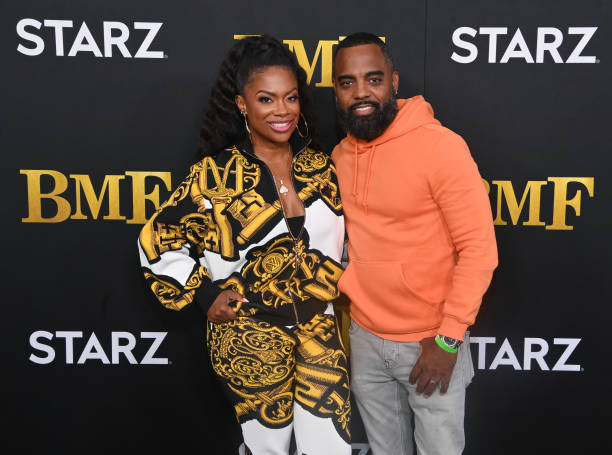
Kandi Burruss’ recent revelation that Todd Tucker ‘tried multiple times’ to pitch a show about the men who orbit The Real Housewives of Atlanta — and that ‘no one was interested’ — reads less like gossip and more like a diagnostic about how reality TV decides which personalities become fronted narratives. The admission exposes the commercial and cultural filters that determine who gets the spotlight.
The Housewives franchise has long been fertile ground for spin-offs, brand extensions, and personality-led ventures. But flipping the camera from the women to the men who populate their lives has not tracked the same path. Burruss’ account that those pitches failed to gain traction highlights a consistent gap between on-screen visibility and executive confidence in a new kind of show.
At its simplest, this is a programming calculus. Networks and streamers favor projects with a clear protagonist and a market-tested hook; the Housewives brand has been built around the women as engines of drama, commerce, and audience loyalty. Male figures in the franchise often operate as supporting characters, which makes packaging a male-led series a trickier proposition.
There are also branding and risk-management considerations. A men-focused series drawn from a female-centered franchise would need to justify why audiences should follow those narratives independently. Executives may worry that removing the franchise’s established emotional center alters the chemistry that made the original shows bankable.
Beyond business logic this moment reveals something cultural: reality TV remains gendered in the kinds of attention and agency it grants. The Housewives ecosystem has given many women a platform to become entrepreneurs and public figures; men who appear in that orbit are frequently framed through their partners. That structural imbalance shapes which stories are seen as worth investing in.
At the same time, audience habits and distribution channels have changed. A concept that conventional networks deem too risky might find life in niche streaming, a produced digital series, or direct-to-fan platforms. The lack of mainstream interest today does not necessarily mean the idea has no audience — only that it may not fit the traditional gatekeepers’ playbook.

Ultimately Burruss’ remark functions as a small but revealing snapshot of how storytelling power is allocated in reality TV. Whether Todd Tucker or another producer circles back with a different format, or whether platforms willing to experiment step in, the exchange points to a larger question about whose interiority is monetized and why.
For viewers and creators alike the takeaway is sharp: being a memorable presence on a franchise does not automatically translate into being a bankable solo star. The men of RHOA may be headline-makers in a supporting role, but turning that role into its own narrative remains a challenge shaped by market assumptions as much as by creative possibility.