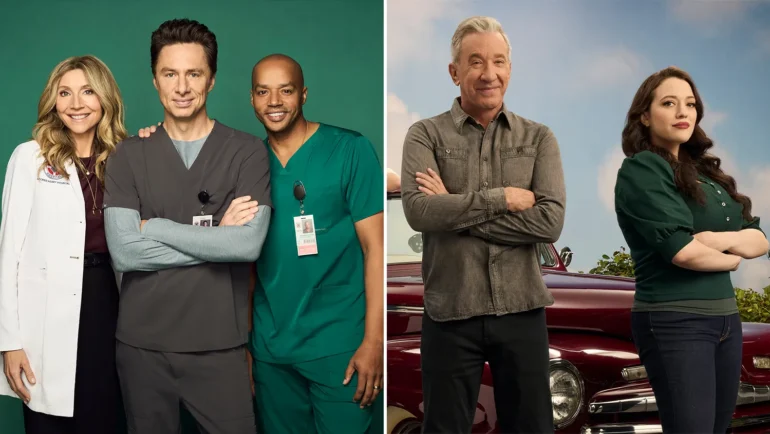
The recent news that ABC has renewed veteran sitcoms Scrubs and Shifting Gears—both shows that have long been staples of the network’s schedule—while simultaneously canceling Rachel Bloom’s critically acclaimed series Do You Want Kids? might seem like a simple business decision. Yet, this seemingly straightforward programming shift offers a compelling microcosm of broader cultural transformations occurring in the modern media landscape. It highlights a growing tension between the comfort of established, nostalgic narratives and the appetite for fresh, often more challenging, voices, revealing a complex interplay of audience preferences, industry economics, and the very definition of cultural relevance in an era defined by constant flux.
For years, the television landscape has been dominated by familiar franchises and long-running shows that provided a sense of reliable comfort for audiences. Scrubs, a beloved medical comedy known for its unique blend of humor and heart, first aired in 2001, and its longevity speaks to its enduring appeal. Similarly, Shifting Gears, a car-themed reality competition, has carved out a dedicated following over its multiple seasons. These shows, representing a certain era of network television, tap into nostalgia and a desire for the predictable. They are safe bets for networks, offering a known quantity in an increasingly unpredictable market. This strategy has historically ensured stability, providing a consistent viewership base that advertisers value.
In stark contrast, Rachel Bloom’s Do You Want Kids?, which premiered in 2021, represented a more contemporary approach to storytelling. Bloom, celebrated for her sharp wit and unflinching honesty in the cult hit Crazy Ex-Girlfriend, brought her signature style to a docuseries exploring the complexities of fertility and childbearing. The show was lauded for its vulnerability, its exploration of nuanced societal pressures, and its ability to foster genuine connection with its audience through shared experiences and frank discussion. It garnered critical praise and a dedicated following, positioning itself as a show that was not only entertaining but also culturally resonant, sparking conversations about modern womanhood and family planning.
The decision to cancel Do You Want Kids? while renewing shows with older demographics and established fanbases suggests a network’s prioritization of perceived stability over progressive artistic merit. This move has not gone unnoticed by critics and audiences alike. The cancellation sparked a wave of disappointment and debate across social media and entertainment news outlets, with many questioning whether the industry is prioritizing nostalgia and broad, less specific appeal over shows that tackle more niche but culturally relevant themes. The narrative often framed around such decisions is one of demographics and profitability, but beneath the surface lies a deeper commentary on what kind of stories are deemed worthy of continuation in an era where cultural capital is increasingly fragmented and contested.
The industry itself often grapples with this dichotomy. Networks are under immense pressure to deliver consistent ratings and revenue, which can lead them to favor established properties with proven track records. This is especially true as streaming services continue to fragment the audience, making it harder for traditional broadcast television to maintain its dominance. In this environment, the allure of a show like Scrubs, with its decades-long history and a generation of fans, or Shifting Gears, which appeals to a specific hobbyist demographic, presents a less risky investment than a newer show that, while critically acclaimed, may have a more limited or less easily quantifiable audience. This calculation, however, risks overlooking the power of cultural relevance and the potential for newer, more diverse voices to capture the zeitgeist and build future fanbases.
Rachel Bloom herself, through her previous work, has demonstrated a keen understanding of the performance of authenticity and the power of self-awareness. In Crazy Ex-Girlfriend, she masterfully blended sharp social commentary with deeply personal explorations of mental health and societal expectations. While she has not publicly commented extensively on the cancellation of Do You Want Kids?, her history suggests an awareness of the delicate balance between artistic integrity and commercial viability. The very nature of her docuseries, delving into intimate and often emotionally fraught subjects, inherently positions it as a different kind of programming than a long-running sitcom or a reality competition. It requires a specific kind of audience engagement—one that is perhaps less about passive consumption and more about active connection and reflection.

This situation speaks volumes about the current cultural moment. We are living in an era where the lines between authenticity and performance are increasingly blurred. Audiences crave genuine connection and relatable narratives, yet the media ecosystem is often geared towards optimizing for engagement through spectacle and established brands. The concept of relevance is constantly being renegotiated; is relevance measured by sheer numbers and broad appeal, or by the depth of connection and the intensity of conversation a show can generate among its dedicated viewers? The survival of shows like Scrubs and Shifting Gears, while often welcome for their nostalgic value, can also be seen as a symptom of a broader cultural tendency to retreat into the familiar, perhaps as a defense mechanism against the complexities and uncertainties of the present. This doesn’t diminish the value of these shows, but it does raise questions about the space available for new, challenging, and potentially more impactful narratives.
Furthermore, the economics of television are undeniable. The rise of streaming has forced traditional networks to adapt, often by consolidating resources and focusing on less risky programming. This can lead to a flattening of creative output, where bold, innovative projects are sidelined in favor of established formats. The cultural authority that was once held by a few major networks is now dispersed across numerous platforms, each vying for attention. In this fragmented landscape, the ability to generate buzz and sustained cultural conversation becomes paramount, and it’s unclear whether the strategy of relying on evergreen content will serve networks in the long run, or if it will ultimately lead to a decline in cultural impact and audience loyalty.
Ultimately, the decision to renew established hits while letting go of a show like Do You Want Kids? reflects a television industry at a crossroads. It grapples with how to balance the demands of a rapidly evolving media economy with the desire to reflect the complexities of contemporary life. While the comfort of familiar programming has its place, the continued success and cultural resonance of television will increasingly depend on its ability to embrace new voices and tackle challenging subjects. The question remains whether networks will adapt to this changing landscape by fostering innovation and diversity, or if they will continue to lean on the comforting, yet potentially stagnant, embrace of the past, risking their relevance in the process.