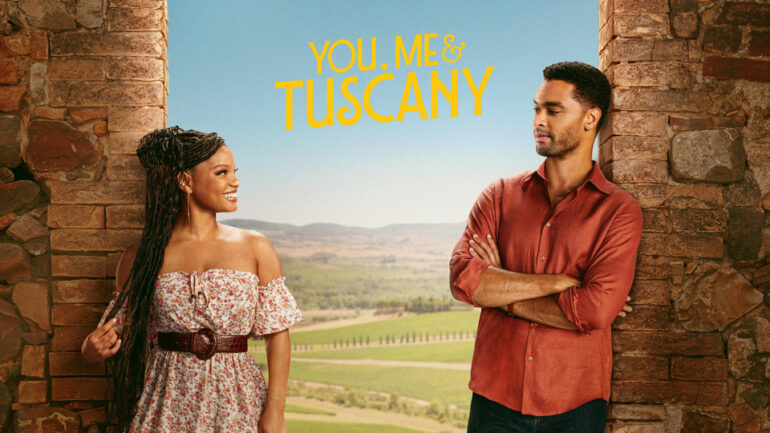
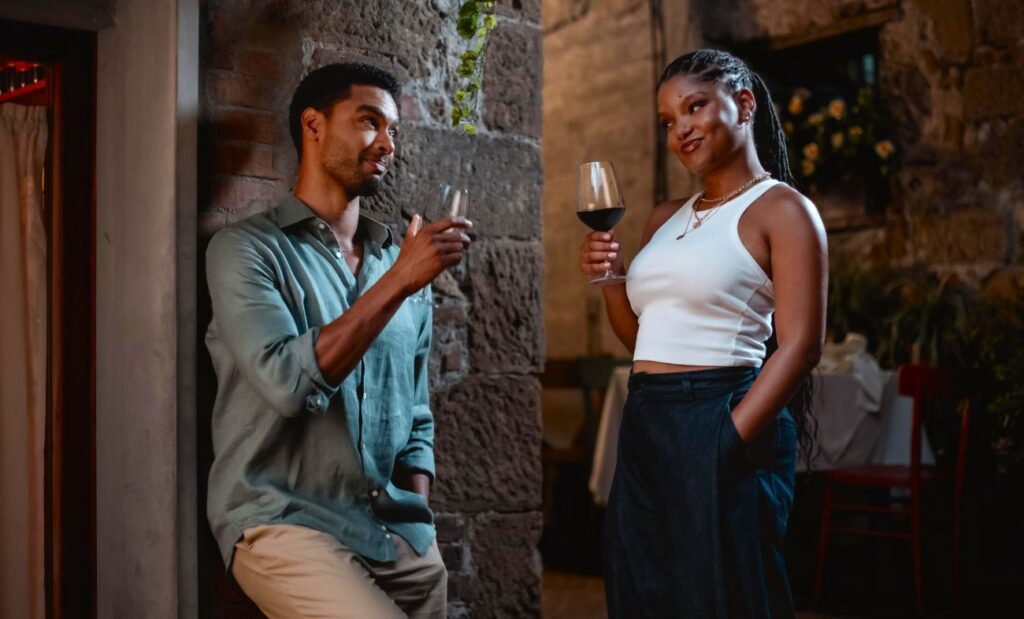
In an industry that prides itself on creativity and innovation, the barriers of entry to share this creativity are high, especially for Black creatives. The upcoming rom-com You, Me & Tuscany starring Rege-Jean Page and Halle Bailey has recently become part of a broader conversation about equity in Hollywood. According to award-winning producer Nina Lee, studios are watching closely to see how the film performs in theaters before deciding whether to greenlight other Black-led projects. Revealing the ongoing issues of Black stories still being treated as experiments rather than investments.
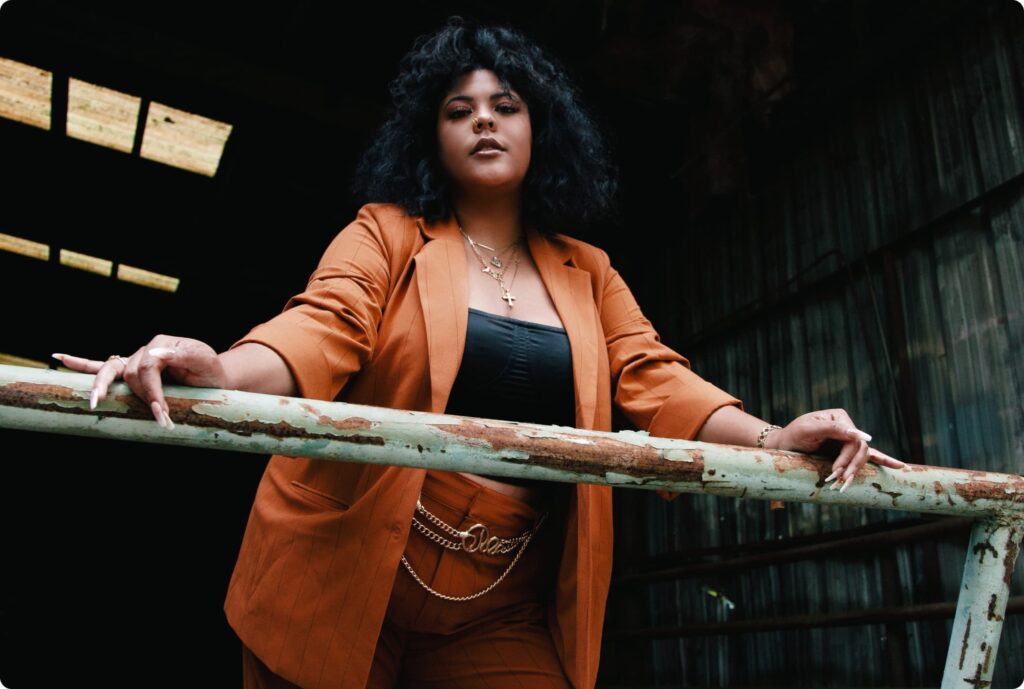
Conditional Greenlighting
Lee’s comments highlight a harsh reality that many Black creatives know, that Black-led projects are always required to prove their worth before they are even fully supported. But how can a film succeed if it is not given the same resources, marketing budgets, opportunity, and backing as White-led films? There have been so many White-led rom-coms that have financially flopped within the past few years, including Fly Me to the Moon, Licorice Pizza, and Palm Springs, but yet they continue to get made.
Hollywood has historically operated on a “track record” mentality, but that standard is not applied equally. While films with predominantly White casts continue to get greenlit regardless of success, Black films are more likely to be treated as high-risk ventures. This results in fewer opportunities for our stories to be told.
The Myth of “Marketability”
Another layer to this issue is the continued myth that Black stories are less “marketable.” Still, history provides a rather different narrative. Not only have movies like Black Panther, Get Out, Girls Trip, and The Woman King been financially successful, but they have also changed social interactions and broadened international viewership.
Still, every new Black-led project is usually judged as though it stands alone and needs to prove itself. This pattern mirrors what some in media refer to as “exceptionalism bias,” where successful Black projects are viewed as abnormalities rather than as proof of a viable market.
Structural Barriers Behind the Scenes
Studies by the UCLA Hollywood Diversity Report always demonstrate that although on-screen diversity has increased, there are still inequities that affect what stories are told and the effort studios put into those films to make them successful.
Lee’s statement highlights this discrepancy in this industry. The concept that the success of one movie may define the course of future endeavors points to a lack of institutional dedication to diversity.
The Double Standard of Success
What makes this situation particularly frustrating is the double standard. When a Black-led film underperforms, it is often used as justification to not invest in other Black-led projects, which enforces the idea that Black stories are inherently risky.

However, there has been progress. With the success of streaming platforms, independent production companies, and Black-led studios, there are creatives making avenues for storytelling with creators like Issa Rae, Jordan Peele, and Ava DuVernay carving out spaces that challenge traditional gatekeeping.
Despite this, the fact that a film like You, Me & Tuscany is still subject to conditional support shows the industry still has some ways to go.
Beyond the Box Office
Ultimately, the conversation surrounding You, Me & Tuscany is about more than just the film itself. It is about redefining how success is measured and who gets to be seen as a safe investment. It is about recognizing that Black audiences are not niche and that Black stories are not limited in scope or appeal.
If studios are watching, as Lee suggests, the question should not be whether the film performs well enough to justify future projects. The question should be why that justification is still necessary in the first place.