For years, the narrative surrounding Karol G was one of “almost.” She was the reggaeton princess waiting for a crown that seemed permanently reserved for the men of the genre or the crossover queens of the early 2000s. She was the artist who played the mid-afternoon festival slots, the one who collaborated with the titans but rarely stood as their equal in the eyes of the English-language establishment.
Then came Sunday night in Indio.
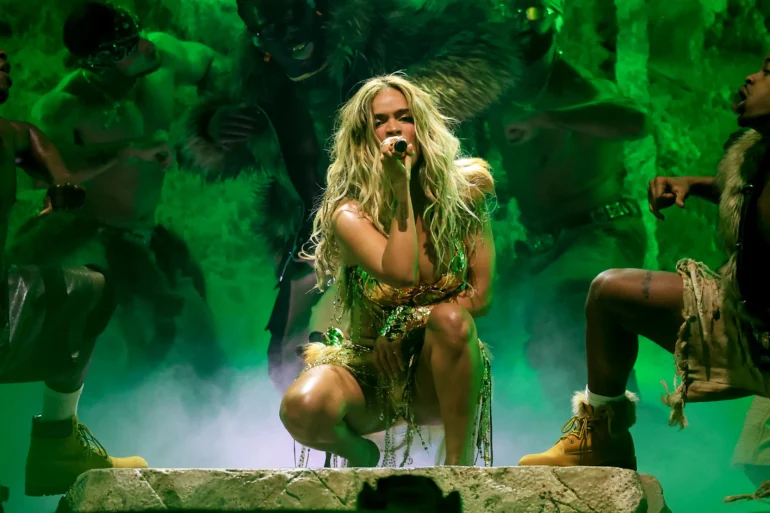
As Karol G ascended a massive, macaw-shaped structure to headline Coachella 2026, the contrast wasn’t just in the production value—it was in the stakes. This wasn’t the bubbly, neon-haired “Bichota” of 2021 trying to prove she belonged. This was Carolina Giraldo Navarro, the “cultural architect,” navigating a performance that felt less like a pop concert and more like a manifesto. In a year defined by political volatility and a shifting Latin music landscape, Karol G’s Coachella set revealed the friction between global superstardom and the heavy, often dangerous, responsibility of cultural representation.
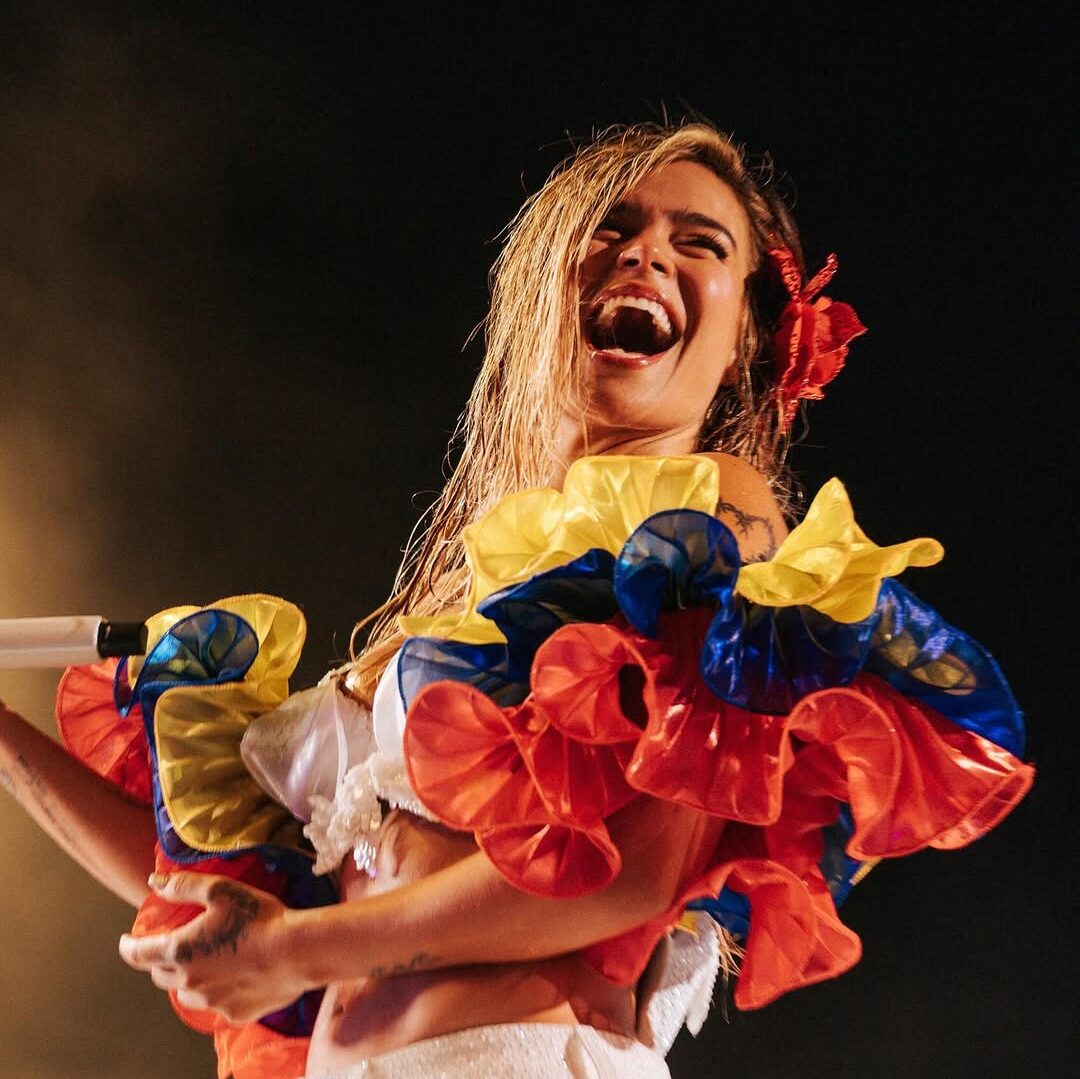
From Medellín to the Main Stage: A Timeline of Intent
The trajectory of Karol G has been a slow-burn exercise in strategic patience. Unlike the overnight viral surges of the TikTok era, her rise was built on a foundation of traditional “working for it.”
- The Early Blueprint (2010–2017): Emerging from the Medellín “quinceañera circuit,” her early work was defined by a clean, pop-inflected reggaeton. She was positioned as the approachable female alternative in a male-dominated “Urban” scene, finding her footing with the Bad Bunny-assisted “Ahora Me Llama.”
- The “Bichota” Pivot (2020–2023): The transition from girl-next-door to empowered icon began with Mañana Será Bonito. She became the first woman to debut at #1 on the Billboard 200 with an all-Spanish album. Here, the “Bichota” brand was born—a blend of vulnerability and “fuck-it” energy that resonated with a Gen Z audience hungry for authenticity.
- The Architect Era (2024–2026): By 2025, the music was no longer enough. She launched the Bichota Records flea market initiative and the Con Cora foundation, rebuilding schools in Colombia. The Coachella announcement in late 2025 solidified her status: she wasn’t just a singer; she was an institution.
The Performance as Politics
The lead-up to Coachella 2026 was marred by a tension that modern pop stars rarely have to vocalize: the cost of speech. In a revealing Playboy cover story released just days before her set, Karol G admitted to the “bait” she had become. Amidst a climate of immigration crackdowns and anti-Latino rhetoric, fans and activists pressured her to use the Coachella stage to denounce ICE (Immigration and Customs Enforcement).
The conflict was palpable. Speaking out could jeopardize the very visa that allowed her to stand on that stage. “You become bait, because some people want to show their power,” she told Playboy. “I don’t want to just say ‘ICE Out’ and have nothing come from it… I’m probably going to go a little harder than that.”
On stage, she opted for the “oblique” over the “inflammatory.” Instead of a slogan, she gave the crowd a cover of Gloria Estefan’s “Mi Tierra,” a poignant ode to the homeland. She brought out an all-female mariachi troupe and shared the stage with Puerto Rican pioneer Wisin. It was a strategic nod to the roots—a way of saying that Latinidad is not a monolith, but a fortified history that cannot be easily dismantled by policy.
The reaction was split. While industry peers and the majority of her fanbase hailed the set as a “masterclass in cultural significance,” a vocal segment of the internet questioned if her “measured” approach was a symptom of the very control she claimed to be fighting. Was it a “fuck-it” era, or a “calculated” one?

The Admission of Strategy
What makes Karol G’s current era distinct from her contemporaries is her candid admission of the fear that accompanies her level of fame. She is no longer pretending that being a global icon is a seamless experience.
“When I received the call [for Coachella], I felt like a huge weight fell on me,” she admitted in April 2026. “I thought that this was going to be like my consecration, but I actually feel like it’s the beginning.”
This admission—that she felt “thrown to the floor” by life in 2025—humanizes the “Bichota” myth. Her Coachella set, with its sprawling 25-song setlist and Parris Goebel choreography, wasn’t just a celebration; it was a reclamation of space. By blending high-concept indie collaborations with Greg Gonzalez (of Cigarettes After Sex) alongside raw Brazilian funk and salsa-fied versions of “Tusa,” she argued that a Latina headliner doesn’t have to choose between being “global” and being “authentic.”
Karol G at Coachella 2026 didn’t just break a glass ceiling; she redesigned the room underneath it. She proved that in the current cultural climate, the most radical thing a Latin artist can do isn’t necessarily to scream—it’s to refuse to be erased, even when the lights are at their brightest.