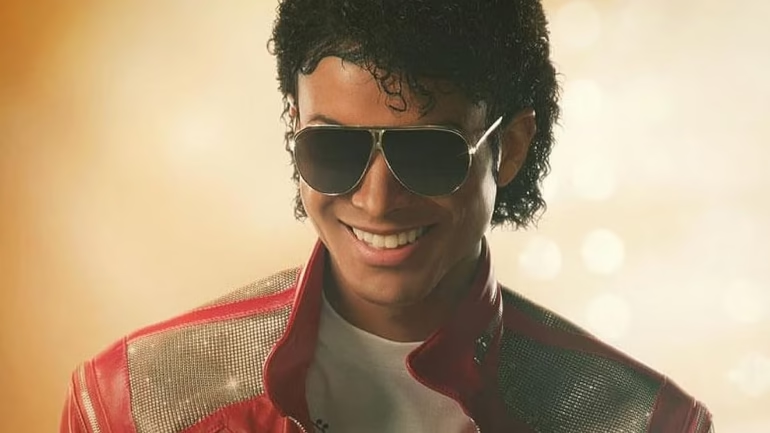

For decades, the name Michael Jackson conjured a kaleidoscope of images: the moonwalking prodigy, the King of Pop, a figure of immense global adoration, and later, a subject of intense scrutiny and controversy. His life was a masterclass in performance, evolution, and the often-painful complexities of fame. Now, the cinematic retelling of his life, titled simply ‘Michael,’ is on pace to shatter box office records for the opening week of a musical biopic, a testament to the enduring fascination with his story, and perhaps, a more profound commentary on how we consume and mythologize cultural icons in the digital age.
The film, starring Jaafar Jackson, Michael Jackson’s own nephew, as the titular pop star, arrives at a moment when the boundaries between artist, persona, and person are more fluid than ever. While the box office numbers signal a commercial triumph, they also prompt a critical examination of what this success signifies. Is it merely a reflection of a beloved artist’s lasting appeal, or does it speak to a broader cultural appetite for curated narratives that sanitize complex histories, offering a more palatable version of genius for mass consumption?
The early years of Michael Jackson’s career were defined by an almost otherworldly talent. From his electrifying performances with the Jackson 5 to his groundbreaking solo work, he was a child prodigy who transcended genres and racial barriers. His early positioning was that of a wholesome, exceptionally gifted entertainer, a pure artist whose music spoke for itself. Albums like ‘Off the Wall’ and ‘Thriller’ were not just commercial successes; they were cultural touchstones, cementing his image as a universally adored figure. His music videos, particularly those for ‘Thriller,’ ‘Billie Jean,’ and ‘Beat It,’ redefined the art form, showcasing a visionary sensibility that seemed to emerge from a place of unparalleled creative instinct. This era established a narrative of pure artistic brilliance, an almost mythical ascent to global superstardom.
As Jackson’s career progressed, so too did the complexities surrounding his public persona. The mid-period of his career saw a noticeable shift. His physical appearance began to change dramatically, sparking widespread speculation and concern. The groundbreaking success of ‘Thriller’ was followed by albums like ‘Bad’ and ‘Dangerous,’ which, while still massive hits, were accompanied by an increasing sense of isolation and eccentricity. His public appearances became rarer, and when they did occur, they were often met with a mixture of awe and unease. The Neverland Ranch, his sprawling estate, became a symbol of his detachment from reality and a focal point for mounting accusations that would shadow him for years. This period was marked by ambiguity; the pure artist was increasingly intertwined with a figure whose personal life became as much a topic of discussion as his music. The narrative began to fracture, with questions arising about the man behind the music, and whether the pressures of superstardom had irrevocably altered him.
The recent crystallizing moments that have shaped the current perception of Michael Jackson’s legacy, and thus the immense interest in his biopic, are undeniably tied to the ongoing reverberations of the accusations of child sexual abuse, most notably brought to light in the 2019 documentary ‘Leaving Neverland.’ This docuseries presented harrowing testimonies from Wade Robson and James Safechuck, detailing alleged abuse they suffered at the hands of Jackson during their childhoods. The film sparked renewed debate, with many fans and critics re-evaluating Jackson’s legacy and calling for a more critical engagement with his work. The subsequent trial where his estate was sued by the accusers, ending in a wrongful death lawsuit dismissal in 2021, further solidified the divisive nature of his public image. These events have created a stark contrast between the unblemished King of Pop of yesteryear and the deeply controversial figure many perceive him to be today. The success of the biopic, therefore, is not occurring in a vacuum but against a backdrop of intense cultural reckoning and deep-seated division.
The public reaction to the narrative surrounding Michael Jackson has been, and remains, profoundly polarized. On one hand, legions of devoted fans continue to defend him, often citing his acquittal in the 2005 child molestation trial as proof of innocence and dismissing later allegations as opportunistic or untrue. This faction often views critical portrayals or documentaries like ‘Leaving Neverland’ as unfair attacks on an artist they believe was persecuted. On the other hand, many are deeply disturbed by the accounts of alleged abuse and argue that Jackson’s artistic genius cannot and should not excuse his alleged actions. This has led to a cultural standoff, where discussing Jackson often involves navigating a minefield of deeply held beliefs and emotional responses. Industry responses have been largely cautious, with major platforms and artists often hesitating to take a definitive stance, opting instead for a nuanced acknowledgment of both his artistic impact and the serious allegations. The media framing has oscillated between celebrating his musical achievements and dissecting the controversies, often struggling to reconcile the two without alienating significant segments of the audience.
While Michael Jackson himself is no longer able to address these issues directly, his estate and those involved in the biopic have made statements that implicitly acknowledge the delicate balancing act required. Director Antoine Fuqua and star Jaafar Jackson have spoken about their desire to tell a comprehensive story, with Fuqua stating, “It’s not about saying he’s innocent or guilty. It’s about telling the story of Michael Jackson. It’s about telling the story of the man.” This framing suggests an intention to present a neutral portrayal, focusing on the artist’s life and career, while sidestepping the more fraught aspects of the allegations. The estate has consistently maintained Jackson’s innocence, a position that informs the narrative choices made in projects like the biopic. This strategic approach, to focus on the ‘artistry’ and ‘genius’ while attempting to contextualize or distance from the controversies, is a well-worn path for managing the legacies of complex, and sometimes compromised, cultural figures. It’s a performance of its own, designed to secure a place in cultural memory that prioritizes acclaim over accountability.

The phenomenal box office success of ‘Michael’ speaks volumes about our current cultural moment, particularly concerning the enduring tension between relevance and legacy, and the performance of authenticity in the modern media ecosystem. In an era where social media allows for direct access to artists and immediate public judgment, the curated, often sanitized, narratives presented in biopics can serve as a powerful tool for shaping historical perception. The film’s apparent success suggests a powerful, perhaps even desperate, cultural desire to reclaim or redefine the narrative of figures like Michael Jackson, prioritizing the celebration of artistic achievement over a full reckoning with the darker aspects of their lives. It highlights how power and influence, particularly in the music industry, can allow for the construction of legacies that selectively emphasize certain truths while downplaying or ignoring others. The battle for cultural authority is increasingly fought in the realm of narrative control, where the loudest voices, or the most commercially successful ventures, can often drown out more nuanced or critical perspectives.
Furthermore, the situation reflects a broader pattern of how we grapple with genius and morality. The willingness of audiences to flock to a film that celebrates Jackson’s artistry, even with the shadow of serious allegations hanging over him, indicates a cultural tendency to compartmentalize. We want to enjoy the art, the spectacle, the unparalleled talent, and often, we are willing to overlook or minimize the human flaws — or alleged transgressions — that complicate the picture. This is not unique to Jackson; it’s a pattern observed with artists across disciplines, from painters to writers to musicians, where the brilliance of the work can sometimes act as a shield against uncomfortable truths about the creator. In this context, the biopic functions not just as entertainment, but as a cultural referendum on forgiveness, selective memory, and the enduring power of performance over accountability.
As ‘Michael’ continues its box office run, its success will undoubtedly be analyzed for years to come. But its opening week performance offers a potent snapshot of our contemporary cultural landscape. It poses a critical question: in a world increasingly demanding transparency and accountability, can a carefully constructed narrative of artistic triumph continue to dominate, effectively rewriting complex histories for the sake of commercial success and sentimental legacy? Or will this moment, much like the seismic shifts in public opinion that have followed other complex cultural figures, eventually give way to a more critical, nuanced, and perhaps less profitable, examination of the men and women behind the myths? The answer lies not just in future box office numbers, but in our collective willingness to confront the uncomfortable truths that often lie beneath the dazzling surface of genius.