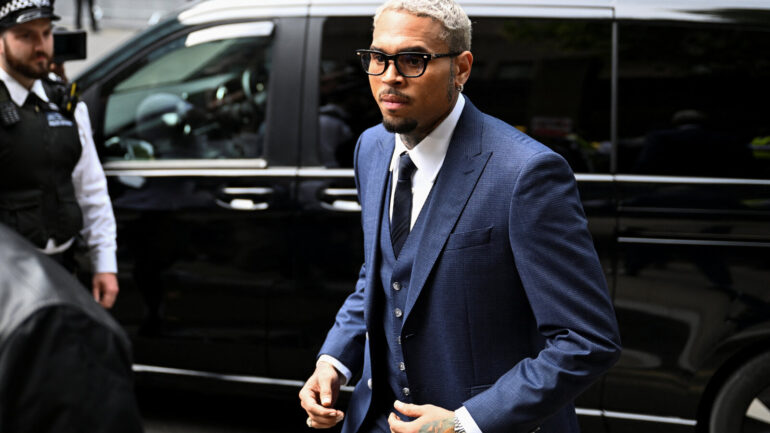
Chris Brown, an artist whose career has been a masterclass in navigating the treacherous waters of public perception and industry resilience, finds himself once again at a legal and cultural crossroads. His former housekeeper’s fight to introduce evidence of his past assault on Rihanna during an upcoming trial serves as a potent reminder that the specter of his most infamous act continues to loom large, challenging any attempts to sanitize or compartmentalize his narrative. This legal skirmish isn’t just about admissible evidence in a new case; it’s a flashpoint in the ongoing cultural reckoning with celebrity accountability, the persistence of past transgressions, and the enduring tension between an artist’s work and their personal conduct.

Brown’s career trajectory is a complex tapestry woven with undeniable musical talent and profound controversy. From his explosive debut in the mid-2000s with hits like “Run It!,” he was positioned as a charming, prodigious talent, a successor to Michael Jackson’s pop-R&B throne. His early work was characterized by infectious beats, slick choreography, and a youthful exuberance that captivated a global audience. He cultivated an image of a gifted performer, someone whose life was an open book of creative output and the typical ups and downs of young stardom. This was the persona that launched a thousand fan pages and secured a multi-platinum career.
The pivotal shift, the moment that irrevocably altered his public image, occurred in 2009 with the violent assault on then-girlfriend Rihanna. The leaked photographs of her bruised and battered face sent shockwaves through the entertainment world and beyond. While Brown initially offered a remorseful public apology, his subsequent behavior and career management have been marked by a consistent struggle to reconcile that event with his artistic ambitions. The mid-period of his career saw a series of legal troubles, including probation violations, altercations, and public outbursts, which further complicated his narrative. Despite these recurring issues, his music continued to chart, and he maintained a significant fanbase, demonstrating a remarkable capacity to endure public condemnation and continue releasing new material. This period was characterized by a push-and-pull between his undeniable musical appeal and the persistent shadow of his past, often met with a divided public—some calling for a permanent boycott, others defending his right to redemption or separating the art from the artist.
The current legal development, where his former housekeeper seeks to introduce evidence of the Rihanna assault in a new trial, crystallizes this ongoing narrative. Brown’s team is reportedly attempting to block this line of questioning, arguing it is irrelevant to the current proceedings and designed solely to prejudice the jury. This legal maneuver highlights the stark contrast between his desire to move forward and the persistent demand for accountability that his past actions continue to provoke. It’s a strategic attempt to control the narrative, to insulate his current legal battles from the foundational controversy that has defined so much of his public life. The housekeeper’s insistence, however, underscores the profound impact of the 2009 incident and the argument that it remains central to understanding his character and potential behavior.
The backlash and industry response to Brown have been varied and often contradictory over the years. While some brands and platforms have distanced themselves, others have tacitly accepted his continued presence, prioritizing commercial success over moral judgment. The media framing has oscillated between focusing on his musical achievements and detailing his legal woes, sometimes creating a narrative of a troubled genius, other times a cautionary tale. This ongoing tension fuels the public’s complex relationship with him—a willingness to engage with his music while simultaneously grappling with the ethical implications of supporting an artist with such a documented history of violence. The audience itself is divided, with a core of loyal fans often fiercely defending him against what they perceive as unfair or persistent scrutiny, while others maintain a steadfast refusal to engage with his work, viewing it as complicity.
Moments of self-admission or acknowledgment from Brown have been rare and often couched in strategic apologies or claims of misunderstanding. While he has expressed remorse for the Rihanna incident, particularly in the immediate aftermath, and has spoken about his struggles with anger management, these acknowledgments have sometimes been overshadowed by subsequent controversies. In a 2017 interview with [Complex](https://www.complex.com/music/2017/09/chris-brown-interview-interview-magazine), he reflected on his past, stating, “I was a kid. I made a mistake… I’m not tryna make excuses, but I’m tryna be honest. I was young, I was stupid.” This statement, while seemingly offering a degree of introspection, also carries the implication of seeking absolution through time and maturity, framing the assault as a youthful indiscretion rather than a foundational act of violence. More recently, his public persona often leans into a portrayal of a misunderstood artist, a father, and a resilient survivor of public scrutiny, attempting to curate a new identity that sidelines the most damaging aspects of his past.

This legal and public relations battle over the admissibility of past evidence speaks volumes about our current cultural moment, particularly regarding the concepts of relevance versus legacy, and authenticity versus performance. In an era where social media allows for constant performance and curated self-presentation, the lines between genuine transformation and strategic maneuvering are increasingly blurred. Brown’s career, in many ways, embodies the struggle for relevance in a hyper-competitive industry, where even profound controversy can be weathered if the talent and the fanbase remain strong. His enduring popularity, despite the persistent allegations and incidents, raises questions about cultural authority—how it is wielded, how it is lost, and how it can be regained, or perhaps, merely reasserted through sheer force of presence and output.
The modern media ecosystem thrives on narrative control. Celebrities, like Brown, are increasingly sophisticated in managing their public image, leveraging platforms to bypass traditional gatekeepers and communicate directly with their audience. The attempt to block evidence of past assault is a textbook example of this strategy—an effort to control the narrative within a legal framework, preventing external factors from derailing a carefully constructed present. Yet, this also highlights a deeper cultural debate about whether past actions should forever define an individual, or if redemption is a viable, and indeed necessary, component of a person’s story. The issue becomes particularly acute when the past actions involve severe violence against women, a societal concern that continues to demand robust accountability.
Ultimately, Chris Brown’s continued presence in the cultural conversation, fueled by legal battles that dredge up his darkest moments, forces us to confront uncomfortable truths about celebrity, accountability, and the enduring power of past actions. As he seeks to compartmentalize his history and maintain his career, the question remains whether his current strategy of resilience and artistic output is enough to redefine his legacy in a society increasingly grappling with the complexities of supporting public figures with problematic pasts. The housekeeper’s fight is not just a legal procedural; it’s a cultural insistence that the narrative is not yet fully written, and that accountability, however inconvenient, remains a non-negotiable component of the story of Chris Brown.