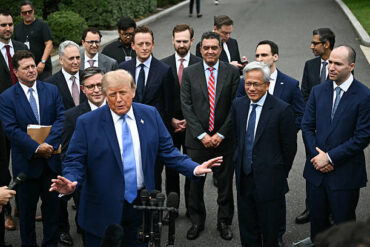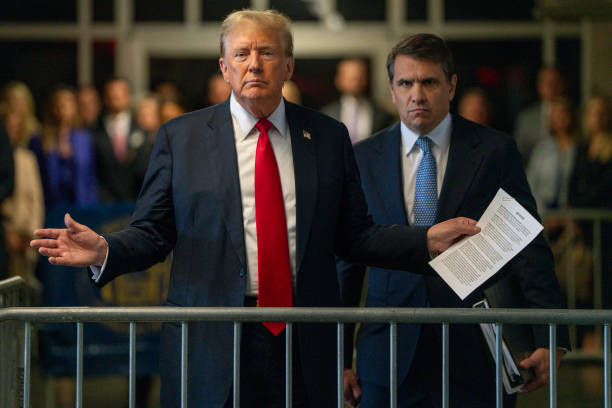
During a campaign rally in Nebraska, Donald Trump delivered a typical stream-of-consciousness speech touching on geopolitical conflict, economic pain, and nuclear escalation. Amid complaints about elevated gas prices, he remarked:
“With the war, it’s just artificial. It’s a little bit high. It’s a small price to pay for keeping the world safe, keeping our country safe. They could take out a city. Let them take out Los Angeles. Let them take out San Diego. That’s—this is a very small price to pay. And it’s going to be over very soon.”
The reaction was immediate. Democratic leaders, including California Governor Gavin Newsom and local mayors, condemned the statement as an irresponsible dismissal of American lives. The White House countered that the comments were taken out of context, claiming Trump was illustrating the hypothetical threat posed by a foreign adversary if aggressive U.S. intervention were not undertaken.
Beyond the political fallout lies a strategic question: What point was he trying to make, and does it reflect a genuine inability to contain foreign strike capabilities?
What Was He Trying to Say?
Parsing Trump’s off-the-cuff rhetorical style requires distinguishing between his underlying premise and his choice of delivery.
- Framing Short-Term Disruption vs. Long-Term Threats Trump’s primary point was to justify economic discomfort—specifically surging fuel costs caused by foreign conflict or sanctions—as a secondary concern compared to neutralizing existential threats. In his view, paying higher gas prices now prevents a far worse alternative in the future.
- Hyperbolic Threat Projection When Trump invoked foreign adversaries taking out major coastal hubs like Los Angeles or San Diego, he was using exaggerated hypothetical scenarios to drive home urgency. By naming prominent, politically opposing targets, he sought to illustrate an “extreme worst-case scenario” to convince his audience that aggressive foreign policy measures are worth the immediate cost.
- The White House Clarification Administration communications staff clarified that Trump was arguing against allowing enemy capabilities to reach that point. The official defense posits that the quote was intended as a warning—”if we don’t stop them, cities like LA and San Diego are vulnerable”—rather than an endorsement of sacrifcing major urban centers.
Is It Really Possible We Can’t Contain Them Completely?
Trump’s casual invocation of a U.S. city being targeted raises a fundamental defense query: Is complete containment of modern missile and non-conventional threats actually achievable?
Military analysts and defense strategists generally agree on several realities regarding national defense and containment:

- Limits of Missile Defense: While air defense infrastructure—such as ground-based midcourse defense systems and Aegis-equipped destroyers—is advanced, no system offers a 100% interception rate against large-scale or multi-vector ballistic missile strikes. Intercepting high-velocity, multi-stage, or hypersonic weapons remains mathematically and technically difficult.
- Geographic Vulnerabilities: Coastal metropolises such as Los Angeles and San Diego host significant infrastructure, port entry points, and major naval bases (e.g., Naval Base San Diego). Their coastal proximity reduces early-warning timelines for submarine-launched or maritime threats compared to inland locations.
- Asymmetric and Non-Conventional Warfare: “Taking out a city” does not strictly mean nuclear flattening. Modern warfare includes cyberattacks on electrical grids or water supplies, regional supply chain blockades, and asymmetric strikes—threats that are difficult to fully neutralize through conventional containment alone.
- Deterrence over Absolute Containment: Modern national security relies heavily on deterrence (the promise of retaliatory destruction) rather than absolute physical containment (blocking every incoming attack). A state may possess the raw capability to launch a strike, but deterrence prevents them from executing it.
The Gap Between Rhetoric and Reality
When Trump suggested that losing a city or enduring economic strain is a “small price to pay,” the phrase highlighted a friction point in how foreign policy is communicated.
To his supporters, the speech was a blunt, unvarnished summary of the high stakes involved in global confrontation—arguing that temporary sacrifice at the pump is minor compared to preventing catastrophic attacks. To his critics, framing major American population centers as acceptable collateral damage crossed a line from strategic deterrence into reckless political hyperbole.
While complete missile defense containment is never absolute in military science, national security policy operates on the principle that zero domestic loss is the only acceptable baseline. Trump’s remarks brought that tension to the surface, sparking a debate over the balance between domestic economic pain, international conflict, and national defense.