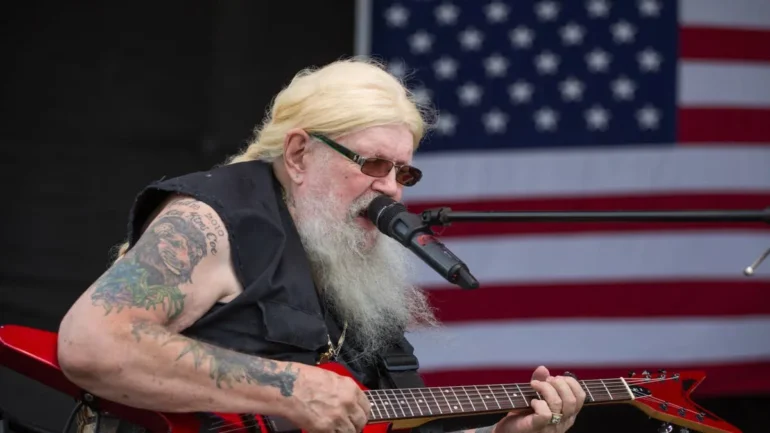
For decades, David Allan Coe has been an indelible, if often controversial, figure in country music, a self-proclaimed outlaw whose music courted shock value and defied easy categorization. His passing marks the end of an era, but his legacy is a complex tapestry woven with threads of rebellion, artistic integrity, and enduring cultural impact. Coe, who died at 86, was known for his raw, unvarnished lyrics and a persona that embraced the fringes of society. He was the archetypal outlaw country artist, a figure who personified the spirit of rebellion against Nashville’s polished mainstream. Yet, his career also became a Rorschach test for what society would tolerate, and even celebrate, under the guise of artistic freedom.
Coe’s early years were steeped in the very outlaw spirit he would later embody. Born in Akron, Ohio, his life was marked by a tumultuous youth, including a stint in the armed services and time spent in prison. These experiences, he claimed, deeply influenced his songwriting, providing a gritty authenticity that resonated with a segment of the audience tired of Countrypolitan gloss. His early work, particularly albums like 1975’s Once Upon a Time in the 21st Century and 1978’s Human Emotions, cemented his reputation for unvarnished tales of hard living, drinking, and heartbreak. He famously penned “You Never Even Call Me by My Name,” a song that became an anthem for country music outsiders, often lauded for its clever meta-commentary on the genre itself, a song that Coe himself described as the “perfect country and western song” for its ability to encapsulate the genre’s tropes.
As his career progressed, Coe’s uncompromising stance and provocative material began to draw sharper criticism. While he maintained a devoted fanbase that saw him as a genuine voice of the working class and the disaffected, his willingness to push boundaries often resulted in controversy. His independent releases, famously distributed through his own label, often contained lyrics that bordered on, or crossed into, the offensive, particularly concerning race and misogyny. This was starkly contrasted with his more widely recognized hits like “Longhaired Redneck” and “The Ride,” which showcased his undeniable storytelling prowess and a more accessible, if still rebellious, image. The tension between his celebrated outlaw persona and the explicit nature of some of his lyrical content created a cultural friction point, questioning the line between artistic expression and harmful rhetoric. This ambiguity became a defining characteristic of his public image, making him a figure who was both revered and reviled.
The backlash against Coe, though often simmering, intensified over the years, particularly as societal norms evolved and conversations around representation and inclusivity in music became more prominent. While some defended his work as a reflection of a particular subculture or a deliberate provocation, others pointed to the real-world harm such lyrics could perpetuate. The music industry, while largely hesitant to overtly condemn him given his independent status and cult following, often kept him at arm’s length. Fellow artists sometimes engaged in public debates about his lyrical content, with some championing his authenticity and others denouncing his perceived insensitivity. The media framing often oscillated between celebrating the “outlaw” mystique and critiquing the more problematic aspects of his output, contributing to a polarized perception of his legacy.
Coe himself offered moments of insight into his motivations, though often couched in his characteristic gruffness. In interviews, he frequently emphasized his desire to be real, to express the unvarnished truth as he saw it, even when it was uncomfortable. He once stated, “I sing about what I know,” a sentiment that served as both a defense and an explanation for his lyrical choices. This adherence to his perceived reality, however unfiltered, was a core tenet of his artistic identity. Whether this was a genuine artistic conviction or a strategic choice to cultivate an extreme persona for attention and relevance is a question that continues to fuel debate. The “outlaw” brand, after all, is a powerful currency in the music world, offering a path to authenticity and a means to challenge established norms. Coe wielded this brand with a deliberate intensity, often blurring the lines between performance and lived experience.

David Allan Coe’s career trajectory and the ensuing cultural conversations around him offer a potent lens through which to examine the contemporary media landscape. His story is not merely about a country singer but a microcosm of broader cultural patterns regarding authenticity, provocation, and the pursuit of relevance in an attention-driven economy. In an era where carefully curated online personas often mask deeper realities, Coe’s often unapologetic rawness, even in its most offensive forms, can be seen as a counterpoint. However, the lasting challenge lies in disentangling genuine artistic expression from harmful prejudice. His legacy forces us to confront how we value and define artistic freedom, particularly when it clashes with evolving societal understandings of respect and inclusivity. The commodification of rebellion, the power dynamics inherent in shock value, and the audience’s appetite for transgression all play a role in how figures like Coe gain and maintain cultural currency.
As the music industry continues to grapple with its past and its role in shaping cultural narratives, David Allan Coe’s passing invites reflection. His music, particularly the outlaw anthems that defined him, will undoubtedly continue to find an audience. Yet, the broader cultural significance of his career lies in the enduring questions it raises about the boundaries of art, the responsibility of artists, and the complex relationship between entertainment and social impact. In a landscape saturated with fleeting trends and manufactured controversy, Coe’s brand of raw, often abrasive authenticity still holds a certain defiant allure. However, whether this enduring appeal can sustain itself without confronting the more problematic elements of his legacy remains a pertinent question in our ever-shifting cultural terrain.