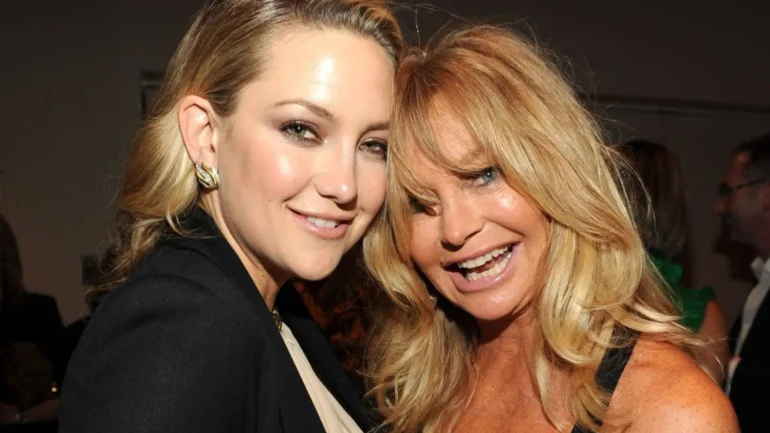
For decades, the image of Goldie Hawn and Kate Hudson has been inextricably linked, not just by genetics but by a shared luminescence that flickered across the Hollywood landscape. Hawn, the effervescent force behind cinematic landmarks like Private Benjamin and The First Wives Club, was the established queen of the comedic comeback and the idiosyncratic leading lady. Hudson, her daughter, emerged in the early aughts with a star-making turn in Almost Famous, embodying a sun-drenched, bohemian spirit that quickly made her a household name. Yet, despite their palpable on-screen chemistry, evident in their rare public appearances and a few shared cameos, the one project that seemed almost inevitable—a full-fledged mother-daughter movie—remained conspicuously absent. Now, with Hawn and Hudson admitting they’ve “thought a lot about” making a film together and declaring “never say never,” a familiar cultural tension surfaces: the allure of legacy versus the pragmatism of the present, and what it truly means for established stars to navigate the ever-shifting demands of relevance and audience expectation.
The seeds of this conversation were sown early in their careers. Hawn, who achieved superstardom in the 1970s and 80s with a unique brand of warmth and sharp comedic timing, paved a path for female-driven comedies that didn’t shy away from vulnerability or ambition. Her success was a blueprint, demonstrating that a leading lady could be both hilarious and deeply relatable. Hudson, following in her mother’s footsteps, captured a different, yet equally resonant, zeitgeist of the early 2000s. Her roles in films like How to Lose a Guy in 10 Days and Bride Wars (which she starred in with her friend Anne Hathaway) positioned her as a romantic comedy icon, embodying a youthful exuberance that defined an era. The public, already charmed by their familial resemblance and shared charisma, began to anticipate a cinematic collaboration, a joint venture that felt like a natural progression. Early interviews and Hawn’s own reflections often hinted at the possibility, a dream project that would allow them to play off each other’s strengths, a meta-narrative of Hollywood royalty passing the torch, or perhaps, more compellingly, sharing the spotlight simultaneously.
As the years progressed, the absence of a joint film became more pronounced, occasionally punctuated by Hawn’s semi-retirement from leading roles and Hudson’s foray into business ventures, including her wildly successful activewear brand, Fabletics. While Hawn made occasional, memorable appearances—like her villainous turn in Snatched opposite Amy Schumer—and Hudson continued to explore more dramatic roles, the mother-daughter movie remained a persistent “what if.” This period was marked by a subtle ambiguity. Was it a matter of finding the right script? Were their schedules too demanding? Or was there a deeper, unspoken reluctance to blend their established individual brands into a singular, potentially limiting, entity? The industry, meanwhile, continued to evolve, with streaming services disrupting traditional studio models and audience tastes fragmenting. The classic mother-daughter comedy, a staple of Hollywood’s past, faced an uncertain future in a landscape increasingly dominated by franchises, superhero epics, and algorithm-driven content.
The current narrative, crystallized by their recent “never say never” statements, arrives at a moment when both Hawn and Hudson are reflecting on their careers and legacies. Hawn, now in her late 70s, continues to exude an ageless vitality, a testament to her enduring screen presence. Hudson, in her mid-40s, has recently spoken about her desire to revisit more comedic roots while also exploring diverse acting opportunities. This renewed discussion about a potential collaboration isn’t just about nostalgia; it’s about relevance. In an industry that often favors the new and the next, established stars are increasingly facing questions about how to maintain their cultural currency. The media’s framing of their “maybe-soon” movie plays into this dynamic, positioning them as beloved figures contemplating a grand reunion that could reignite interest in their joint star power. It taps into a collective desire to see beloved figures recapture past glories, a sentiment often amplified by social media’s insatiable appetite for reunion narratives and nostalgia plays.
The public reaction, as expected, has been overwhelmingly positive, a testament to their shared goodwill and the enduring appeal of their respective personas. Fans on social media express excitement, envisioning potential scripts and chemistry reads. Yet, beneath the surface of enthusiastic anticipation lies a critical question: What does this potential collaboration represent in the current cultural climate? Is it a genuine artistic endeavor, a chance for two talented women to create something meaningful together, or is it a strategic move to capitalize on their established brand and public affection in an era where attention is the ultimate currency? The pressure to remain relevant, to avoid fading into the background, is a palpable force in Hollywood. For stars who built their careers on individual charisma, the prospect of sharing the spotlight, even with a loved one, carries its own set of challenges. It requires a delicate balance of ego, artistic vision, and commercial viability. The very fact that they are openly discussing it, rather than making it happen, suggests a complex calculus at play, one that weighs the potential rewards against the risks of dilution or misinterpretation.
In past interviews, Hawn has spoken about the importance of timing and the right material. Hudson, too, has emphasized finding projects that resonate authentically. Their current openness could be interpreted as a signal that the “right” script might finally be on the horizon, or it could be a calculated signal of intent, a way to generate buzz and gauge audience interest. This reflects a broader pattern in the modern media ecosystem, where celebrity is increasingly performative and constantly curated. The line between authentic desire and strategic positioning blurs. For stars like Hawn and Hudson, whose public images are so intertwined with their personal lives, every statement, every hint, becomes part of a larger narrative. It’s a performance of availability, a management of legacy, and a continuous negotiation for a place in the cultural conversation. This isn’t necessarily cynical; it’s the reality of navigating a landscape where visibility is paramount and where the carefully constructed mythos of a star can be as valuable as any performance.

The broader cultural implications of Hawn and Hudson’s potential movie collaboration extend beyond just a mother-daughter reunion. It speaks to the enduring power of familial bonds in storytelling, and the Hollywood machine’s perennial fascination with hereditary talent. Yet, it also highlights the evolving nature of stardom. In an age of social media influencers and TikTok sensations, the established pathways to fame and sustained careers are being redrawn. For a mother-daughter duo like Hawn and Hudson, whose careers were forged in a different era, their decision to potentially unite on screen is a critical test of whether their brand of star power can translate into contemporary success. Will a film tailored to their established personas feel fresh and relevant, or will it be perceived as a nostalgic cash-in? The challenge lies in creating something that honors their individual legacies while also speaking to a new generation of viewers. It’s about more than just acting; it’s about mastering the art of continued cultural relevance in an environment that’s constantly demanding novelty.
Ultimately, Goldie Hawn and Kate Hudson’s “never say never” stance on a joint film project is a microcosm of a larger cultural phenomenon. It’s about legacy, relevance, and the intricate dance between authenticity and performance in the modern entertainment industry. As they contemplate this next potential chapter, the question isn’t just whether they will make the movie, but what the movie itself will represent. Will it be a triumphant reclamation of a cinematic space, a testament to enduring talent and familial connection? Or will it be a reminder of the challenges inherent in maintaining cultural authority when the rules of engagement are constantly changing? Their continued presence in the cultural conversation, even in anticipation, underscores the enduring power of star narratives, but it also begs the question: In a world obsessed with the next big thing, can the established luminaries of yesterday truly shine as brightly, or will their shared spotlight merely be a fleeting echo of past glories?