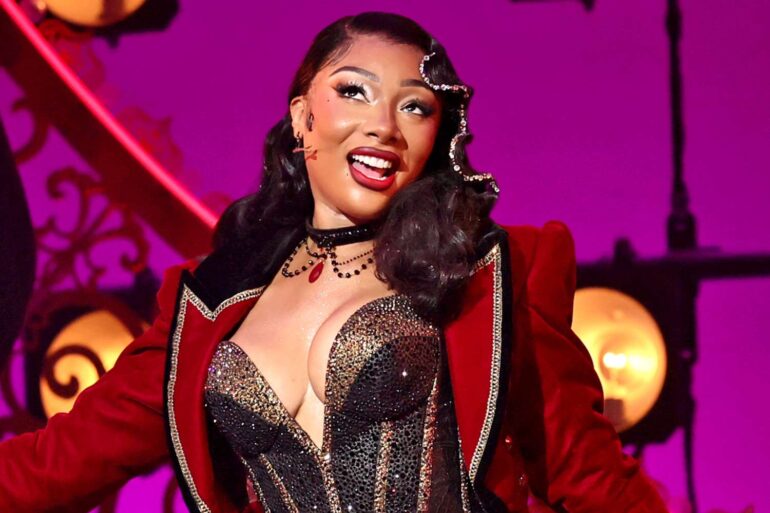
Megan Thee Stallion, a figure synonymous with unyielding confidence and the unapologetic assertion of her power, has recently navigated a highly public and ultimately truncated dalliance with the glitz and theatricality of Broadway’s Moulin Rouge! The Musical. The news of her early departure, following a hospitalization, has sent ripples through her fanbase and the wider cultural commentary sphere. This isn’t merely a story about a celebrity’s brief stint on stage ending prematurely; it’s a potent illustration of the precarious balance modern artists must strike between their established personas, the relentless demands of the entertainment machine, and the very real vulnerabilities that underscore even the most formidable public figures. The narrative arc from triumphant debut to quiet exit reveals a deeper truth about the contemporary landscape of fame, where authenticity, performance, and the relentless pursuit of relevance often collide, leaving artists navigating a minefield of expectations.
The trajectory of Megan Thee Stallion’s career has been largely defined by a persona of unwavering strength and self-determination. From her early days, she cultivated an image of a boss bitch, a confident rapper who penned anthems of female empowerment and sexual liberation. Tracks like “Savage” and “Hot Girl Summer” became rallying cries, solidifying her status not just as a musical artist, but as a cultural force. Her embrace of her “Hot Girl” alter ego was more than just a catchy slogan; it was a deliberate construction of a public identity built on resilience, humor, and a defiant spirit that resonated deeply with a generation. This was a woman who seemingly controlled her narrative with absolute precision, projecting an image of invincibility that made her arrival on the Broadway stage feel like a natural, albeit ambitious, extension of her multifaceted talents. Her announcement in April 2024 about joining the cast of Moulin Rouge! was met with considerable excitement, positioning her as the latest in a line of contemporary stars making bold forays into live theater. The initial fanfare painted a picture of a performer ready to conquer a new domain, further cementing her status as a cultural chameleon.
However, the road to Broadway, as it turned out, was shorter and more turbulent than anticipated. Just days into her highly anticipated limited engagement, reports surfaced of her withdrawal due to illness. This was swiftly followed by news of her hospitalization, which, while a private health matter, inevitably cast a shadow over her triumphant theatrical debut. The stark contrast between the jubilant anticipation of her opening night and the somber reality of her swift exit created a palpable sense of dissonance. What began as a bold declaration of artistic expansion suddenly morphed into a narrative of unexpected interruption, prompting questions about the pressures inherent in such high-stakes ventures and the toll they might take on an artist’s well-being. The rapid transition from celebrated newcomer to sidelined performer highlighted the unpredictable nature of live performance and the often-brutal immediacy with which celebrity narratives can shift.
The public reaction to Megan Thee Stallion’s situation has been a complex tapestry woven from genuine concern for her health and a degree of confusion stemming from the abruptness of her departure. While many fans expressed solidarity and wished her a speedy recovery, the swiftness of her exit also sparked debate within online communities and entertainment circles. The narrative, amplified by various media outlets, grappled with the tension between respecting her privacy regarding her health and the public’s inherent curiosity surrounding a high-profile event. Unlike instances where an artist might openly discuss burnout or mental health struggles, the sudden hospitalization and subsequent withdrawal left a void that speculation, however well-intentioned, began to fill. This situation underscores the delicate tightrope walk that public figures undertake; their lives, even in moments of personal crisis, are subject to constant public scrutiny and interpretation. The media framing, often oscillating between sympathetic coverage of her health and a subtle undercurrent of “what happened?”, reflects the broader cultural appetite for narratives that dissect celebrity lives, even when those lives involve personal health challenges.
Throughout her career, Megan Thee Stallion has been remarkably adept at articulating her vision and motivations. While she hasn’t directly commented on the specific circumstances leading to her Moulin Rouge! departure beyond acknowledging her health, her broader public discourse has often centered on themes of control, self-advocacy, and the importance of prioritizing one’s well-being amidst the chaos of fame. In the past, she has spoken candidly about the pressures of the music industry and the need to protect her mental and physical health. For instance, after navigating significant legal battles and public scrutiny, she has consistently emphasized the importance of setting boundaries. This ethos of self-preservation, while perhaps not explicitly stated in relation to her Broadway exit, underpins the actions of any artist who, when faced with overwhelming circumstances, chooses to step back. Her career has been a testament to her agency, and her withdrawal, however unfortunate, can be viewed through the lens of that same assertive self-management – a decision made to protect her health and, by extension, her ability to continue delivering the powerful performances her fans expect.

Megan Thee Stallion’s brief but eventful turn on Broadway serves as a microcosm of the current cultural moment, where the lines between authenticity and performance are increasingly blurred, and the pursuit of relevance often comes at a significant cost. In an era saturated with content and a constant demand for engagement, artists are incentivized to diversify their portfolios and maintain a high-octane public presence. The concept of ‘legacy’ often takes a backseat to the immediate necessity of ‘relevance.’ A Broadway role, a film cameo, a viral moment – these are all strategic moves designed to keep an artist in the cultural conversation. Yet, this relentless drive can create an unsustainable pressure cooker, where even the most resilient individuals can falter. The phenomenon highlights the inherent tension in modern stardom: the need to be constantly visible and expanding one’s brand versus the fundamental human requirement for rest, recovery, and genuine well-being. The ecosystem rewards constant output, often at the expense of sustainable artistic development or personal health, forcing artists into a performance of invincibility that is ultimately unsustainable. The digital age has amplified this, creating a feedback loop where attention is the primary currency, and any perceived withdrawal can be misinterpreted as a lack of commitment or a failure to adapt.
Ultimately, Megan Thee Stallion’s Moulin Rouge! exit is more than just a footnote in her illustrious career. It’s a poignant reminder of the human cost behind the dazzling spectacles of celebrity culture. In a landscape that relentlessly demands more – more music, more appearances, more visibility – the decision to prioritize health and step away, even from a dream project, is a powerful act of self-definition. The question remains whether the current cultural machinery, with its insatiable appetite for novelty and constant engagement, can truly accommodate such moments of vulnerability. As artists continue to navigate the complex terrain of fame, the endurance of their strategies, their personas, and their very identities will depend on their ability to balance the demands of the performance with the undeniable realities of their own humanity. Megan Thee Stallion’s journey, from the electric anticipation of her Broadway debut to her quiet, health-necessitated withdrawal, offers a compelling, if somber, reflection on the shifting sands of modern stardom and the enduring, often fragile, foundations upon which it is built.