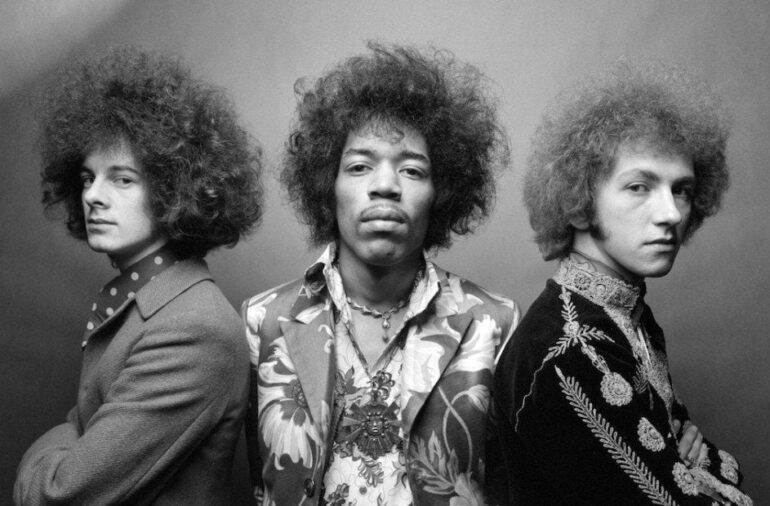

The ghosts of rock and roll’s most incandescent moments are often more profitable than the living. In a recent legal battle, the heirs of Jimi Hendrix’s seminal bandmates, Noel Redding and Mitch Mitchell, found themselves on the wrong side of a protracted fight over royalties, a dispute that pitted them against Sony Music and the Hendrix Estate itself. The outcome, a decisive loss for the families of the musicians who helped shape one of music’s most enduring legacies, underscores a complex and often uncomfortable truth about how artistic contributions are valued and compensated long after the music has faded into history, revealing a broader cultural pattern of legacy management and the perennial tension between artistic collaboration and posthumous control.
The narrative of Jimi Hendrix is one of meteoric ascent and tragic, premature flameout. From his emergence in the late 1960s, Hendrix, alongside bassist Noel Redding and drummer Mitch Mitchell, redefined the boundaries of electric guitar and psychedelic rock. Their performances, particularly at Monterey Pop and Woodstock, became legendary, solidifying their place in the pantheon of musical innovation. Redding, a pivotal member of the Jimi Hendrix Experience, brought a steady, melodic grounding to Hendrix’s virtuosic flights, while Mitchell’s jazz-infused drumming provided a dynamic and responsive counterpoint. Their collective output, though relatively brief, produced some of the most iconic songs in rock history, from ‘Purple Haze’ to ‘All Along the Watchtower.’ Early statements and the very essence of their work celebrated a collaborative spirit, a sonic trinity that propelled Hendrix to superstardom and cemented the Experience’s place in cultural memory. The symbolism was clear: a groundbreaking band, a shared creative vision.
However, the passage of time and the inevitable complexities of estate management began to cast shadows over this idyllic picture. While Hendrix’s own genius was undeniable and his death in 1970 left a void, the financial and creative control of his vast catalog became a battleground. The mid-period of this narrative is marked by increasing consolidation of power within the Hendrix Estate, which has, over decades, diligently managed and monetized his image and music. This often involves licensing deals and strategic partnerships, aiming to keep Hendrix’s presence relevant in a constantly shifting media landscape. For Redding and Mitchell, and by extension their heirs, the journey from being integral creative forces to claimants in a legal dispute signifies a profound shift. Ambiguities in original contracts, the evolving nature of royalty payments in the digital age, and the sheer scale of the Hendrix brand likely contributed to the growing chasm between the estate’s control and the musicians’ families’ perceived entitlements.
The recent legal proceedings, culminating in the heirs’ defeat, crystallize the current narrative. The core of the dispute reportedly revolved around the interpretation of royalty agreements and the extent to which Redding and Mitchell’s estates were entitled to ongoing payments, particularly in light of new licensing deals and the estate’s aggressive management of Hendrix’s intellectual property. This conflict inevitably drew public attention, sparking discussions among music fans and industry observers about fairness and the treatment of artists who, while not the marquee name, were crucial to the sonic tapestry. The media framing often focused on the David-and-Goliath nature of the lawsuit – families of legendary musicians challenging a corporate giant and a powerful estate. While not a direct feud in the public eye, the legal action itself represented a significant controversy, highlighting the financial realities that persist long after the applause has died down. Industry responses, though largely behind the scenes, likely involved a degree of sympathy for the musicians’ families, tempered by an understanding of the legal complexities and the established power dynamics within music estates.
Direct quotes from the musicians themselves, reflecting on their time with Hendrix, often spoke of creative synergy and the thrill of discovery. Redding, in interviews, sometimes alluded to the challenges of being overshadowed by Hendrix’s colossal fame, but rarely in a way that suggested deep resentment over compensation during their active years. However, the current situation is less about their direct admissions and more about the interpretation of their legacy and contractual rights by their heirs and legal representatives. The estate, through its actions and its legal defense, has implicitly acknowledged a motivation to maintain stringent control over the Hendrix brand, a strategy aimed at preserving its immense financial and cultural value. This often involves navigating complex legal landscapes to ensure that all revenue streams are channeled and managed according to the estate’s directives, a common practice for maximizing the longevity and profitability of iconic artists’ catalogs.

This protracted legal battle offers a stark lens through which to view the contemporary cultural moment. It speaks volumes about the evolving dynamics between relevance versus legacy. The Hendrix Estate’s aggressive management ensures Hendrix remains a relevant cultural force, constantly re-licensed and re-contextualized, thereby preserving his legacy. Yet, this often comes at the cost of disputes with those who were instrumental in creating that legacy. The tension between authenticity versus performance is also palpable. While Hendrix’s music is inherently authentic, the management of his estate and the legal wrangling can feel performative, a calculated effort to maintain control and financial dominion. The case highlights the immense power, attention, and influence wielded in the modern media ecosystem, where control over intellectual property translates directly into cultural and economic capital. Gaining cultural authority in the digital age often means mastering the art of legacy management, ensuring that the narrative—and the profits—remain tightly controlled. This situation is a microcosm of how cultural authority is contested today, often through legal channels and strategic brand positioning, rather than purely through artistic merit alone.
Ultimately, the heirs of Noel Redding and Mitch Mitchell’s struggle, though legally concluded, leaves a lingering question about the equitable distribution of rewards in the afterlife of artistic collaboration. In an era where music is constantly being sampled, re-licensed, and re-packaged, the fight for royalties is a perennial one. The question remains whether the current strategies employed by powerful estates, while financially astute, truly honor the spirit of collaboration that defined the music in the first place. As the cultural landscape continues to shift, and new generations discover Hendrix’s timeless music, the legacy of the Experience—all three members—deserves to be understood not just through the lens of the primary star, but through the collaborative spark that ignited a revolution. Whether this current model of legacy control, as exemplified by the Hendrix Estate’s victory, will continue to resonate or eventually face further challenges from those seeking a more equitable share of the echoes of greatness, remains to be seen.