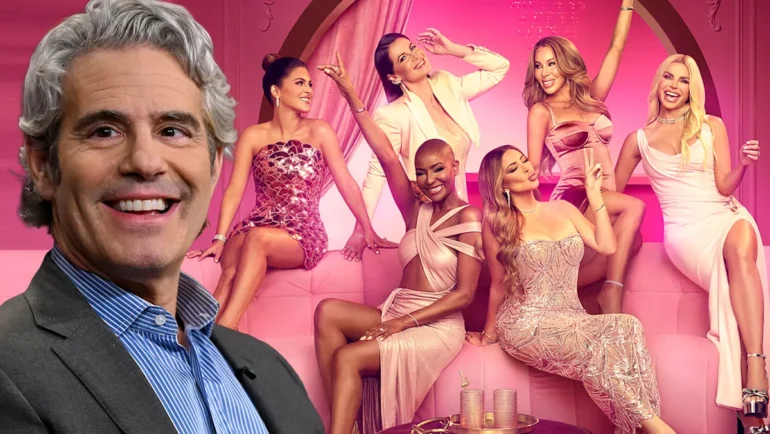
Andy Cohen, the architect of Bravo’s reality empire, stands at a familiar crossroads. For years, he has been the impresario of manufactured drama, the puppet master pulling the strings of ostensibly unfiltered lives. Yet, when faced with the nebulous ‘pause’ of The Real Housewives of Miami, a show that has navigated a complex rebirth, Cohen’s response is not one of despair or uncertainty, but a confident, almost defiant, assurance: “It’ll be back.” This declaration, made in the face of industry shifts and audience fatigue, is more than a simple executive promise; it’s a statement about the enduring, albeit evolving, power of personality-driven television and Cohen’s own brand of cultural curation.
The journey of The Real Housewives of Miami is, in itself, a microcosm of the franchise’s broader trajectory. Initially launched in 2011, the show struggled to find its footing, often overshadowed by its more established counterparts in Orange County and Atlanta. Its early seasons, marked by a certain aspirational sheen and a cast that sometimes felt more aspirational than authentic, failed to capture the raw, unvarnished energy that had become the franchise’s hallmark. It was canceled after just two seasons, a rare stumble in Cohen’s otherwise impeccable reality TV record. For years, it remained a footnote, a nearly forgotten experiment in Bravo’s burgeoning universe. The show’s symbolism at this stage was one of potential unrealized, a glossy veneer that couldn’t quite hide a lack of compelling narrative depth.
Then came the resurrection. In 2021, Peacock, NBCUniversal’s streaming service, revived the franchise, and with it, a new era began. This wasn’t just a reboot; it was a reinvention. The new iteration leaned into a more mature, multifaceted cast, incorporating established figures like Larsa Pippen with dynamic newcomers who brought a fresh perspective and a genuine willingness to engage with complex personal narratives. The show began to explore themes of family, career ambition, and cultural identity with a nuance that had been missing. However, this mid-period shift, while critically praised for its improved quality and authenticity, also brought its own set of challenges. The transition from a traditional broadcast network to a streaming platform, coupled with the inherent pressures of maintaining audience interest in a crowded reality TV landscape, created moments of ambiguity regarding its long-term viability and its ultimate place within the Bravo canon. The audience, accustomed to Bravo’s particular brand of pacing and drama, had to adjust, and critics pondered whether the show’s newfound depth could sustain the appetite for pure escapism.
The recent ‘pause’ in production, a term often used in the industry to denote uncertainty or a potential winding down, sparked a flurry of speculation. Was this another cancellation? A sign of dwindling interest? The media framing, often quick to sensationalize, hinted at potential demise. This is where Cohen’s interjection, “It’ll be back,” becomes crucial. It’s a strategic deployment of his role as the ultimate arbiter of the Housewives universe, a man who has cultivated an image of being intimately connected to the pulse of his shows and their audiences. His confidence serves as a bulwark against the tide of negative speculation, attempting to maintain credibility and anticipation for the show’s return. This moment reflects the broader industry’s struggle with audience attention spans and the constant demand for fresh content, pushing networks and producers to re-evaluate established formats and to find ways to keep them relevant without alienating core fan bases.
Cohen himself has, at times, offered glimpses into the strategic calculus behind these decisions. In interviews, he often speaks of the need for shows to evolve, to remain “fresh and relevant,” hinting at a constant process of adaptation. While he might not explicitly admit to seeking attention or leveraging controversy, his consistent presence and vocal advocacy for his shows, even those facing challenges, underscore a clear motivation to maintain his position as a dominant force in reality television. The very act of guaranteeing a return for *RHOM* before official confirmation can be seen as a calculated move to generate buzz, to signal that the show is too valuable, too representative of a certain cultural moment, to be discarded. His words, quoted widely by outlets like Entertainment Tonight, function as a form of preemptive reassurance, a means of controlling the narrative and managing audience expectations.

What does this persistent cycle of cancellation, reinvention, and hopeful revival reveal about our current cultural moment? It speaks volumes about the complex interplay between relevance and legacy. For shows like *The Real Housewives of Miami*, the initial concern is often about immediate ratings and marketability (relevance). However, as the franchise matures, there’s a growing emphasis on building a lasting impact, a loyal fanbase, and a distinct cultural identity (legacy). Cohen’s bet on *RHOM* suggests a belief that even shows that faltered initially can find new life and enduring appeal by adapting to changing audience tastes and embracing authenticity over manufactured perfection. It also highlights the performance inherent in modern celebrity and media. Cohen’s pronouncements are as much a part of the show’s narrative as the on-screen drama. His role is not just to produce but to champion, to curate, and to ultimately convince us of the cultural significance of these televised lives. This performative aspect is deeply entwined with the pursuit of power, attention, and influence in the modern media ecosystem. In an era of fragmented audiences and infinite content streams, maintaining cultural authority requires constant engagement, strategic maneuvering, and the ability to generate sustained conversation, even when the future of a particular show is uncertain.
Cohen’s unwavering declaration that *The Real Housewives of Miami* “will be back” positions him as a steward of a particular brand of aspirational, often dramatic, unscripted television. It’s a testament to his belief in the enduring appeal of complex female characters navigating personal and professional lives under a microscope. But as the landscape of television continues to shift – with streaming wars intensifying, audience preferences diversifying, and the very definition of ‘reality’ being constantly interrogated – the question remains: does this particular strategy, this confident assertion of return, still carry the same weight it once did? In a culture increasingly valuing genuine connection and critical self-awareness, will the promise of more manufactured drama, even when delivered with a wink and a nod, be enough to sustain the intricate, often exhausting, reality that Andy Cohen has so expertly built?