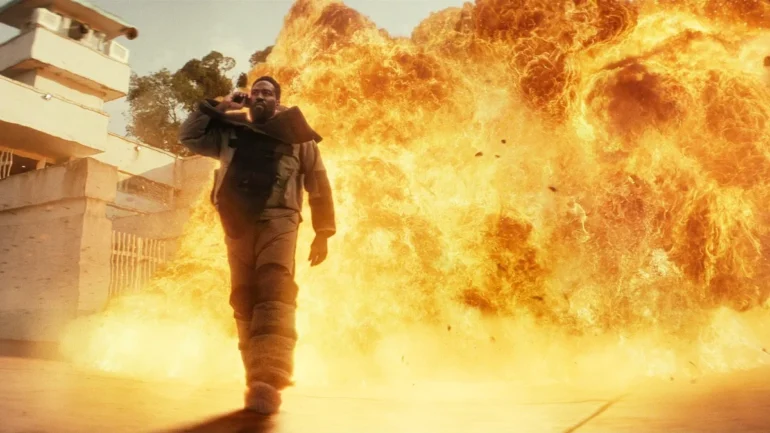
The spectral echo of Denzel Washington’s stoic, haunted John Creasy in the 2004 film Man on Fire looms large, a cinematic benchmark for quiet, devastating vengeance. Now, Netflix attempts to reignite that inferno with Yahya Abdul-Mateen II in the titular role, a performance that, according to early reviews, crackles with a different kind of intensity. This reboot isn’t just a revival of a familiar narrative; it’s a contemporary lens through which to examine our enduring fascination with broken men seeking brutal redemption, and what that says about the cultural currents of our time. Abdul-Mateen II, known for his magnetic yet controlled presence in projects like Watchmen and Candyman, steps into a role that demands a raw, visceral transformation, portraying a man driven by loyalty and a thirst for retribution. The question is no longer if such a performance can be compelling, but what it signifies when a story of extreme, almost primal, justice finds a new home in our increasingly fractured society.
The original Man on Fire, based on A.J. Quinnell’s novel and directed by Tony Scott, cemented Washington’s portrayal of Creasy as a burned-out ex-CIA operative turned bodyguard. His transformation from a man teetering on the brink of despair to a force of nature unleashed upon those who wronged his young charge became a cultural touchstone. Washington’s Creasy was a man of few words, his pain and determination etched onto his face. The film’s stark visuals and brutal action sequences resonated deeply, tapping into a primal desire for order and consequence in a chaotic world. It was a narrative steeped in the post-9/11 anxieties of the era, a world where perceived threats could lead to swift, decisive, and often violent, retribution.
Fast forward nearly two decades, and Netflix’s iteration arrives at a moment when the very definition of justice, accountability, and the acceptable means of achieving them are under intense scrutiny. The decision to reboot a story so intrinsically linked to its original star and directorial vision raises immediate questions. What does it mean to revisit a narrative of vigilante justice now? Is it a nostalgic revisit, or a commentary on the persistent feeling that formal systems of justice are failing? The early buzz suggests Abdul-Mateen II brings a different energy, a more outward-facing torment, perhaps reflecting a generation more vocal about its internal struggles even as it grapples with external chaos. His character, a broken man motivated by loyalty and vengeance, is a potent archetype. But in 2024, does this archetype offer catharsis or simply mirror a societal malaise?
The shift from Washington’s internalized anguish to Abdul-Mateen II’s potentially more explosive portrayal, as hinted by critics, is not merely an actor’s choice; it’s a signal of evolving cultural sensibilities. The early 2000s were a time of more pronounced, often singular, public figures embodying ideologies. Washington’s Creasy, while a character of extreme violence, felt rooted in a certain stoicism. Abdul-Mateen II, on the other hand, has built a career on portraying complex characters who navigate societal pressures with a blend of charisma and vulnerability, as seen in his nuanced performance as Dr. Manhattan in Watchmen or his terror-inducing turn in Candyman. This new Man on Fire could lean into a more psychological exploration of trauma and the desperate measures it breeds. It positions the narrative not just as an action thriller, but as a character study of a man pushed to his absolute limit, a theme that resonates deeply in an age where mental health and personal struggles are increasingly, and often publicly, acknowledged.

The public reaction to such reboots is always a complex tapestry. There’s the inevitable comparison to the original, a critical hurdle that Abdul-Mateen II and the new creative team must overcome. For fans of the original, the new Man on Fire risks being seen as an inferior imitation. However, for a new generation, it offers a fresh entry point, a chance to engage with a story of extreme consequence without the baggage of prior interpretation. The online discourse surrounding any such high-profile remake is often immediate and polarized. Early tweets and forum discussions are likely already dissecting trailers and cast choices, measuring potential against the hallowed memory of the 2004 film. This critical lens, while potentially daunting, also indicates a vibrant cultural appetite for stories that explore the darker corners of human motivation, especially when delivered with credible performances. The key will be whether this new iteration offers a perspective that feels essential, rather than gratuitous.
In recent years, Abdul-Mateen II has spoken about the importance of choosing roles that challenge him and reflect a deeper thematic resonance. He’s demonstrated a keen awareness of his own burgeoning cultural capital, using it to amplify stories that might otherwise remain in the shadows. In interviews concerning his previous work, he has often alluded to the