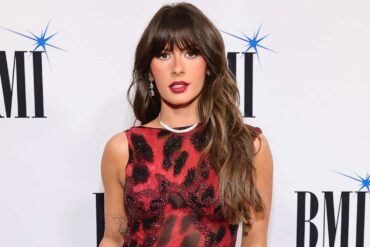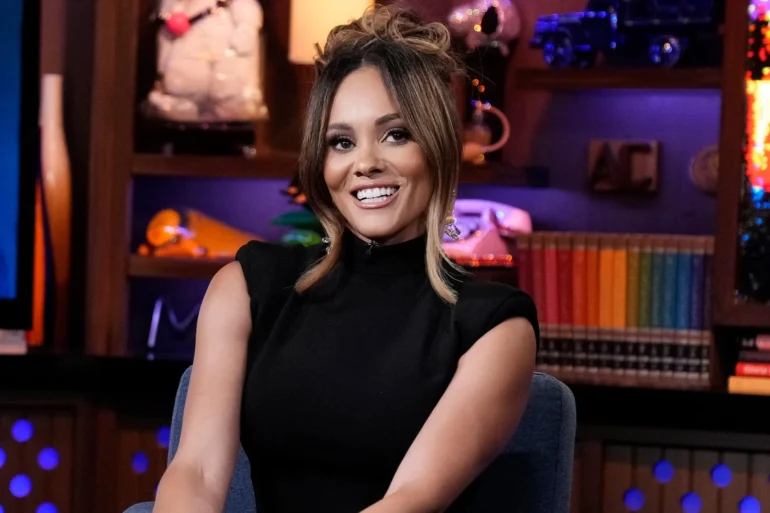
The image of Ashley Darby, resplendent at the Kentucky Derby alongside reality television figures like Cynthia Bailey, offers a seemingly innocuous snapshot of celebrity mingling at a high-profile event. Yet, this moment, captured in the vibrant atmosphere of Churchill Downs, signifies more than just a stylish appearance. It represents a subtle yet deliberate recalibration of Darby’s public persona, a move from the confines of domestic drama to the broader stage of aspirational lifestyle and social currency. Her past was defined by the raw, often contentious, narratives of Bravo’s *The Real Housewives of Potomac*, a show where authenticity was measured by vulnerability and conflict. Now, glimpsed in a more polished, less volatile context, Darby appears to be cultivating a different kind of visibility—one that trades on glamour, connection, and the perceived allure of a life beyond the confines of reality television’s manufactured crises.
Darby’s journey within *The Real Housewives of Potomac* has been a narrative arc marked by significant personal and relational evolution. From her early seasons, she presented herself as a vibrant, sometimes impulsive, socialite navigating the complexities of a marriage that would ultimately become a focal point of public scrutiny and personal pain. Her early public positioning was intrinsically linked to the show’s dramatic structure, where her storylines often revolved around relationship turbulence, disagreements with castmates, and the occasional social faux pas that fueled weekly water cooler conversations. For instance, her public disputes with co-stars like Karen Huger and Gizelle Bryant were not just personal disagreements but were amplified by the show’s producers, framing her within a specific archetypal role—the playful, sometimes misunderstood, figure on the periphery of the Potomac elite. This early phase was characterized by an emphasis on interpersonal conflict and the unveiling of private struggles for public consumption, a common currency on reality television.
The mid-period of Darby’s tenure saw a gradual, almost imperceptible, shift. As her marriage to Michael Darby faced increasing public attention, including allegations and rumors that were explored on-air, her personal narrative began to take on a more somber hue. While still engaging in the show’s signature dramatic exchanges, there was a growing sense that the performances were becoming heavier, the stakes more personal. This period was marked by a more overt display of resilience and a determination to maintain her presence and relevance amidst these challenges. The transition from early season vivacity to a more guarded, yet still resilient, demeanor indicated a growing awareness of the toll that constant public exposure and manufactured drama could take. It was during this time that moments of ambiguity emerged—was she a victim of circumstance, a willing participant in the spectacle, or a strategic player navigating a complex media landscape? The ambiguity itself became a point of fascination, drawing viewers who were invested in her personal journey beyond the superficial conflicts.
The Kentucky Derby appearance, alongside figures like Cynthia Bailey (a veteran of *The Real Housewives of Atlanta* known for her own trajectory from modeling to reality stardom and subsequent ventures), signals a conscious pivot. This is not simply a social outing; it’s a performance of a desired image. The jockeying for relevance in the digital age often means transcending the platforms that initially provided fame. For Darby, this could mean leveraging her existing fanbase and notoriety to build a brand that extends beyond the *Housewives* universe. It suggests a strategic move to associate with other established figures and events that project an image of success, sophistication, and broader cultural influence. The Instagram post, carefully curated and shared, acts as a digital press release, announcing this new chapter to her followers and the wider public. It’s an attempt to redefine her narrative, moving from the often messy confines of a reality show to a more aspirational and perhaps more controlled public presentation.

This evolution has not gone unnoticed, nor has it been without reaction. While the Derby appearance itself might be seen as apolitical, Darby’s broader career trajectory has been met with a spectrum of audience responses. Viewers who were drawn to her early, uninhibited persona might find the current, more curated image less compelling. Conversely, those who have followed her through personal difficulties may appreciate her apparent move towards rebuilding and projecting a more stable, aspirational life. The media, too, plays a role in framing this transition. Outlets that previously focused on the interpersonal drama of *RHOP* might now highlight her fashion choices, her social circle, and her entrepreneurial endeavors, implicitly endorsing this new direction. This shift in media focus can bolster her credibility and influence, signaling to brands and other industry players that she is evolving into a more bankable personality. The lack of significant backlash to the Derby photo suggests that this particular move has been met with general approval or, at least, indifference, indicating that audiences are ready to see Darby in a new light.
Darby herself has offered glimpses into her motivations, often couched in terms of personal growth and professional ambition. While she hasn’t explicitly stated,