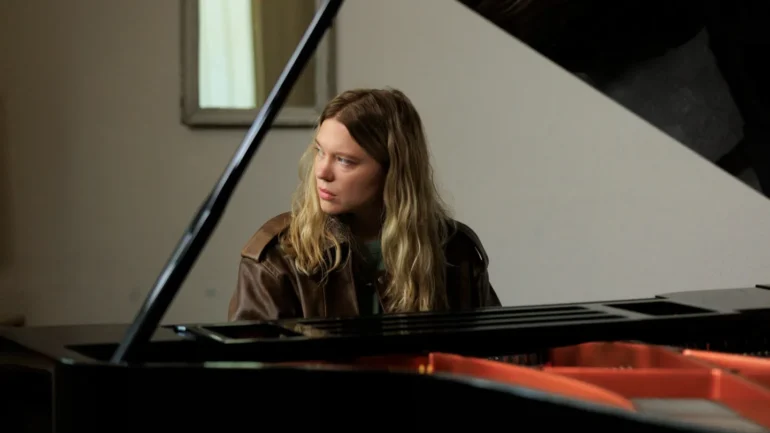
Léa Seydoux, an actress whose career has often navigated the complexities of human desire and existential dread, delivers a performance of profound gravity in ‘Gentle Monster.’ The film, directed by a rising auteur, plunges into the heart of a fractured family, where unspoken resentments and buried traumas surface with devastating effect. Seydoux, known for her chameleon-like ability to embody characters wrestling with their inner demons, finds fertile ground here, portraying a mother caught in a web of her own making.
Her early reputation was forged in arthouse circles, often playing enigmatic and alluring figures. Films like ‘Blue Is the Warmest Colour’ and ‘The Grand Budapest Hotel’ showcased a burgeoning talent capable of both raw vulnerability and steely resolve. However, ‘Gentle Monster’ sees Seydoux eschew overt sensuality for a more internalized, yet equally potent, display of emotional turmoil. Her shift in recent years towards roles that demand a deeper psychological excavation is powerfully evident.
The narrative centers on a tense family reunion at a remote estate, a setting that amplifies the claustrophobia and simmering tensions. Seydoux’s character, Elodie, is tasked with confronting her estranged siblings and aging father, a man whose silence has long been a source of pain. As the weekend progresses, secrets that have festered for decades begin to unravel, forcing each character to reckon with their past actions and their complicity in the family’s dysfunction. Seydoux’s portrayal of Elodie is a masterclass in restraint; her every glance, every subtle gesture, speaks volumes about the character’s internal struggle. In one particularly poignant scene, she confronts her father, her voice barely a whisper yet laden with years of unspoken grief. “You taught us to be strong,” she says, her eyes fixed on him, “but you never taught us how to heal.”
Critics have lauded Seydoux’s performance, with many pointing to it as the film’s emotional anchor. The New York Times described her work as “a haunting portrayal of maternal anguish,” noting that she “brings a stoic resilience to a character teetering on the brink.” This aligns with the publication’s recent focus on cultural shifts, examining how artists navigate evolving societal expectations. Seydoux’s career trajectory exemplifies a broader trend in cinema, where established stars are increasingly seeking out challenging, character-driven roles that explore the nuances of the human condition, moving beyond mere performance to authentic emotional resonance.

The film’s cultural analysis lies in its unflinching examination of generational trauma and the lingering impact of familial legacies. It questions the nature of authenticity in relationships, particularly within the confines of a family unit where performance often masks genuine connection. Is Elodie’s stoicism a form of genuine strength, or a carefully constructed facade to navigate an unbearable reality? Seydoux masterfully blurs these lines, leaving the audience to ponder the true nature of her character’s resilience. Her relevance as an actress is amplified by her willingness to engage with such complex themes, demonstrating a commitment to artistic integrity over commercial appeal. This mirrors the trajectory of many contemporary artists who prioritize legacy and depth over fleeting fame, as discussed in Billboard’s recent features on evolving artist strategies.
Ultimately, ‘Gentle Monster’ is a harrowing, yet deeply rewarding, cinematic experience. Seydoux’s performance is not merely a portrayal; it is an embodiment of profound emotional truth. Her current strategy of choosing roles that demand such intense introspection solidifies her status as one of contemporary cinema’s most compelling actresses. The film’s conclusion leaves the audience with a sense of catharsis, a testament to the power of confronting difficult truths, and Seydoux’s enduring ability to bring gravity to even the most harrowing of narratives. Her continued presence in films that explore the darker, more intricate facets of human experience ensures her legacy will be one of substantive artistic contribution, a stark contrast to the fleeting trends often highlighted by Variety.