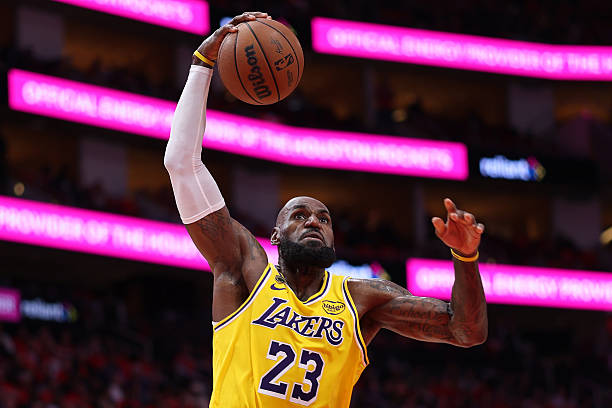
For years, LeBron James has been the picture of stoic athletic excellence, a figure whose public persona was carefully curated around relentless dedication to the game. He was the elder statesman, the paragon of professionalism, the player whose every move on and off the court seemed calculated to build a lasting legacy. But a curious shift has begun to manifest, a subtle yet persistent commentary on the very cities that host his league, a critique that has moved beyond game-day analysis to something more personal, and perhaps, more telling. His recent assertion that the New York Knicks had an advantage in the NBA Finals due to a lack of activities in San Antonio—famously summarized by his declaration that “You ain’t doing shit in San Antonio. Nothing at all. Nothing. And I mean nothing“—represents a peculiar pivot, transforming him from an athlete solely focused on competition to an unlikely urban critic.
This evolution in LeBron’s public pronouncements doesn’t emerge from a vacuum. His career has been a masterclass in brand management and strategic communication. Early in his tenure, his public statements were largely confined to basketball prowess, team aspirations, and the occasional philanthropic endeavor, as documented by outlets like ESPN. His narrative was one of a generational talent, a chosen one destined for greatness, with an emphasis on his role as a unifying force for his teams and communities. Even his critiques were typically framed within the context of the game itself, focusing on officiating, strategy, or the competitive spirit of opponents. The initial foundation of his public image was built on an unwavering commitment to the sport and an aspirational message of perseverance.
However, the mid-career phase saw a gradual broadening of his public platform. LeBron became more vocal on social and political issues, an aspect extensively covered by publications like The New York Times. This expansion of his public role, while widely applauded by many, also began to subtly shift the perception of his focus. The moments of ambiguity arose when his off-court commentary started to intersect more directly with the operational aspects of the league in ways that felt less about the game and more about the periphery. The current narrative, crystallized by his remarks about NBA cities, suggests a player who is not just competing on the court but is also, in his own way, evaluating and commenting on the entire ecosystem surrounding the sport. This isn’t the first time LeBron has offered unsolicited opinions on the non-basketball aspects of NBA locales; his previous comments about cities like Cleveland, though often framed with a degree of affection or playful banter, also hinted at a broader engagement with the urban environments he visited.
The backlash to his San Antonio comments was swift, though perhaps not as intense as one might expect for such a direct dismissal of an entire city. Social media erupted, with many residents and fans defending their city, highlighting its culture, history, and attractions. Local media outlets, such as MySanAntonio.com, covered the story extensively, capturing the local sentiment. While some defended LeBron, citing his right to his opinion or framing it as typical athlete trash talk, a significant portion perceived it as arrogant or out of touch. This incident underscores a recurring theme in the discourse around LeBron James: how his pronouncements, even when seemingly casual, carry immense weight and can spark considerable debate. The media framing often oscillates between portraying him as an insightful commentator and a privileged athlete whose opinions, however ill-considered, are amplified by his status. This public reaction is not just about San Antonio; it’s a broader conversation about celebrity influence and the perception of entitlement.
LeBron himself has, at times, acknowledged the performative aspect of his public persona and the strategic use of attention. While he hasn’t directly addressed the San Antonio comments in a way that explains his motivation as attention-seeking, his broader career has been marked by an understanding of how to generate buzz. In interviews, he has spoken about the pressure of maintaining relevance and the importance of staying engaged with the public. His willingness to court controversy, or at least engage in provocative statements, could be interpreted as a strategy to remain in the cultural conversation, a way to assert his continued influence beyond the statistical achievements on the court. This is a player who once famously stated, “I’m not going to let anyone judge me by the way I grew up, by the way I was brought up,” as quoted by Biography.com, suggesting a deep-seated awareness of perception and a desire to control his own narrative. His current approach, while seemingly focused on trivial aspects of NBA cities, might be a calculated move to maintain a certain level of cultural currency, a way to stay “in the game” off the court.

This phenomenon speaks volumes about the current cultural moment, where the lines between athlete, celebrity, and commentator are increasingly blurred. LeBron James’s critiques of NBA cities reveal a complex interplay between relevance and legacy. While his on-court legacy is largely cemented, his off-court relevance is a continuous performance. The modern media ecosystem thrives on narratives, and by injecting himself into discussions about urban life, even in a seemingly flippant manner, he ensures his voice is heard. This is a battle for cultural authority, where established figures leverage their platforms to shape perceptions and maintain influence. The question of authenticity versus performance is paramount; are these critiques genuine observations, or calculated attempts to generate engagement and assert dominance in the cultural sphere? In an era saturated with content, provoking a reaction, even a negative one, can be a potent tool for staying visible and relevant, a strategy that seems to be at the core of this evolving public persona. It highlights how power and influence are now wielded not just through traditional media but through direct engagement, often bypassing established gatekeepers.
Ultimately, LeBron James’s commentary on NBA cities positions him at a fascinating crossroads. He is a figure whose past achievements warrant a place in the pantheon of sporting legends, yet his current engagement with the world suggests a desire to remain a contemporary cultural force. The question that lingers is whether this strategy of critique and provocation will enhance his legacy or merely serve as a fleeting distraction. In a landscape where public opinion can shift as rapidly as game momentum, the weight of his words, once solely tied to athletic brilliance, now carries the added burden of urban commentary. As the NBA continues to evolve, and as new generations of athletes and influencers emerge, it remains to be seen if LeBron’s current positioning as a cultural pundit, dissecting the merits of cities from the comfort of his privileged perspective, will resonate as deeply as his unparalleled achievements on the court. His influence is undeniable, but the enduring impact of these off-court pronouncements is yet to be fully written.