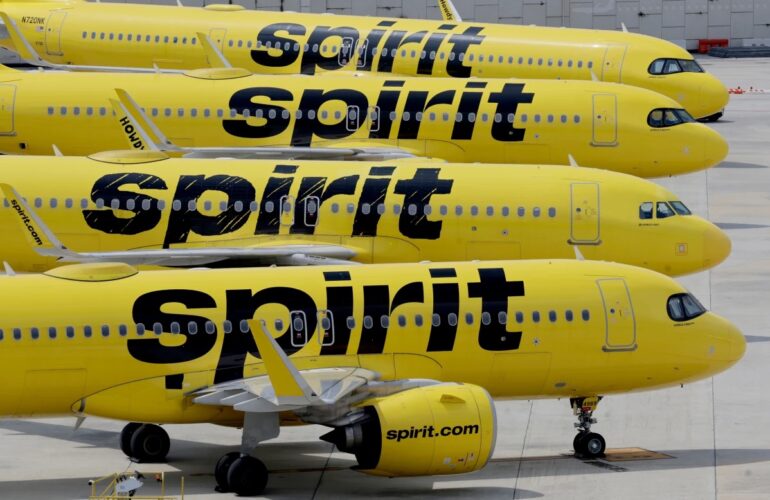
After 34 years in the skies, Spirit Airlines has officially shut down operations, marking the end of one of the most recognizable low-cost carriers in American aviation history. The airline cited rising oil prices tied to the war with Iran, ongoing financial instability, and mounting operational challenges as key reasons it could no longer continue flying.
The company announced earlier this month, that it had “started an orderly wind-down of our operations, effective immediately,” canceling all future flights and leaving thousands of passengers stranded nationwide. Spirit, known for its bright yellow aircraft, deep-discount fares, and controversial fee structure, employed roughly 17,000 workers at the time of closure.
While the announcement shocked travelers, former employees say the writing had been on the wall for years.
Former Spirit Airlines employee Laverne Davis, who worked across multiple operational roles between 2015 and 2018, described the closure as deeply emotional.
“As a young impressionable adult, I had recently lost my mother due to complications from breast cancer,” Davis shared. “Despite those odds against me, I knew I wanted to be part of a team.”

Coming into the airline industry with no prior experience, Davis said Spirit became more than a job — it became a foundation.
“I started from the bottom as a Customer Service Agent,” she explained. “At that time Spirit was rock solid. I was trained by the best.”
Spirit Airlines built its reputation by offering ultra-low-cost airfare that made travel accessible to millions of working-class Americans. But according to Davis, affordability alone eventually became unsustainable.
“Spirit always provided the low-cost flights people needed,” she said. “But the baggage fees and limited space inside the aircraft deterred frequent flyers. If they had evolved internally and focused more on the customer relationship dynamic, things could’ve changed.”
Over the years, Davis worked both upper wing and lower wing operations, transitioning from customer-facing positions at the ticket counter and gates into baggage and ramp operations alongside TSA personnel. She says those experiences taught her discipline, resilience, and leadership.
“I instantly learned the value of communication,” Davis said. “I wasn’t just checking passengers in anymore. I was checking in pilots and flight attendants. I got to understand what makes us safe while traveling in the air and how every person plays a pivotal role.”
For Davis, a Black woman from Chicago’s South Side, Spirit represented access to an industry where opportunities often felt limited.
“It was rare for someone my age and background to gain acceptance in a field that often turns people away because of the color of their skin or the stigma attached to it,” she said. “Spirit Airlines became the catalyst that changed the way the system was deeply rooted.”
The shutdown happened abruptly. Across airports nationwide, passengers arrived unaware their flights had been canceled. In Atlanta, several Spirit flights still appeared “on time” Saturday morning despite the company ceasing operations overnight.
“What!?” exclaimed traveler Taylor Nantang after arriving at the airport with her family for a planned vacation to Miami. “So the whole airline at every airport is out of business? Oh my, that’s crazy.”
Other travelers questioned how refunds would be handled and whether customer service lines would remain active. Transportation Secretary Sean Duffy stated that customers who booked directly through Spirit would be eligible for refunds through a reserve fund, while third-party bookings would need to seek reimbursement elsewhere.
Several competing airlines, including United Airlines, Delta Air Lines, JetBlue, and Southwest Airlines, reportedly offered limited emergency fares for stranded passengers.
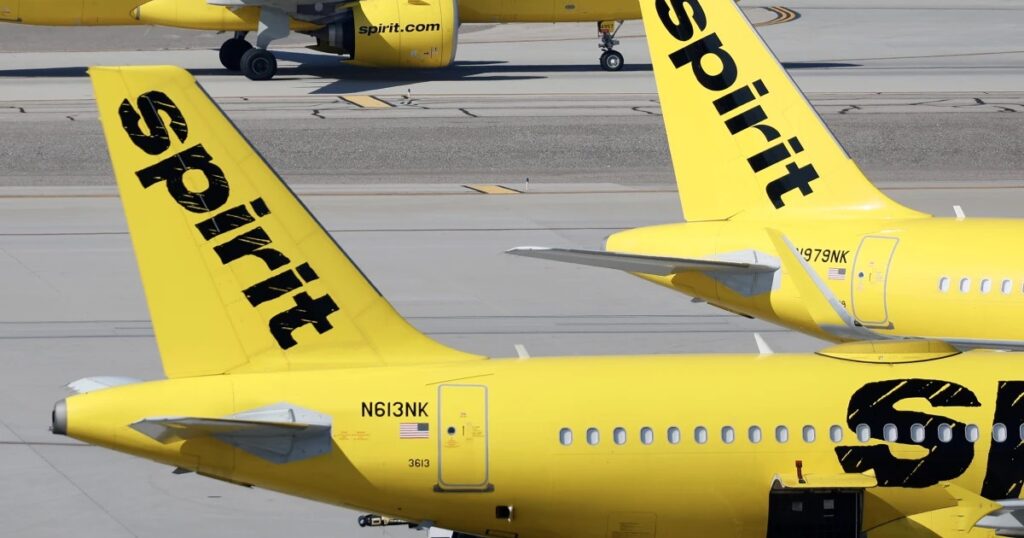
Meanwhile, Spirit confirmed it was working to return more than 1,300 crew members to their home bases following the airline’s final completed flight from Detroit to Dallas-Fort Worth.
According to Davis, many people fail to understand the emotional and financial devastation employees now face behind the scenes.
“People don’t always see what employees go through,” she said. “For many of us, this wasn’t just a paycheck. It was family.”

The airline had reportedly explored government bailout discussions after filing bankruptcy for the second time in under two years. However, no agreement materialized before operations ceased. Rising jet fuel prices tied to escalating geopolitical tensions ultimately accelerated the collapse.
Despite Spirit’s shutdown, Davis believes the demand for affordable travel will remain strong, opening the door for competitors like Frontier Airlines to dominate the market.
“Finances are becoming harder for everyday Americans,” she said. “People are still going to need affordable transportation, and Frontier operates very similarly to Spirit.”
Still, she remains skeptical that Spirit itself could ever successfully return without dramatic internal restructuring.
“Spirit struggled financially for about a decade,” Davis explained. “External updates weren’t enough. There weren’t enough internal changes to reshape and save the airline.”
Her conclusion reflects a hard truth many analysts and employees now acknowledge: low ticket prices alone are no longer enough to sustain an airline in a volatile economic climate.
“If charging clients more meant better customer service and stronger FAA compliance, that would’ve made a difference,” Davis added. “Money rules this world, and Spirit was too soft on ensuring the financial piece was fully squared away.”
For former employees like Davis, the closure of Spirit Airlines represents more than the loss of a company. It represents the end of an era that gave thousands of workers, many from overlooked communities, an opportunity to build careers, support families, and believe bigger futures were possible.
And while the final Spirit flight may have landed, the stories of the people who built the airline continue long after the runway went quiet.