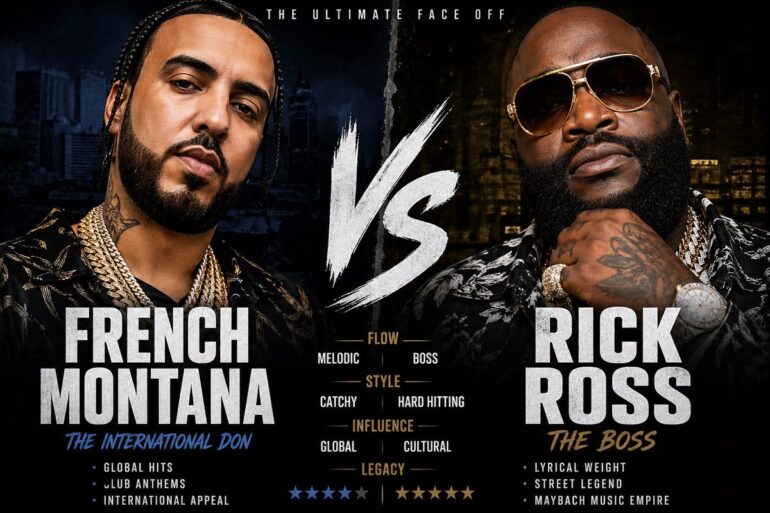

The announcement of a Verzuz battle between Rick Ross and French Montana sent ripples through the hip-hop community, not necessarily for the anticipated fireworks, but for the perceived imbalance. On paper, the matchup appears decidedly skewed, with Rick Ross, the Boss, boasting a discography and an established legacy that seems to dwarf that of French Montana. Yet, it is precisely this apparent disparity that piques curiosity, suggesting that the appeal of such a contest lies not in a fair fight, but in the complex dynamics of perceived value, evolving influence, and the enduring quest for relevance in the hyper-competitive landscape of modern music.
Rick Ross, born William Leonard Roberts II, has cultivated an image of unwavering dominance since his ascent in the mid-2000s. His early work, including the seminal album Port of Miami (2006), was characterized by a larger-than-life persona, propelled by booming basslines, opulent imagery, and a distinctive baritone delivery. Ross positioned himself as a modern-day kingpin, a narrative reinforced by his lyrical content, which often referenced wealth, power, and the spoils of illicit enterprise. His early statements and the symbolism embedded in his music consistently projected an aura of unassailable authority and enduring success. This established a formidable reputation as a pillar of contemporary hip-hop, a figure whose influence extended beyond music to entrepreneurship and cultural commentary.
French Montana, on the other hand, carved his niche through a different, perhaps more accessible, path. Emerging from the mixtape circuit and later achieving mainstream success with hits like “Pop That” and “Ain’t Worried About Nothin’,” Montana cultivated an image of a charismatic, globetrotting artist with a knack for infectious hooks and a vibrant, often celebratory, sound. While his lyrical depth and thematic complexity might not always align with the gravitas of artists like Ross, his ability to craft undeniable anthems and maintain a consistent presence in the pop-culture zeitgeist has been undeniable. However, in the context of a Verzuz battle, where the weight of catalog and lyrical prowess often takes precedence, Montana’s positioning has historically felt more aligned with chart presence and energetic performance than with the kind of deep, narrative-driven artistry that defines Ross’s appeal.
The mid-period of both artists’ careers saw further crystallization of these roles, but also moments of ambiguity. Ross, while maintaining his mogul status, occasionally faced scrutiny for lyrical inconsistencies or perceived attempts to chase trends, leading some to question the authenticity of his kingpin persona. Meanwhile, Montana, despite his commercial successes, often found himself on the periphery of more serious hip-hop discussions, his artistry sometimes overshadowed by his persona and his collaborations. Yet, both artists have demonstrated a remarkable ability to adapt and remain visible. Ross’s entrepreneurial ventures and consistent output kept him in the public eye, while Montana’s prolific collaborations and social media presence ensured his continued relevance. These periods of ambiguity and adaptation set the stage for the current narrative, where the perceived disparity in their Verzuz announcement becomes a focal point.
The public reaction to the Rick Ross vs. French Montana Verzuz announcement has been a mixture of intrigue and skepticism. While some welcomed the prospect of a vibrant musical exchange, many immediately pointed out the perceived mismatch. Social media buzzed with comparisons of their respective catalogs, with fans and critics alike debating the depth and impact of their discographies. This discourse, amplified by various hip-hop news outlets and podcasts, has largely framed the battle as an uphill climb for Montana. The media’s tendency to highlight the perceived imbalance, while perhaps unintentional, inevitably shapes audience expectations and influences the narrative surrounding the event. This framing, however, can also serve to elevate the underdog, creating an opportunity for Montana to defy expectations and prove his detractors wrong.
The tension between legacy and current relevance is a recurring theme in hip-hop, and this Verzuz matchup is no exception. Rick Ross, with his established status as a rap titan, represents the established order, a figure whose place in hip-hop history seems assured. French Montana, while a successful artist in his own right, operates in a space where maintaining relevance often requires a different strategy – one that emphasizes accessibility, virality, and consistent engagement with contemporary trends. This dynamic raises questions about what constitutes a meaningful contribution to hip-hop culture. Is it the creation of a deep, complex body of work that stands the test of time, or is it the ability to consistently capture the public’s imagination and remain a prominent voice in the cultural conversation, regardless of the perceived artistic merit?
In the cutthroat world of the music industry, where attention is the ultimate currency, artists often employ strategies to remain in the spotlight. For Rick Ross, the Verzuz battle offers a platform to reassert his dominance and remind audiences of his extensive catalog. For French Montana, it presents a significant opportunity to elevate his standing, challenge perceptions, and potentially solidify his legacy against a formidable opponent. While neither artist may have explicitly detailed their motivations for participating in such a contest, the underlying drive for relevance, recognition, and the continued pursuit of cultural capital is palpable. The very act of agreeing to a Verzuz battle, especially one where the odds appear stacked against him, suggests a calculated risk on Montana’s part, a belief that he can leverage the platform to his advantage, perhaps by focusing on his most infectious hits and energetic stage presence.
This situation is emblematic of a broader cultural pattern where the lines between authenticity and performance, legacy and fleeting fame, are increasingly blurred. In the modern media ecosystem, where algorithms dictate visibility and virality often trumps substance, artists must constantly navigate the demands of staying relevant. The Verzuz platform itself, born out of a desire to celebrate hip-hop’s rich history, has inadvertently become a crucible for these dynamics, forcing artists to confront their standing and their impact in a very public arena. The perceived lopsidedness of this particular matchup highlights the complex ways in which cultural authority is gained, lost, and contested today. It’s a testament to the enduring power of a strong catalog and a consistent persona, but also to the strategic maneuvering required to stay afloat in an ever-evolving cultural landscape.
Ultimately, the Rick Ross versus French Montana Verzuz battle, despite its apparent unevenness, promises to be more than just a musical showdown. It is a cultural commentary in itself, a reflection of the ongoing dialogue about legacy, relevance, and the shifting sands of influence in the hip-hop world. Whether French Montana can overcome the perceived deficit and deliver a performance that challenges expectations remains to be seen. But regardless of the outcome, the very fact that this matchup has generated such conversation underscores the intricate ways in which artists strive to maintain their footing and their voice in a culture that is constantly demanding something new, yet still reveres the echoes of the past. The question for both artists, and indeed for the culture that consumes their work, is whether such strategies still carry the same weight in an environment that is perpetually chasing the next big thing.